State-Wise Solar Subsidy 2026: Confirmed PM Surya Ghar Top-Ups
The Central Subsidy Is the Same Everywhere
Every state gets the same central assistance: ₹30,000 per kW for the first 2 kW, ₹18,000 for the third kW and ₹78,000 for systems of 3 kW and above. Our PM Surya Ghar guide covers it in full. A state top-up sits on top, usually paid by the state nodal agency or the distribution company after the central subsidy is released.
Confirmed Top-Ups at a Glance
State | What the state adds | Combined at 3 kW |
|---|---|---|
Delhi | Up to ₹26,000 per kW for systems up to 3 kW | ₹1,56,000 |
Uttar Pradesh | ₹15,000 per kW up to 2 kW, maximum ₹30,000 | ₹1,08,000 |
Bihar | ₹10,000 per kW, maximum ₹20,000 per consumer | ₹98,000 |
Maharashtra | ₹10,000 to ₹17,500 per kW for low-consumption households | Applies to 1 kW systems |
Gujarat | Household pays 10% of benchmark cost up to 2.18 kWp | See the Gujarat guide |
State by State
Delhi. The state subsidy runs up to ₹26,000 per kW for plants up to 3 kW, which gives ₹52,000 at 2 kW and ₹78,000 at 3 kW. There are two routes, one run through tendered vendors and one open to any registered vendor. Our Delhi guide sets out both.
Uttar Pradesh. UPNEDA's information booklet lists a state subsidy of ₹15,000 per kW for residential rooftop plants up to 2 kW, so ₹30,000 at most, with nothing extra for the third kW. A 1 kW system gets ₹45,000 in total and a 2 kW system ₹90,000. Group housing societies get ₹15,000 per kW up to 2 kW on common facilities. UPNEDA releases the state subsidy about seven days after the central subsidy shows as released on the national portal. Eligible households are metered residential consumers, and the central rules on domestically made modules apply.
Bihar. The state cabinet approved ₹1,000 crore on August 14, 2026 for a top-up of ₹10,000 per kW, up to ₹20,000 per consumer, on top of the central subsidy. For a 3 kW system the combined subsidy is up to ₹98,000.
Maharashtra. The Swayampurna Maharashtra Residential Rooftop (SMART) scheme, set up by a government resolution in October 2025, targets households using less than 100 units a month. MSEDCL runs it and installs 1 kW systems on a ₹50,000 per kW benchmark.
Household type | Central | State | Household pays |
|---|---|---|---|
Below poverty line | ₹30,000 | ₹17,500 | ₹2,500 |
SC or ST | ₹30,000 | ₹15,000 | ₹5,000 |
Other, under 100 units | ₹30,000 | ₹10,000 | ₹10,000 |
In August 2026 MERC approved a utility-led rollout of 1 kW systems for 2,11,206 low-income households, with vendors chosen by bidding at ₹45,450 per kW. Households above 100 units a month can still use the central scheme.
Gujarat. Since October 22, 2026 households pay 10% of a benchmark cost (5% for SC and ST) for systems up to 2.18 kWp. See our Gujarat guide for the examples and the sizing cliff.
Rajasthan. Trade pages report an extra ₹17,000 for households enrolled in the Mukhyamantri Nishulk Bijli Yojana free-electricity scheme. Confirm the current terms with the state renewable energy agency before quoting it.
Why the Numbers Differ From Site to Site
Search for any state and you will find different figures. Bihar appears as ₹10,000 per kW on some sites and ₹15,000 per kW on others. Uttar Pradesh is sometimes shown as a flat ₹30,000 and sometimes per kW. Several sites list states as having no top-up when the state has since announced one, and Bihar is a recent example. The state notification, or the nodal agency's own booklet, is the figure to use.
What EPCs Should Do
- Quote the central subsidy as a fixed number. Treat any state top-up as an extra that depends on eligibility, caps and the state's budget.
- Collect eligibility proof at the start. Maharashtra needs proof of BPL, SC or ST status and consumption below 100 units, and Rajasthan's top-up depends on scheme enrolment.
- Watch the caps. Uttar Pradesh stops at 2 kW, Bihar at ₹20,000 per consumer, and Gujarat above 2.18 kWp.
- Tell customers how and when the state money arrives. In Uttar Pradesh it comes after the central subsidy, so the customer should expect two payments.
- Keep a one-page sheet per state. Add the date and source of each figure, because state schemes change.
- Do not promise zero cost unless the household's category and the scheme terms clearly support it.
Where Design Software Fits
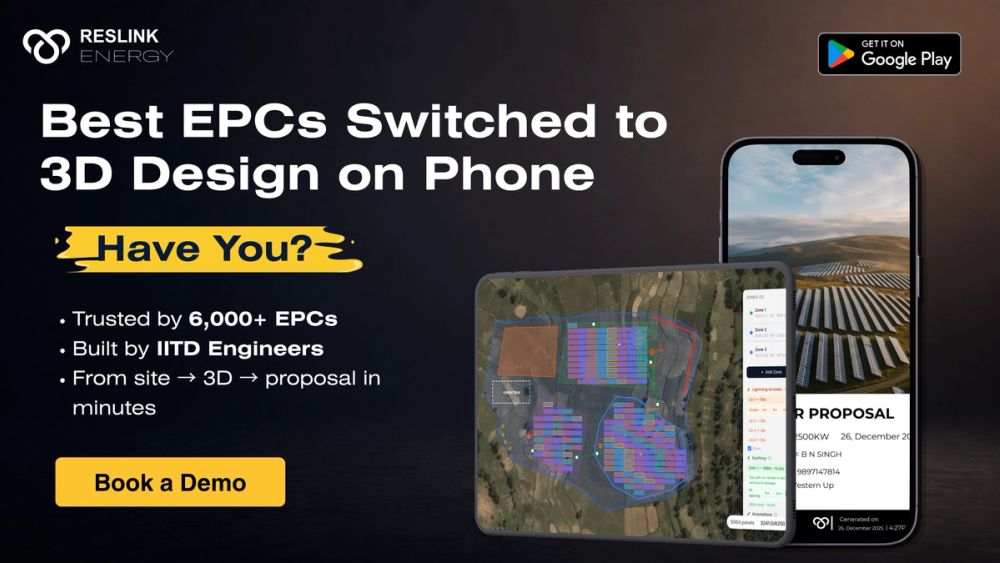
A state-by-state price depends on the system size you quote, and a cap like Uttar Pradesh's 2 kW or Gujarat's 2.18 kWp makes the comparison between sizes part of the sales conversation. Design software like Reslink calculates the central PM Surya Ghar subsidy inside the proposal and produces the layout and bill of materials for each size. It does not calculate state top-ups.
See the full workflow → Book a demo
Frequently Asked Questions
Q1. Is the central PM Surya Ghar subsidy the same in every state?
Yes. It is ₹30,000 per kW for the first 2 kW, ₹18,000 for the third kW and ₹78,000 at 3 kW or more.
Q2. Which states add their own subsidy?
Delhi, Uttar Pradesh, Bihar, Maharashtra and Gujarat have published top-ups, and Rajasthan is reported to add one for free-electricity scheme households.
Q3. Which state gives the most?
At 3 kW Delhi's combined subsidy is up to ₹1,56,000, against ₹1,08,000 in Uttar Pradesh and ₹98,000 in Bihar.
Q4. Who gets the Maharashtra SMART top-up?
Households using less than 100 units a month: BPL households get ₹17,500, SC and ST households ₹15,000 and other eligible households ₹10,000 on a 1 kW system.
Q5. Is the Uttar Pradesh top-up per kW or flat?
Per kW: ₹15,000 for each kW up to 2 kW, so ₹30,000 at most.
Q6. Who pays the state subsidy?
The state nodal agency or distribution company, usually after the central subsidy is released. In Uttar Pradesh UPNEDA pays about seven days later.
Q7. What if my state is not listed?
Quote the central subsidy only and ask the state nodal agency or your distribution company whether a top-up exists.
Final takeaway
The central subsidy is a fixed number, and the state top-up is where figures differ. For EPCs the safe approach is to quote the central subsidy, add a state top-up only when it traces to the state notification, and keep eligibility proof ready from day one.
You May Also Like
- PM Surya Ghar 2026: ₹78,000 Subsidy, Last Date and EPC Rules
- Gujarat Solar Subsidy 2026: The 2.18 kWp Top-Up for EPCs
- Delhi Free Rooftop Solar for EPCs: ULA Route vs Open Route
Sources
- UPNEDA, PM Surya Ghar Muft Bijli Yojana Information Booklet (August 1, 2024)
- Energetica India, Bihar Approves Additional INR 10,000/kW Rooftop Solar Subsidy Under PM Surya Ghar (August 14, 2026)
- Energetica India, Maharashtra Unveils SMART Rooftop Solar Scheme Offering Up to 95 Percent Subsidy (October 2025)
- Energetica India, MERC Approves Rooftop Solar Rollout for 2.11 Lakh Low-Income Households in Maharashtra (August 20, 2026)
- SolarQuarter, MERC Approves Rooftop Solar for 2.11 Lakh Low-Income Households in Maharashtra (August 20, 2026)
This guide reflects the state schemes above as of November 17, 2026. State top-ups change with each state's budget, so check the nodal agency or your distribution company before quoting one.
Related Articles
Is Solar Required on New Commercial Buildings From March 2027?
From Mar 24, 2027, solar on new English commercial buildings is part of Part L energy targets, not a stand-alone duty. What applies and what is open.
Wholesale CfD for Existing UK Solar Farms: What DESNZ Proposes
DESNZ wants existing solar farms on fixed-price contracts. Who qualifies, the 5 or 10 MW threshold, the metering upgrade and the Dec 9 deadline.
Gujarat Solar Subsidy 2026: The 2.18 kWp Top-Up for EPCs
Gujarat's top-up cuts the household share of PM Surya Ghar rooftop solar to 10% up to 2.18 kWp. Rules, examples, the sizing cliff and open points.