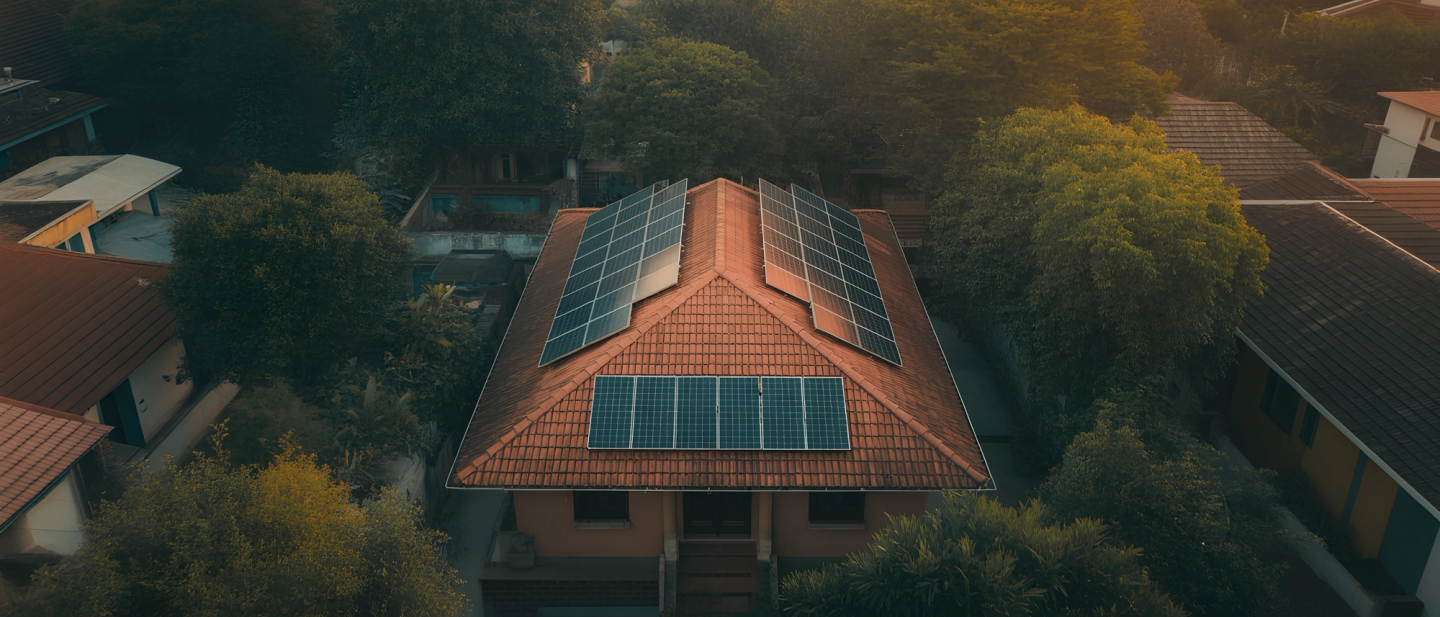
Delhi Free Rooftop Solar for EPCs: ULA Route vs Open Route
 Shashank·Founder·October 15, 2026·11 min read
The Delhi Solar Scheme at a Glance
Delhi has changed its rooftop solar offer twice in about two years, and the second change is the one that matters now. The Overview of Delhi Solar Scheme, published on the Delhi Solar Portal, says the government has carried out a Second Amendment to the Delhi Solar Energy Policy, raising the solar subsidy to ₹78,000. That sits in addition to the up to ₹78,000 under PM Surya Ghar.
The sequence, as far as the sources show it:
- March 14, 2024: the Delhi Solar Energy Policy 2023 is notified, with a residential capital subsidy of ₹2,000 per kW up to ₹10,000 (Delhi Power Department SOP).
- 2025: a first amendment lifts the residential state subsidy to ₹10,000 per kW, capped at ₹30,000 (press report, July 2025).
- Early September 2026: the Delhi Cabinet approves the second amendment (press report, September 4).
- September 21, 2026: the consumer consent portal is reported open for applications.
- October 15, 2026: the portal's state subsidy page, updated that day, carries the current subsidy table.
The scheme has two parts that EPCs should keep apart. One is a government-run installation programme for eligible homes, where the Delhi Government, through IPGCL, selects vendors by tender. The other is the ordinary PM Surya Ghar route, where the household picks a registered vendor, now with a larger Delhi subsidy attached. The sections below take them in turn, starting with the mechanism behind the first.
How Delhi's Free Route Works: Utility-Led Aggregation Explained
The Delhi documents call the free route a Utility-Led Aggregation, or ULA, model, and also use the phrase Discom Trusteeship Model. ULA is not a Delhi invention. It is a national model defined in MNRE's December 2024 guidelines for RESCO and Utility Led Aggregation models under PM Surya Ghar.
Under those guidelines, a ULA model is one where the distribution utility, the state government or another state-designated entity with majority state ownership installs rooftop solar on behalf of individual residential households. IPGCL, a Delhi Government undertaking, is the Delhi entity named on the portal.
MNRE describes two ULA variants.
- Model I, utility-owned assets. The utility owns the system for a project period of at least five years, then ownership may pass to the household. The utility can use EPC vendors or sub-RESCO entities, selected through open, competitive and transparent bidding or by matching feed-in tariffs.
- Model II, consumer-owned assets. The utility adds a grant, and the household owns the system from commissioning. The utility aggregates demand and appoints EPC vendors through open, competitive bidding, and pays them. It may collect a consumer share of no more than 10 per cent of the benchmark cost, which MNRE puts at ₹5,000 per kWp at the current benchmark.
The Delhi documents read here do not say which model Delhi uses. They say homes up to 400 units pay nothing and homes above 400 units pay the net cost after both subsidies, which is consistent with either model but does not settle it. EPCs reading the tender should check this first, because it changes who owns the plant, who carries warranty risk and how the vendor is paid.
Several other ULA rules carry straight into the work an EPC would do.
- Size limit. Central assistance under ULA is released only for households with installations up to 3 kW. That matches the 2 kW and 3 kW options on Delhi's consent form.
- Fixed central subsidy. The central assistance follows the scheme's benchmark rates, whatever price the state finds through bidding. A cheaper bid does not reduce the central amount.
- Domestic content. Modules must be domestically manufactured from domestically manufactured cells. Use of non-DCR modules in any form makes the installation ineligible for central assistance.
- Consent. The National Portal requires a consumer consent form and authentication, including consent for redemption of the central subsidy in favour of the utility.
- Data. ULA installations must report generation data at least hourly and integrate with the National Portal.
- After-sales. The ULA proposal must identify repair and maintenance for the project period. The utility is covered by OEM warranties, and those pass to the consumer at the end of the project period. Defects that block subsidy release must be rectified by the utility.
- Inspection. The DISCOM physically inspects the system before the central subsidy is released.
For a vendor, the practical reading is that ULA work is high volume, rule-bound and paid by the utility, not by the household. The tender will set the price. The guidelines set most of everything else.
The Subsidy Math
Two subsidies combine, and each is computed differently.
Central subsidy. The PM Surya Ghar guidelines for residential assistance set a benchmark cost of ₹50,000 per kW for the first 2 kW and ₹45,000 for the additional kW. Assistance is 60 per cent of the benchmark for the first 2 kW and 40 per cent for the third kW, which works out to ₹30,000 per kW for the first 2 kW and ₹18,000 for the third. Nothing is paid beyond 3 kW. The guidelines also let states add their own subsidy, provided it follows the scheme rules and is routed through the National Portal.
Delhi subsidy. The portal's state subsidy table gives up to ₹26,000 per kW for systems up to 3 kW, with no additional subsidy above 3 kW up to 10 kW. Under the Discom trusteeship model, the portal says the state subsidy is the lower of two numbers: the bid cost minus the PM Surya Ghar subsidy, or ₹26,000 times the capacity in kW. The total is capped at ₹78,000.
System | Central subsidy | Delhi subsidy, maximum | Central benchmark cost | Maximum combined subsidy |
|---|---|---|---|---|
2 kW | ₹60,000 | ₹52,000 | ₹1,00,000 | ₹1,12,000 |
3 kW | ₹78,000 | ₹78,000 | ₹1,45,000 | ₹1,56,000 |
The table shows something worth reading twice. For a 3 kW system, the maximum combined subsidy of ₹1,56,000 is higher than the central benchmark cost of ₹1,45,000. The benchmark is a central scheme figure, not a Delhi tender price, so it only shows the order of magnitude. But if a 3 kW plant were priced at the benchmark, the Delhi formula would pay ₹67,000 (₹1,45,000 less ₹78,000), the two subsidies together would equal the whole price, and the gap left for the household would be zero. At 2 kW the same reasoning gives a Delhi subsidy of ₹40,000 against a ceiling of ₹52,000.
The household pays something only if the winning bid sits above the combined subsidies. A 3 kW plant priced at ₹1,80,000, for example, would leave ₹24,000 after both subsidies. For homes up to 400 units the portal calls the plant free, and a press report on the Cabinet decision describes a government top-up to cover any such gap. For homes above 400 units, the consent guide says the consumer pays the net cost. The figures above are arithmetic from published rules, not tender prices, and the real bid will decide the outcome.
Who Qualifies for the Free Delhi Solar Scheme Route
The consent guide runs an automatic eligibility check on the consumer account number. The result depends on average monthly consumption in FY 2025-26.
Homes averaging 0 to 200 units are shown a free rooftop plant, an additional incentive of up to ₹300 a month, and payment by the DISCOM for surplus power. Homes at 201 to 400 units are shown a free plant and payment for surplus power. Homes above 400 units are shown the PM Surya Ghar subsidy up to ₹78,000 and the Delhi subsidy up to ₹78,000, and told they pay the net cost.
Two groups are told they are not eligible under ULA: non-residential consumers, and homes that already have a plant of more than 1 kW on the same account. MNRE's rules point the same way, since households with pre-existing rooftop solar are not eligible under the RESCO and ULA models and non-residential segments get no central assistance. The portal says an ineligible residential home can still install through an empanelled vendor under PM Surya Ghar and claim the central and state subsidies as per existing provisions. For EPCs, that is the lead pool the free route leaves behind: homes with existing plants, and homes that choose their own vendor.
Two Routes, Two Kinds of Work for EPCs
ULA route | Open route | |
|---|---|---|
Who installs | A vendor IPGCL selects by tender, allotted by DISCOM division | A vendor registered on the PM Surya Ghar portal, chosen by the household |
How price is set | Bidding, run by the Delhi Government through IPGCL | Agreed between household and vendor, with no tendering or rate discovery by the DISCOM |
System size | 2 kW or 3 kW only | Sized to the roof and load. Delhi's subsidy table runs to 10 kW |
Cost to the home | Free up to 400 units. Net cost above 400 units | Vendor's price less the subsidies that apply |
Not eligible if | Non-residential, or more than 1 kW already installed | Scheme rules apply |
EPC work | Bid for a division, then deliver at volume to a fixed specification | Win each client, design, quote and install |
The distinction in the second row is not a detail. MNRE's residential guidelines state that under the ordinary scheme there is no tendering or rate discovery by state DISCOMs or agencies to empanel vendors, as there was under the earlier Phase II programme. ULA brings competitive bidding back, but only for the aggregated installations a state chooses to run.
One point on the open route helps clients who skip the central subsidy. The empanelled vendors page says consumers outside PM Surya Ghar do not have to use an empanelled vendor, and that the Delhi subsidy and generation based incentive are available for all net-meter installations under their categories. That page does not give the amounts for this case.
What the Open Route Demands of a Vendor
For EPCs who stay on the open route, the central guidelines set a detailed list of vendor duties. Several are easy to miss in a quote.
- Five years of free service. Registered vendors provide repairs and maintenance free of cost for the five-year comprehensive maintenance period from commissioning, and replace or repair under-performing components free in that period. The model vendor agreement also asks for a system warranty of five years from commissioning.
- Performance. The model agreement requires a performance ratio of 75 per cent at commissioning, maintained through the five-year warranty. The vendor provides a radiation sensor with a valid calibration certificate on a returnable basis at commissioning.
- Shadow analysis. Annexure 3 asks for a shadow analysis report for each site, from an instrument such as Solar Pathfinder or from professional shadow analysis software, and says lower performance due to shadow is liable to penalty. Software like Reslink can produce a shadow analysis. The guideline names no tool and does not say any particular software is accepted.
- Modules and inverters. Modules must meet the domestic content condition and the ALMM requirement named in Annexure 3. Inverters must follow the Quality Control Order for solar inverters and be able to send data through SIM or dongle.
- Documents. The vendor gives the household the technical catalogues, test reports, serial numbers, warranty cards for panel and inverter, layout and single-line diagram, structure drawing and cable details, and helps upload them for subsidy release.
- Feasibility. Rooftop applications up to 10 kW are deemed accepted without a DISCOM technical feasibility approval under the Electricity (Rights of Consumers) Rules, 2020 and later amendments. Until a state operationalises that, documents are uploaded as state rules require.
- Quality enforcement. Systems that do not meet standards or scheme rules can lead to de-registration or penalties after notice.
The payout sequence matters for cash flow. After installation, the household updates the portal with geo-tagged photographs and documents, the DISCOM inspects physically and signs the metering agreement, and an e-token is activated with the eligible amount. The household redeems it and the subsidy is released. The guidelines say claims are processed within 15 days of DISCOM approval.
What Is Still Unclear
Several points that EPCs will want answered are not settled by the documents read for this guide.
- The IPGCL tender. The consent guide says IPGCL is selecting vendors by tender, division by division, and that selection may take about 1.5 to 2 months. The tender document was not found, so bid dates, eligibility, division sizes and the ownership model are unknown.
- Open-route state subsidy. The ₹26,000 per kW table sits next to a bid-cost formula written for the trusteeship model. The portal does not say whether open-route installs get the full ₹26,000 per kW.
- The cap on homes. Press reports give 2.3 lakh households as the Chief Minister's target and describe first-come, first-served processing. No portal page read here states a cap.
- Generation based incentive. The consent guide mentions DISCOM payment for surplus power. Current incentive rates are not on the pages read.
- Scheme end date. MNRE's guidelines set the scheme period to March 31, 2027. How Delhi's ULA installations fit that window is not addressed in the portal documents.
Where Design Software Fits
A 2 kW or 3 kW roof still needs a layout, a shadow check and a bill of materials before a quote goes out, and the open route asks for a shadow analysis report with the file. Design software like Reslink produces the layout, shadow analysis and bill of materials from one 3D design on a phone. It does not decide eligibility or subsidy under Delhi's rules. The portal and the DISCOM do.
See the full workflow → Book a demo
Frequently Asked Questions
Q1. How does a Delhi home apply for the free route?
The consumer opens the Delhi Solar Portal and enters the consumer account number, DISCOM (BRPL, BYPL, TPDDL, NDMC or MES) and a mobile number, then verifies an OTP. The portal checks eligibility and shows the result. The consumer then chooses 2 kW or 3 kW, enters district and pincode, ticks the consent box and submits. A reference number is issued on screen and by SMS.
Q2. What happens after consent is submitted?
The selected vendor for that DISCOM division visits to assess technical feasibility, and the plant is installed only if the site is feasible. The consent guide read here does not say what happens to a home that fails the check.
Q3. Who receives the central subsidy under ULA?
Not the household, under MNRE's ULA rules. The consent form includes consent for redemption of the central subsidy in favour of the utility, and after commissioning the subsidy is released to the entity concerned as per the approved proposal. Delhi's documents do not describe its own flow in more detail.
Q4. Do housing societies get anything?
Yes. The central guidelines give ₹18,000 per kWp for common facilities, including EV charging, up to 500 kWp at 3 kWp per house, and the state subsidy page lists ₹11,000 per kWp from Delhi, capped at the gap between plant cost and the central subsidy found through bidding. MNRE's own example: a society with 20 households and a 100 kW plant gets assistance on 60 kW, which is ₹10,80,000. The Overview PDF says the Delhi scheme is open to group housing societies.
Q5. Is the 400-unit limit inclusive?
The sources differ. The consent guide says up to 400 units. The Overview PDF says less than 400. A home near the line should read the eligibility result the portal displays, and EPCs should not promise free until it appears.
Q6. Can shops and other non-residential consumers use the Delhi solar scheme?
Not the ULA route. The consent guide says non-residential consumers are not eligible under it, MNRE gives no central assistance to commercial and industrial consumers, and the Delhi subsidy table covers residential consumers and housing societies. The 2024 SOP also listed a generation based incentive for commercial and industrial consumers for the first 200 MW. Its current status was not checked.
Q7. How long does the central subsidy take on the open route?
MNRE's guidelines say claims are processed within 15 days of DISCOM approval, and the DISCOM must first inspect the system physically. If the household took a loan through the portal, the subsidy goes to the loan account up to the outstanding amount, and any remainder goes to the bank account.
Final takeaway
The Delhi solar scheme is now two markets. One is a government-run programme for homes up to 400 units, where a tender decides which vendors install and the rules come from MNRE's ULA guidelines. The other is the ordinary PM Surya Ghar route, with a larger Delhi subsidy and a vendor duty list that is long but known.
For Delhi free rooftop solar, the open questions are all on the ULA side: the tender, the ownership model and the cap. Until the IPGCL tender is found and read, EPCs can prepare on three fronts. Keep empanelment current. Sort leads by consumption and existing capacity. Stop using the word free for any quote the portal's own eligibility check has not confirmed.
You May Also Like
- PM Surya Ghar 2026: Subsidy, Last Date and EPC Rules
- Net Metering Approvals in India: A Step by Step State Guide for EPCs
- PM Surya Ghar 50 Lakh: Can It Hit the December Target
Sources
- Delhi Solar Portal, Department of Power, GNCTD: state subsidy page (updated October 15, 2026), Overview of Delhi Solar Scheme PDF, Consumer Consent and Application Guide PDF, and empanelled vendors page
- MNRE, Guidelines for PM Surya Ghar: Muft Bijli Yojana, RESCO, Utility Led Aggregation Models and Payment Security Mechanism (December 2024)
- MNRE, Guidelines for PM Surya Ghar: Muft Bijli Yojana, Central Financial Assistance to Residential Consumers (OM dated June 7, 2024), including Annexures 2 and 3
- Delhi Power Department, Standard Operating Procedure on subsidy disbursal under the Delhi Solar Energy Policy 2023 (October 11, 2024)
- Renewable Watch, reports of July 18, 2025 (first amendment) and September 4, 2026 (Cabinet approval of the second amendment)
- Down To Earth, report on the Delhi subsidy announcement and the 2.3 lakh household target
This guide summarises Delhi Government and MNRE documents read on October 15, 2026 and press reports. Subsidy terms, tender terms and eligibility can change. Check the Delhi Solar Portal and your DISCOM before quoting.
Related Articles
Maryland Net Metering Cutoff 2027: Confirmed vs Open for EPCs
Maryland closes net metering to new systems at the earlier of 3,000 MW or July 1, 2027. What is set, what the PSC is still deciding.
BS 7671 Amendment 4: What Solar and Battery EPCs Must Do
Amendment 4 to BS 7671 becomes the only current edition on 15 October 2026. What the new battery chapter, forms and transition rules mean for EPCs.
CEA April 2027 Rules for Solar and BESS: Confirmed vs Open
Two CEA rule sets for solar and BESS start 1 April 2027, and a draft list of safety standards is open until 15 November. What EPCs can rely on.