Spain Solar Grant Deadline June 2026: RD 477/2021 EPC Guide
What the RD 477/2021 Programme Is and Where It Stands
Royal Decree 477/2021 (RD 477/2021), published in the Boletín Oficial del Estado on June 30, 2021, established a programme of incentives for self-consumption, energy storage, and renewable thermal systems in Spain, funded through NextGenerationEU under Spain's Plan de Recuperación, Transformación y Resiliencia (PRTR). IDAE, Spain's national energy diversification and saving institute, administered the programme at national level, distributing funds to Spain's 17 autonomous communities and the cities of Ceuta and Melilla, each of which ran its own grant convocatoria.
The initial programme budget was €660 million. IDAE subsequently expanded the total allocation in several resolutions. Per the IDAE budget expansion page, the current total published allocation stands at €2,085,798,144.50, updated as of the Secretaría de Estado de Energía resolution of December 26, 2024.
Applications for new grants under this programme closed on December 31, 2023. The programme is now in its execution and justification phase. Approved applicants must execute the funded installation and submit the required justification documentation to their autonomous community's managing body by the applicable regional deadline, which may not exceed the PRTR framework ceiling of June 30, 2026.
The EPC's role at this stage: EPCs are not applicants in this process. Their clients are the approved beneficiaries. But an EPC contracted to install a grant-linked system carries the practical responsibility of ensuring the installation is executed, legalised where required, and documented before the client's regional deadline. A client who loses their grant due to a missed deadline will hold whoever managed the installation accountable.
What RD 477/2021 Covers: The Six Programme Structure
RD 477/2021 established six distinct programmes. Each approved grant falls under one of these programmes, and the EPC needs to know which programme applies to their client's approved grant before confirming what the installation must include.
Programme 1
Self-consumption installations with renewable energy in the services sector, with or without storage. Covers commercial buildings, hotels, offices, and service-sector facilities.
Programme 2
Self-consumption installations with renewable energy in other productive sectors of the economy, with or without storage. Covers industry, agriculture, and other non-services productive sectors.
Programme 3
Storage incorporated into existing renewable self-consumption installations in the services sector and other productive sectors. Applies to battery storage added to an already-operating installation, not new combined systems.
Programme 4
Self-consumption installations with renewable energy in the residential sector, public administrations, and the third sector, with or without storage. Covers households, communities of owners, public bodies, and NGOs.
Programme 5
Storage incorporated into existing renewable self-consumption installations in the residential sector, public administrations, and the third sector. Applies only to battery storage added to an already-operating installation in these sectors.
Programme 6
Renewable thermal energy installations in the residential sector. Solar thermal, heat pumps, and other renewable heating and cooling systems. Does not include solar PV.
The June 30 Deadline: What It Is and What It Is Not
June 30, 2026 is the ceiling date set by Spain's PRTR framework for execution and justification of all projects funded under the plan. It is the latest possible date by which any approved RD 477/2021 project can be considered compliant with the EU's NextGenerationEU conditions.
However, June 30 is not automatically the operative deadline for every approved project. Each autonomous community issued its own grant resolution (resolución de concesión) when approving individual applications. That resolution contains the specific execution deadline and the required justification documentation for that applicant in that region. Some communities may have set an earlier internal deadline. Others may have issued modifications or extensions to their original resolutions.
Physical installation of the system is typically a necessary condition but may not be sufficient on its own. The execution and justification process generally requires the installation to be: physically complete and operational, legalised where required by regional regulation (this may include registration with the relevant autonomous community or the applicable administrative self-consumption register, where required), and documented through a formal justification submission to the autonomous community's managing body before the applicable deadline.
What EPCs Must Do Now
- Identify every client with an approved RD 477/2021 grant in your pipeline. Ask each client to provide their grant approval resolution (resolución de concesión) and confirm the specific execution and justification deadline stated in that document.
- Contact the relevant autonomous community's energy agency immediately. With the client's grant reference number, confirm: the operative regional deadline, the required justification documentation, and whether any modification or extension has been issued since the original resolution.
- Confirm the installation scope matches the approved programme. The installation must correspond exactly to what was approved under the client's specific programme number. Any deviation from the approved scope may affect grant eligibility at justification.
- Prepare justification documentation in parallel with installation. Do not wait for physical completion to begin the administrative steps. Understand in advance which documents the autonomous community requires and have them ready to submit on the day of commissioning.
- Notify the client in writing of the applicable deadline. Regardless of who manages the relationship, put the regional deadline and required steps in writing to the client. This protects the EPC and ensures the client is informed. A client who loses their grant without being notified of the deadline will hold the EPC responsible.
Solar Incentives That Remain Active After June 30, 2026
The end of the RD 477/2021 execution phase does not remove all solar incentives in Spain. Several mechanisms remain active for new projects after June 30, 2026. EPCs should be presenting these to clients considering new installations.
IRPF income tax deductions
Two national IRPF deduction mechanisms apply to solar installations in 2026, confirmed by the Spanish Tax Agency (AEAT) primary guidance.
New solar autoconsumo deduction (Real Decreto-ley 7/2026, BOE March 21, 2026): A new national IRPF deduction of 10% or 20%, depending on the applicable legal conditions under the decree, applies to the installation during 2026 of solar self-consumption systems using renewable energy sources in dwellings and predominantly residential buildings. The annual deduction base limit is €5,000. The specific rate applicable to a given installation depends on conditions set out in the decree; EPCs should confirm the applicable rate with the client's tax adviser before citing a specific percentage in any proposal.
Energy improvement deductions (prolonged to December 31, 2026 by Real Decreto-ley 7/2026): Works reducing primary non-renewable energy consumption qualify for a 40% IRPF deduction, with a maximum annual base of €7,500 and a maximum cumulative base of €15,000 per dwelling. Works reducing heating and cooling demand qualify under a separate deduction with different rates and conditions. Both require an energy efficiency certificate issued after the works. The applicable deduction depends on the specific nature of the works and must be confirmed with a tax adviser.
Autonomous communities may also offer additional regional IRPF deductions for solar installations. These vary by region and must be confirmed directly with the tax authority of the relevant autonomous community.
ICIO construction tax bonification
Article 103.2(b) of the Ley Reguladora de las Haciendas Locales (Real Decreto Legislativo 2/2004, BOE primary) authorises municipalities to establish, through their own fiscal ordinance (ordenanza fiscal), a bonification of up to 95% of the ICIO on construction works incorporating solar energy systems. This is the statutory ceiling set by national legislation. Whether a specific municipality applies this bonification, at what level up to 95%, and under what conditions, is determined by that municipality's own ordenanza fiscal. The bonification is not automatic: it must be applied for explicitly at the point of obtaining the relevant works permit. Confirm the ICIO ordinance with the relevant ayuntamiento for each project.
IBI property tax bonification
The same Ley Reguladora de las Haciendas Locales authorises municipalities to establish a bonification of up to 50% of the annual IBI (Impuesto sobre Bienes Inmuebles) for properties in which solar energy systems have been installed. As with ICIO, application and conditions are set at the municipal level through the ordenanza fiscal. Duration and applicable percentage vary by municipality. Confirm with the relevant ayuntamiento.
RD 244/2019 autoconsumo and compensación simplificada
Spain's self-consumption framework established by Royal Decree 244/2019 remains fully active. The compensación simplificada mechanism allows eligible renewable self-consumption installations, generally up to 100 kW as provided under RD 244/2019, to offset surplus energy generated against the client's monthly electricity bill under the applicable contract and regulatory conditions. Installations using compensación simplificada cannot simultaneously sell surplus energy under a separate energy sale agreement. For system sizing above 100 kW, or where the client wishes to sell surplus under a different mechanism, different regulatory conditions apply and should be confirmed with the relevant distributor and retailer.
Future regional programmes
IDAE administers additional support programmes outside of RD 477/2021, and autonomous communities may launch new grant convocatorias under the FEDER 2021-2027 framework or other regional budgets. EPCs should monitor the IDAE website and their relevant regional energy agency for new calls. The technology type, beneficiary category, project size, and eligible costs for any future programme will vary by call and cannot be assumed in advance.
Frequently Asked Questions
Q1. Is June 30, 2026 the operative deadline for every approved RD 477/2021 project?
June 30, 2026 is the PRTR framework ceiling date for execution and justification of all approved projects under Spain's NextGenerationEU recovery plan, including RD 477/2021. However, each autonomous community set its own execution and justification deadline in the individual grant resolution (resolución de concesión) issued to each approved applicant. That regional deadline may be earlier than June 30. Some communities may also have issued modifications or extensions. The operative deadline for any specific project is the deadline stated in the client's grant resolution, which must be confirmed directly with the relevant autonomous community's energy agency using the client's grant reference number. Do not assume June 30 applies to every project without verifying the regional resolution.
Q2. What does "execution and justification" mean in this context?
In the context of Spanish public grants, execution refers to the physical completion of the funded installation in accordance with the approved scope. Justification (justificación) is the formal administrative process of submitting documentary evidence to the autonomous community's managing body proving that the grant was used correctly and the approved installation was completed. Physical installation alone does not satisfy a grant resolution. The justification submission typically includes documentation such as commissioning certificates, invoices for eligible components, proof of legalisation where required by regional regulation (which may include registration with the relevant autonomous community or the applicable administrative self-consumption register), and any other documentation specified in the grant resolution. An installation that is physically complete but whose justification documentation has not been submitted before the applicable deadline may still result in grant denial or revocation. Confirm the complete justification requirements with the relevant autonomous community's managing body.
Q3. What happens if the execution and justification deadline is missed?
If the applicable execution and justification deadline is missed, the approved grant may be denied, revoked, or become subject to recovery proceedings, depending on the terms of the autonomous community's grant resolution and applicable regional administrative law. The specific consequences, and whether any appeal pathway is available, vary by autonomous community and by the circumstances of the individual case. Spanish administrative law generally provides standard appeal mechanisms (recurso de alzada, recurso contencioso-administrativo) but the outcome of any appeal depends on the specific facts and the managing body's decision. EPCs should not advise clients that appeal is straightforward or guaranteed. The correct approach is to ensure the execution and justification requirements are met before the applicable regional deadline, not to rely on post-deadline remedies.
Q4. Are there still solar incentives available in Spain for new projects after June 30?
Yes. Several mechanisms remain active for new solar installations after June 30, 2026. At the national IRPF level, Real Decreto-ley 7/2026 (BOE March 21, 2026) introduced a new 10% or 20% deduction (depending on applicable legal conditions) for solar self-consumption systems installed in dwellings and predominantly residential buildings during 2026, with an annual deduction base limit of €5,000. The existing 40% energy improvement deduction for works reducing primary non-renewable energy consumption is also prolonged to December 31, 2026, with a maximum annual base of €7,500. Both national deductions must be claimed on the annual IRPF return. Autonomous communities may offer additional regional IRPF deductions, which vary by region. The ICIO construction tax bonification of up to 95% (Article 103.2(b) of Real Decreto Legislativo 2/2004) remains available where the relevant municipal ordenanza fiscal provides for it. The IBI property tax bonification of up to 50% is similarly authorised by the same legislation. The compensación simplificada mechanism under RD 244/2019 remains fully operational for eligible installations generally up to 100 kW. All tax incentives should be confirmed with the client's tax adviser and the relevant municipal authority for their specific situation.
Q5. Does Programme 5 apply to clients who want to add a battery to a new solar installation?
No. Programme 5 of RD 477/2021 covers storage incorporated into existing renewable self-consumption installations. It applies to battery storage added to a self-consumption installation that was already operating before the grant application. It does not apply to battery storage installed at the same time as a new solar system, and it does not apply to standalone battery storage without an existing self-consumption installation. A client installing solar and battery together from scratch would fall under Programme 1 (services sector), Programme 2 (other productive sectors), or Programme 4 (residential, public administrations, or third sector), depending on the sector of the beneficiary. Confirm the applicable programme with the client's grant resolution documentation before specifying or installing any components.
Q6. How does compensación simplificada work for post-grant solar installations?
The compensación simplificada mechanism, established under Royal Decree 244/2019, allows eligible renewable self-consumption installations to offset surplus energy generated against the client's monthly electricity bill under the applicable contract and regulatory conditions. Under RD 244/2019, this mechanism is available for installations generally up to 100 kW. Installations using compensación simplificada cannot simultaneously sell surplus energy under a separate energy sale agreement. For installations above 100 kW or where the client has different surplus management preferences, different regulatory arrangements apply and should be confirmed with the relevant electricity distributor and retailer. The compensación simplificada does not function as a direct payment from the grid operator; it reduces the client's monthly electricity bill by an amount corresponding to the surplus energy credited. The exact credit value depends on the applicable market and contractual conditions at the time of settlement.
You May Also Like
- CSIP-AUS Solar Compliance 2026: What Every Australian EPC Must Know Before Their Next Project
- Germany Solar Feed-In Tariff 2026: Last Year to Lock In
- US Solar ITC Deadline July 4 2026: EPC Action Guide
Sources
- Real Decreto 477/2021, June 29, 2021 (Primary Law) — boe.es — BOE-A-2021-10824 — Full text of RD 477/2021 establishing Programmes 1 to 6: Programme structure confirmed; Programme 5 scope (storage incorporated into existing self-consumption installations) confirmed from primary law text; Programme 6 (renewable thermal, residential) confirmed.
- IDAE — RD 477/2021 Programme Page (Primary) — idae.es — Applications closed December 31, 2023 confirmed; PRTR framework June 30, 2026 ceiling confirmed; per-autonomous-community implementation structure confirmed.
- IDAE — Budget Expansion Page (Primary) — idae.es/ampliaciones — Initial budget €660 million confirmed; current total allocation €2,085,798,144.50 confirmed per Secretaría de Estado de Energía resolution of December 26, 2024.
- AEAT — Real Decreto-ley 7/2026 IRPF Measures (Primary) — agenciatributaria.gob.es — New 10%/20% solar autoconsumo IRPF deduction from January 1, 2026 confirmed; annual base limit €5,000 confirmed; 40% energy improvement deduction prolonged to December 31, 2026 confirmed; max base €7,500 confirmed. Source: Real Decreto-ley 7/2026, March 20, 2026 (BOE March 21, 2026).
- BOE — Real Decreto Legislativo 2/2004, Article 103.2(b) (Primary Law) — boe.es — BOE-A-2004-4214 — Ley Reguladora de Haciendas Locales: Article 103.2(b) authorises ICIO bonification of up to 95% for solar installations. Up to 50% IBI bonification also authorised. Both subject to municipal ordenanza fiscal; not automatic.
- Real Decreto 244/2019 (Primary Law) — boe.es — BOE-A-2019-5089 — Compensación simplificada framework confirmed; generally available to installations up to 100 kW; cannot simultaneously sell surplus energy under a separate sale agreement.
Related Articles
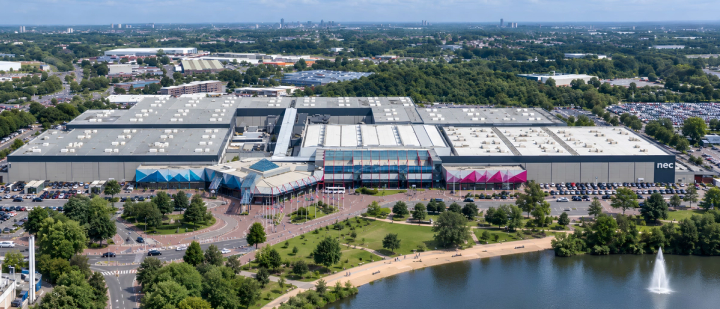
Solar & Storage Live UK 2026: EPC Guide
NEC Birmingham, September 22-24. Confirmed speakers, six conference tracks, and the live grid-connection fight EPCs should actually watch.

Solar Design Software for EPCs in Botswana
Botswana's Rooftop Solar Programme runs through BPC. What EPCs need for compliance, and how Reslink fits a market just getting started.
US Energy Storage Hits Record 20.2 GWh in Q2 2026
US energy storage hit a record 20.2 GWh in Q2 2026, 44% paired with solar. What the SEIA/Benchmark data signals for solar EPCs globally.