Electricity Tariffs Just Rose Again. Solar Payback Is Now Under 5 Years.
Last updated September 4, 2026 (Originally published July 28, 2026)
Quick Answer
Question | Answer |
|---|---|
What is Egypt's electricity tariff in August 2026? | Residential rates range from 0.68 EGP/kWh (Tier 1) to 2.74 EGP/kWh (Tier 7), following the Ministry's August 1, 2026 restructuring, a 12% average increase across brackets 2 through 7. |
Has the tariff changed since April 2026? | Yes. This is the second increase in five months, April raised Tier 7 to 2.58 EGP/kWh, August raised it again to 2.74 EGP/kWh and moved it to flat-rate billing on total consumption. |
What is Egypt's industrial electricity tariff? | 1.60 to 2.34 EGP/kWh depending on connection voltage (extra-high to low), from EgyptERA's published structure. These figures predate the 2026 residential restructurings, confirm current industrial rates directly with EgyptERA before quoting a client. |
Is this the official rate? | Yes, sourced directly from Egypt's Ministry of Electricity and Renewable Energy and confirmed by EgyptERA. |
Egypt's 2026 Residential Electricity Tariff Slabs (EGP/kWh)
Known as شرائح الكهرباء (electricity tariff slabs), Egypt's 2026 residential rates are structured in seven tiers based on monthly consumption:
Tier | Monthly Consumption | Rate (EGP/kWh) |
|---|---|---|
Tier 1 | 0-50 kWh | 0.68 (unchanged) |
Tier 2 | 51-100 kWh | 0.95 (up from 0.78, +21.8%) |
Tier 3 | 101-200 kWh | 1.15 (up from 0.95, +21.1%) |
Tier 4 | 201-350 kWh | 1.72 (up from 1.55, +11%) |
Tier 5 | 351-650 kWh | 2.18 (up from 1.95, +11.8%) |
Tier 6 | 651-1000 kWh | 2.40 (up from 2.10, +14.3%) |
Tier 7 | 1000+ kWh | 2.74 (up from 2.58, +6.2%) |
Billing is cumulative across tiers 1 through 6: a household consuming 400 kWh pays the Tier 1 rate on the first 50 units, the Tier 2 rate on the next 50, and so on up through the portion falling in Tier 4, not the Tier 4 rate on all 400 units.
Tier 7 is the exception, and it's the most important change in this update. As of the August 1, 2026 restructuring, all remaining subsidy on Tier 7 was eliminated, and customers in this bracket are now billed at the flat Tier 7 rate on their entire monthly consumption, not just the portion above 1000 kWh. A household or business using 1,200 kWh in a month now pays EGP 2.74 on all 1,200 units, not the cumulative blend the lower tiers still use. This is a significantly steeper bill increase for high-consumption customers than the 6.2% per-unit rate change alone suggests, and it's the detail worth leading with in any conversation with a heavy-consumption residential or C&I client.
This restructuring, announced August 1, 2026, follows an earlier increase in April 2026 that raised the (then) Tier 7 rate from EGP 2.23 to EGP 2.58 and commercial rates by roughly 20%. Two rate increases in five months signals the pace of Egypt's subsidy phase-out has accelerated, worth flagging to clients who may still be working from spring 2026 numbers.
These are the official rates published by Egypt's Ministry of Electricity and Renewable Energy and confirmed by EgyptERA. Verify current figures directly against EgyptERA or the Ministry before quoting exact rates in a client proposal. Secondary sources show some inconsistency on these numbers, and Egypt's tariff structure has been revised multiple times since 2024; the table above reflects the most recent confirmed figures as of this update, cross-checked against independent news coverage of the April 2026 Tier 7 change specifically.
Egypt's Electricity Tariff Slabs (شرائح الكهرباء) in 2026
Egypt's residential electricity tariff is structured into seven monthly consumption tiers (شرائح). Tier 1 (0-50 kWh) is unchanged at 0.68 EGP/kWh. Tier 4 (الشريحة الرابعة, 201-350 kWh) is 1.72 EGP/kWh. Tier 7 (الشريحة السابعة, above 1000 kWh) is 2.74 EGP/kWh, and as of the August 2026 restructuring, this entire tier is now billed at the flat rate on total consumption, not just the portion above 1000 kWh.
Egypt's Industrial and Commercial Electricity Tariffs 2026
Industrial and commercial users in Egypt are billed under entirely separate structures from the residential table above, and from each other.
Industrial tariffs are set by connection voltage, confirmed directly from EgyptERA's own published tariff schedule. As of the most recently published structure, industrial and other non-residential users pay: extra-high voltage (132 to 220 kV), 1.60 EGP per kWh flat; high voltage (33 to 66 kV), 1.74 EGP per kWh flat; medium voltage (11 to 22 kV), 1.94 EGP per kWh flat; and low voltage (380V), 2.34 EGP per kWh for general use, with a lower 2.00 EGP per kWh rate specifically for irrigation. Larger industrial connections at higher voltage pay meaningfully less per unit than a small factory on a standard low-voltage connection, this is the opposite of what a flat-rate assumption would suggest, and it changes how an EPC should size the financial case for an industrial client depending on their actual connection type.
Commercial premises (محلات تجارية) are billed under their own progressive tier structure, not a flat rate: 0 to 100 kWh at 0.85 EGP per kWh, 101 to 250 kWh at 1.68 EGP per kWh, 251 to 600 kWh at 2.20 EGP per kWh, 601 to 1,000 kWh at 2.27 EGP per kWh, and above 1,000 kWh at 2.33 EGP per kWh. A separate monthly customer service charge applies on top of the per-kWh rate for both industrial and commercial connections, higher for larger voltage connections and higher consumption bands.
These figures come directly from EgyptERA's official tariff schedule and give the confirmed voltage-tiered structure every industrial and commercial connection in Egypt is billed under. The exact per-kWh figures shown reflect the most recently published EgyptERA update; given residential rates rose 12 to 21% across the April and August 2026 restructurings, current industrial and commercial rates are almost certainly higher, by a broadly similar margin. For a specific client proposal, confirm the exact current rate and voltage classification with EgyptERA directly, the structure itself, which tier your client's connection falls into, is what matters most for sizing the financial case, and that structure is confirmed and reliable.
Egypt's Energy Pricing Context
Egypt has been on a multi year path of electricity subsidy reform. For decades, the Egyptian government subsidised electricity heavily, keeping tariffs far below the cost of generation. The IMF backed economic reform programme beginning in 2016 committed Egypt to gradually phasing out these subsidies and moving to cost reflective electricity pricing. That process has accelerated in the 2024 to 2026 period as Egypt manages foreign exchange pressures and implements IMF reform conditions. The April 2026 increase specifically was driven in part by the same Middle East energy crisis that pushed global aluminum and fuel import costs sharply higher this year, Egypt's electricity ministry cited rising fuel import costs tied to the regional conflict directly as a factor in the targeted tariff increase.
The result is that Egyptians in higher consumption brackets now pay significantly more per unit than they did three years ago. The Middle East Observer reports that recent tariff increases, particularly for higher consumption brackets, have "further incentivized adoption" of rooftop solar. Commercial and industrial users, who have historically paid higher tariffs than households, are facing the most pressure. Net metering policies allowing households and businesses to offset their bills with solar generation add to the economic case.
The Tariff Bracket Effect
Egyptian electricity pricing is tiered. Households consuming lower amounts per month pay a significantly lower rate than those consuming more. The tariff structure is progressive, meaning the marginal cost of each additional unit consumed above the lower threshold is higher. For households in higher consumption brackets, which includes most upper middle income urban households in Cairo and Alexandria with multiple air conditioning units, the effective rate they pay on their highest consumption units is substantially higher than the headline low tier rate.
Solar offsets the most expensive units first. When a household generates solar power, it reduces the consumption from the grid starting with the units it would have paid the most for. This means the effective saving per kWh from solar is higher for households in upper tariff brackets than a simple rate comparison suggests. A household spending EGP 4,000 per month on electricity can often achieve savings of EGP 2,500 to 4,000 per month from a properly sized solar system, because they are eliminating consumption from the most expensive brackets.

The Commercial Case Is Even Stronger
Commercial and industrial electricity consumers in Egypt face higher tariffs than residential users, and their consumption is typically concentrated during daytime hours when solar generation is at its peak. This combination creates an ideal solar economics profile: high tariff, high daytime consumption, strong solar resource.
Egypt's solar irradiance is among the highest in the world, with most of the country receiving 2,800 to 3,000 hours of sunshine per year. A 100 kW commercial rooftop system in Cairo generates approximately 150,000 to 165,000 kWh per year. At commercial tariff rates, the annual saving is substantial. With the Egypt Electricity Regulatory Authority (EgyptERA) allowing net metering for commercial users up to 500 kW under the self consumption framework, excess generation can offset bills further.
What EPCs Should Present to Clients
The most effective opening in an Egyptian solar sales conversation is a bill analysis. Ask the client for their last 3 electricity bills. From these, determine their monthly consumption, the consumption bracket they fall into, and the approximate tariff rate they pay on their highest consumption units. Then show them: at that rate, here is what your solar system generates, here is the annual saving in Egyptian pounds, here is the payback period, and here is 25 years of bills without solar versus with solar.
For clients who raise the cost objection, consumer loans for solar in Egypt are available through several banks. According to Tycorun Energy, consumer financing for solar in Egypt reached EGP 341 million in the first half of 2023 alone. Bank of Egypt and several private banks now offer solar specific consumer lending products. Monthly loan payments for a well structured solar financing arrangement can be lower than the monthly electricity saving, making the investment effectively cashflow positive from month one.

Frequently Asked Questions
Q1. Are there solar financing options available in Egypt?
Yes. Several Egyptian banks now offer consumer loans for solar installations. The National Bank of Egypt, Commercial International Bank (CIB), and several others have solar specific or green energy lending products. Loan amounts typically cover 60 to 80% of the installation cost with repayment periods of 3 to 7 years. Monthly loan repayments for a well structured solar financing arrangement can often be lower than the monthly electricity saving, making the investment cashflow positive from month one. Consumer financing for solar in Egypt reached EGP 341 million in H1 2023 and has grown significantly since. Ask your bank for their current green energy loan terms before quoting clients on cash prices alone.
Q2. How much does a rooftop solar system generate in Egypt?
Egypt has one of the best solar resources in the world. Most of Egypt receives between 2,800 and 3,200 hours of sunshine per year, with irradiance levels significantly higher than Europe or South and Southeast Asia. A 1 kW system in Cairo generates approximately 1,600 to 1,800 kWh per year. A 5 kW system generates 8,000 to 9,000 kWh annually. A 10 kW commercial system generates 16,000 to 18,000 kWh per year. These figures make Egypt one of the highest output solar markets in the world per installed kilowatt, which directly improves the economic case compared to lower irradiance countries.
Q3. What are Egypt's current electricity tariff slabs for 2026?
Seven residential tiers: 0-50 kWh at EGP 0.68/kWh, 51-100 kWh at EGP 0.95, 101-200 kWh at EGP 1.15, 201-350 kWh at EGP 1.72, 351-650 kWh at EGP 2.18, 651-1000 kWh at EGP 2.40, and above 1000 kWh at EGP 2.74. Tiers 1 through 6 bill cumulatively; Tier 7 was moved to flat-rate billing on total consumption as of the August 1, 2026 restructuring, meaning a customer in that bracket pays the top rate on every unit consumed, not just the portion above 1000 kWh. Industrial tariffs are set by connection voltage rather than a single flat rate: as of the most recently published EgyptERA structure, 1.60 EGP per kWh at extra-high voltage, 1.74 EGP at high voltage, 1.94 EGP at medium voltage, and 2.34 EGP at low voltage for general use, with a lower rate for irrigation. Commercial premises are billed on their own progressive tier structure, from 0.85 EGP per kWh for the first 100 kWh up to 2.33 EGP per kWh above 1,000 kWh, not a flat commercial rate. Both predate the 2026 residential restructurings and should be reconfirmed against EgyptERA directly, current industrial and commercial rates are very likely higher than these figures given the pattern of 2026 residential increases.
Sources
- Middle East Observer — meobserver.org — Egypt accelerates shift toward rooftop solar as energy pressures mount — EGP 150,000 cost, 4 to 5-year payback, 70 to 100% bill savings (April 19, 2026)
- Tycorun Energy — tycorun.com — Solar energy in Egypt — consumer financing EGP 341 million H1 2023, government incentive programs
- EgyptERA — egyptera.org — Egyptian Electricity Regulatory Authority — net metering and self consumption framework, tariff structure
- Egypt Independent — July 2026 — Full 2026 tariff list, confirms Tier 7 increase from EGP 2.23 to 2.58/kWh in April 2026, tiers 1-6 unchanged since September 2024.
- Trading Economics — April 6, 2026 — Confirms April 2026 tariff increase tied to Middle East energy crisis; commercial rates up ~20%, residential Tier 7 up ~16%.
- Egypt Independent (Al-Masry Al-Youm), "Here are Egypt's new electricity tariff rates following increase," published August 1, 2026, confirms the complete new per-tier residential rates, the 12% average increase, and the Tier 7 shift to flat-rate billing on total consumption.
- EgyptERA (Primary): egyptera.org/, confirms industrial rates by voltage (1.60 to 2.34 EGP per kWh) and the five-tier progressive commercial structure (0.85 to 2.33 EGP per kWh); this specific vintage predates the April and August 2026 residential restructurings, current exact figures should be reconfirmed via EgyptERA's live tariff page
Related Articles
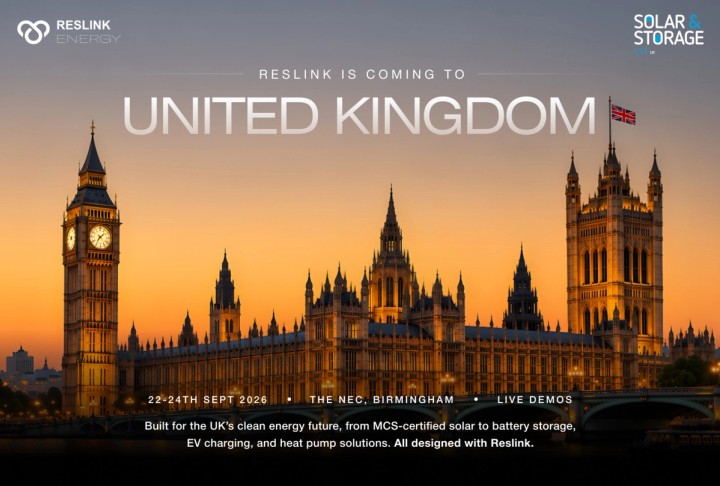
Solar & Storage Live UK 2026: EPC Guide
NEC Birmingham, September 22-24. Confirmed speakers, six conference tracks, and the live grid-connection fight EPCs should actually watch.

Solar Design Software for EPCs in Botswana
Botswana's Rooftop Solar Programme runs through BPC. What EPCs need for compliance, and how Reslink fits a market just getting started.
US Energy Storage Hits Record 20.2 GWh in Q2 2026
US energy storage hit a record 20.2 GWh in Q2 2026, 44% paired with solar. What the SEIA/Benchmark data signals for solar EPCs globally.