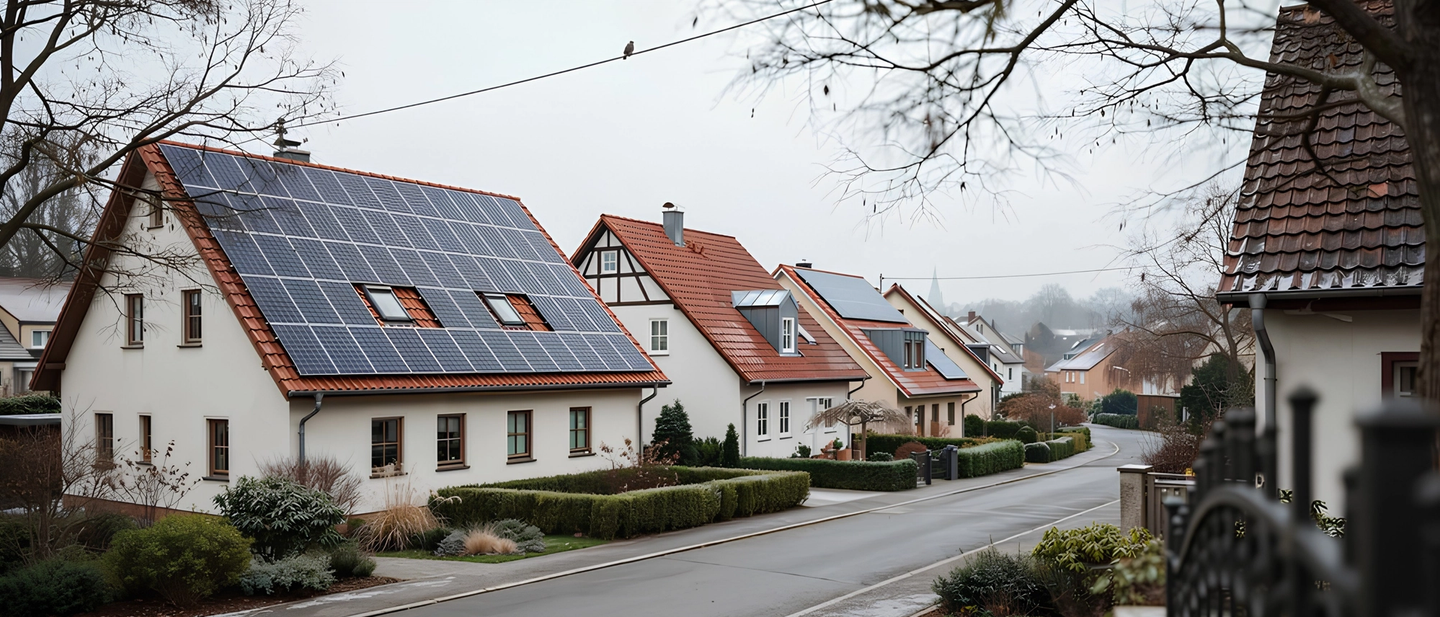
Germany Solar Feed-In Tariff 2026: Last Year to Lock In
The EEG 2027 Reform: Cabinet Approved, Here's the Urgency Argument
Germany's cabinet approved the government bill for the EEG 2027 reform on July 29, 2026. The fixed, guaranteed feed-in tariff ends for all new systems from January 1, 2027, replaced by a transitional payment whose access shrinks by commissioning year, not a flat cutoff at a single system size. See our full Germany Solar Subsidies guide for the complete year-by-year breakdown, current rate table, and redispatch reservation changes. For the complete reform timeline, the redispatch reservation changes, and the current rate table, see our full Germany Solar Subsidies guide.
What this means for EPCs advising residential clients: Systems commissioned and registered in MaStR before January 1, 2027 lock in the current EEG feed-in tariff for 20 years under full grandfathering protection. The reform explicitly does not affect existing systems. An EPC who helps a residential client commission and register before year-end is directly protecting that client from the change, regardless of how the final figures land.
KfW 442: Correct the Record Before Quoting It to a Client
The most common error in German residential solar proposals right now is citing KfW 442 as an available grant. It is not. KfW 442 "Solarstrom für Elektroautos" was a federal grant programme combining PV, battery storage, and EV wallbox into a single application. It launched in September 2023, and its entire budget was exhausted within weeks. The Federal Ministry of Transport confirmed in 2024 that no further funds would be allocated. There is no KfW 442 in 2026 and no announced successor programme for private households.
Multiple competitor blogs and solar websites continue to quote KfW 442 as current. Any EPC quoting KfW 442 to a residential client in 2026 is passing on incorrect information that will surface as a credibility problem the moment the client tries to apply. The correct federal financing instrument for residential solar in 2026 is KfW 270.
Full KfW 270 eligibility, loan amounts, and application process are covered in our Germany Solar Subsidies guide..
Balcony Solar (Steckersolargeräte): The 800VA Grenze (Limit) Explained
This is a separate, already-in-force rule, not part of the EEG 2027 reform above, and it's worth explaining clearly since it's commonly confused. Since Solarpaket I took effect May 16, 2024, a Steckersolargerät (plug-in balcony solar device) qualifies for simplified rules if it stays under two limits simultaneously: 800 VA inverter (AC) output and 2,000 Wp module (DC) capacity. The 800VA figure refers specifically to what the inverter is allowed to feed into the household circuit, not the module capacity, oversizing the panels relative to the inverter is normal and improves real-world output in low-light conditions.
Within these limits: no grid operator notification is required, only MaStR registration within one month of commissioning, and since October 2024, landlord or co-owner consent is no longer generally required either (§554 BGB, §20 Abs. 2 Nr. 5 WEG). A new technical standard, VDE-AR-N 4105:2026-03, took effect March 1, 2026, and formally codifies these Solarpaket I rules, confirming standard Schuko plug connections are permitted and no grid operator registration is needed.
Important for multi-unit properties: if a single connection point (Entnahmestelle) has more than one Steckersolargerät, per Bundesnetzagentur's own guidance, the combined inverter output across all devices must stay under 800VA to keep the simplified status. Exceeding it, even by adding a second small device, moves the whole installation into standard PV system rules, with full grid operator registration and compliance requirements.
Existing 600VA systems from before Solarpaket I keep Bestandsschutz and aren't required to upgrade, though many can be raised to 800VA via a software setting.
For how the VDE-AR-N 4105:2026-03 update lets a larger plug-in array pair with battery storage while staying within the 800VA export limit, see our full Germany Solar & Battery Storage guide.

How to Present This to a Residential Solar Client
The conversation that works: "There is a government bill, approved by Germany's cabinet on July 29, 2026, that would end the guaranteed feed-in tariff for new residential solar systems from January 2027. It is not yet final law, the Bundestag is still debating it, but it is specific and it is moving through the formal legislative process. Systems commissioned and registered before January 1, 2027 are fully protected: they lock in the current rate for 20 years regardless of what happens. Systems commissioned after that date would move to a declining transitional payment instead of a guaranteed rate, with exactly how much depending on the system's size and the year it's commissioned. Here is what your system would earn over 20 years under the current tariff, and here is how KfW 270 financing makes that investment accessible without a large upfront payment."
That is not manufactured urgency. It is a documented legislative proposal, explained accurately. The EPC who can present this clearly, in a proposal that shows the 20-year income calculation, the KfW 270 monthly repayment, and the VAT saving explicitly, is the EPC who closes the residential conversation without needing to oversell anything. Reslink's proposal software generates the 20-year financial model, the subsidy calculation, and the documentation package from a single design workflow, reducing the time from site visit to signed proposal to less than an hour.
Frequently Asked Questions
Q1. What is the current Germany EEG solar feed-in tariff rate in 2026?
The current EEG feed-in tariff, effective August 1, 2026, is 7.70 ct/kWh for partial feed-in and 12.22 ct/kWh for full feed-in, both for systems up to 10 kWp, confirmed by Bundesnetzagentur-sourced reporting. The rate at commissioning and MaStR registration locks in for 20 years regardless of later degression steps.
Q2. Is Germany's solar feed-in tariff really being abolished in 2027?
Not entirely. Germany's cabinet approved the government bill for the 2027 reform on July 29, 2026. The fixed feed-in tariff ends for all new systems from 2027, replaced by a transitional payment, not zero guaranteed income, but access to that transitional payment shrinks each year rather than applying at one flat size cutoff. See our Germany Solar Subsidies guide for the full year-by-year breakdown. Existing systems keep full grandfathering protection regardless of the final outcome.
Q3. Is KfW 442 still available in 2026?
No. KfW 442 was exhausted within weeks of its September 2023 launch and no successor has been announced. The correct federal instrument for 2026 is KfW 270, a subsidised loan, not a grant. See the KfW 442 section above for the full history.
Q4. What is the 800VA Grenze (limit) for balcony solar (Steckersolargeräte) in Germany?
800 VA is the maximum inverter output a plug-in device can feed into the household circuit under Solarpaket I, paired with a separate 2,000 Wp module cap. See the Balcony Solar section above for the full limits and grandfathering detail.
Q5. Do I need to register a balcony solar system with my grid operator in Germany?
No, not within the 800VA/2,000Wp limits, only MaStR registration is required within one month. See the Balcony Solar section above for the multi-unit caveat.
Q6. Does the proposed 2027 EEG reform affect my existing solar system?
No. Existing, already-commissioned systems keep full grandfathering, 20 years at their locked-in rate, regardless of the final 2027 outcome. The proposed changes affect only systems commissioned after the reform takes effect.
You May Also Like
Sources
- Logic Energy, May 2026 — logicenergy.de — February 2026 EEG FiT rates: 7.78 ct/kWh partial (up to 10 kWp), 12.34 ct/kWh full (up to 10 kWp); degression 1% per half-year confirmed under EEG §49; BMWK 2027 reform overview. Cites Bundesnetzagentur and BSW Solar.
- ADAC, April 2026 — adac.de — BMWK Referentenentwurf proposes abolition of EEG feed-in tariff for new systems up to 25 kWp from January 1, 2027; Direktvermarktung to replace fixed tariff.
- 1komma5, April 2026 — 1komma5.com — Referentenentwurf from Economics Minister Katherina Reiche (CDU) confirmed; January 1, 2027 start date named; reform is a concrete legislative proposal not yet final law.
- Stiftung Umweltenergierecht, June 3, 2026 — stiftung-umweltenergierecht.de — Independent legal foundation analysis of EEG 2027 Referentenentwurf: implications of abolishing EEG FiT for small installations.
- BBH Blog (law firm), April 2026 — bbh-blog.de — EEG 2027 reform analysis: FiT abolition for systems under 25 kW, permanent 50% feed-in cap, balcony power plants (up to 2 kWp) exempt.
- 42watt, April 2026 — 42watt.de — KfW 270 current terms: 3.27% to 11.60% effective annual rate (as of April 20, 2026); up to 100% of investment costs; 2 to 30 year terms; up to 5 repayment-free initial years. Cites KfW directly.
- EnergieFluss24, April 2026 — energiefluss24.de — KfW 442 exhausted since 2023, not relaunched; no federal direct grants for residential PV in 2026; KfW 270 confirmed as the only federal KfW instrument for residential solar.
- EStG §3 Nr. 72 (Primary Law) — Income tax exemption for PV systems up to 30 kWp, in force from tax year 2022.
- UStG §12 Abs. 3 (Primary Law) — 0% VAT on supply and installation of PV systems on or adjacent to residential buildings up to 30 kWp, in force from January 1, 2023.
- EEG 2023, §49 (Primary Law) — Degression clause: 1% reduction in feed-in tariff rates on February 1 and August 1 of each year.
- Bundesnetzagentur (Primary) — bundesnetzagentur.de — EEG FiT rates published before each degression date; MaStR registration requirement: within 1 month of commissioning.
- Rödl & Partner, August 2026 — confirms the staggered transitional-payment access schedule and the extended 36-month period, superseding the flat 25 kW framing in earlier reporting.
Related Articles
Solar & Storage Live UK 2026: EPC Guide
NEC Birmingham, September 22-24. Confirmed speakers, six conference tracks, and the live grid-connection fight EPCs should actually watch.

Solar Design Software for EPCs in Botswana
Botswana's Rooftop Solar Programme runs through BPC. What EPCs need for compliance, and how Reslink fits a market just getting started.
US Energy Storage Hits Record 20.2 GWh in Q2 2026
US energy storage hit a record 20.2 GWh in Q2 2026, 44% paired with solar. What the SEIA/Benchmark data signals for solar EPCs globally.