
How to Create a Solar Quotation: Indian EPC Guide
Question | Answer |
|---|---|
What makes a solar quotation actually convert in India? | A site-specific generation report, a shadow analysis, and a rupee-denominated ROI, in that order of importance. |
Does proposal length matter for closing deals? | No, relevance and accuracy matter more than length; a shorter, site-specific proposal consistently outperforms a longer generic one. |
Who is this guide for? | Solar EPCs and installers building residential and C&I quotations in India. |
What's the single biggest fact? | A peer-reviewed rooftop shading study found generation losses of 12.6% to 28.3% from unaccounted obstructions like water tanks. |
What should EPCs do now? | Check the last five proposals sent for a site-specific generation report and a shadow analysis, most gaps show up there first. |
A solar quotation is not a brochure. It is a decision-making tool. The EPCs in India who close the highest share of their leads understand this distinction and structure their proposals around the three questions every Indian solar customer is actually asking, not around the EPC's company credentials or a generic description of how solar technology works.
Why Most Indian Solar Proposals Fail to Close
The common failure in Indian solar proposals is not design quality or format. It is relevance. Most proposals lead with the EPC's company credentials, a generic description of how solar works, and a system specification in kilowatts. The customer reads the first section and skips to the price. They see a number with no context. They ask their neighbour or compare quotes from three other EPCs. The deal stalls.
The proposals that close are different. They open with the customer's specific situation: this is your roof, this is how much your system will generate on it accounting for the water tank on the east side and the parapet shadow in December, and this is what that generation means for your electricity bill in rupees, month by month for the next 25 years.
The difference is not aesthetic. It is that one proposal treats the customer as a generic homeowner and the other treats them as the owner of a specific roof with specific constraints and a specific bill. The latter requires a design tool. The former requires a spreadsheet and a price list.
The Content That Actually Drives Decisions
Based on how Indian homeowners and commercial decision-makers evaluate solar proposals, five content areas have a direct and measurable impact on close rate. Everything else is secondary.
1. Generation Report Based on the Actual Roof
The single most important piece of content in an Indian solar quotation is the generation forecast, and it must be calculated from the actual 3D model of the customer's roof, not from a generic per-kW estimate. An Indian residential rooftop has water tanks, satellite dishes, parapets, AC outdoor units, and sometimes trees on adjacent properties. A generation forecast that ignores these obstructions will overestimate output.
The generation report should show monthly and annual generation in kilowatt-hours, the specific irradiance data for the installation location, and the panel degradation curve over the system's life. When the numbers in the proposal match the customer's first-year electricity bills, the EPC earns repeat business and referrals. When they do not, the EPC loses both.
2. Shadow Analysis
Shadow analysis is the content element that most clearly separates EPCs using modern solar design software from those who do not. Showing the customer a visual of how shadows move across their roof through the day and across the year communicates two things simultaneously: that you have done technical work specific to their property, and that your generation numbers account for real obstructions rather than ideal conditions.
On Indian rooftops, unmodelled shade from a water tank, a parapet, or a neighbouring structure meaningfully reduces actual generation below the proposal forecast, a peer-reviewed study on rooftop shading found discrepancies of 12.6% to 28.3% from unaccounted neighboring obstructions. That gap between expected and actual performance is one of the most common reasons an Indian residential solar customer would not recommend their EPC to a neighbour. Shadow analysis in the proposal prevents this outcome before installation begins.
3. ROI Analysis in Rupees
The ROI section should translate the generation forecast into financial outcomes the customer can evaluate without needing to understand solar. The key figures are:
- Current monthly electricity bill
- Annual saving in rupees
- Cumulative saving over 10, 15, and 25 years
- Payback period
- PM Surya Ghar subsidy amount and net system cost after subsidy
The 25-year savings figure is the one that tends to shift the customer's frame from "this is a big expense" to "this is an investment." As an illustrative example only, for a well-sized system on a Rs 4,000 to Rs 5,000 monthly bill, lifetime savings in the Rs 18 to Rs 22 lakh range are a realistic order of magnitude, though the actual figure always depends on the specific site and tariff. A customer who sees a number like this alongside the net cost after PM Surya Ghar subsidy rarely continues to compare the system on price alone.
4. System Design and 3D Layout
The 3D solar PV design of the roof with panels placed is the most visually striking element of a proposal. It shows that you have done real, site-specific technical work on the customer's property before they have committed to anything.
Include the panel model and specifications, the inverter model and capacity, and the mounting structure type. Add a brief confirmation that both the panel and inverter are ALMM-compliant. This single line removes a question increasingly asked by informed commercial buyers as DISCOM rejections from non-ALMM equipment become more visible in the market. The 3D layout combined with the generation report and shadow analysis gives the customer a complete picture of what they are buying and why the numbers are trustworthy.
5. Pricing, Subsidy, and Payment Terms
Present pricing clearly and in order: gross system cost, PM Surya Ghar central subsidy where applicable, net cost to customer after subsidy, and payment schedule. Address the subsidy payment mechanism explicitly: the subsidy is paid directly to the customer's bank account after commissioning, not deducted from the EPC's invoice. This is the most common source of customer confusion in the post-signing stage.
For commercial projects, also include the accelerated depreciation benefit where applicable. Under Section 32 of the Income Tax Act, 1961, solar power assets qualify for 40% depreciation in the first year on the Written Down Value method, well above the standard rate for general plant and machinery. Including this in the ROI analysis significantly strengthens the financial case for commercial buyers who are evaluating solar against other capital expenditure options.
The Delivery Channel Is Part of the Proposal
In India, a proposal sent by email to a residential customer has a realistic open rate around 20 to 25%. The same proposal sent via WhatsApp is opened at a rate consistently measured above 90%, a gap that holds up across current industry data, not a one-off figure.
This matters beyond the open rate. A WhatsApp proposal gets forwarded. The homeowner sends it to their spouse, their accountant, and the family member whose opinion they trust most. The proposal becomes a shared document in the customer's decision-making group rather than a file sitting unopened in an inbox.
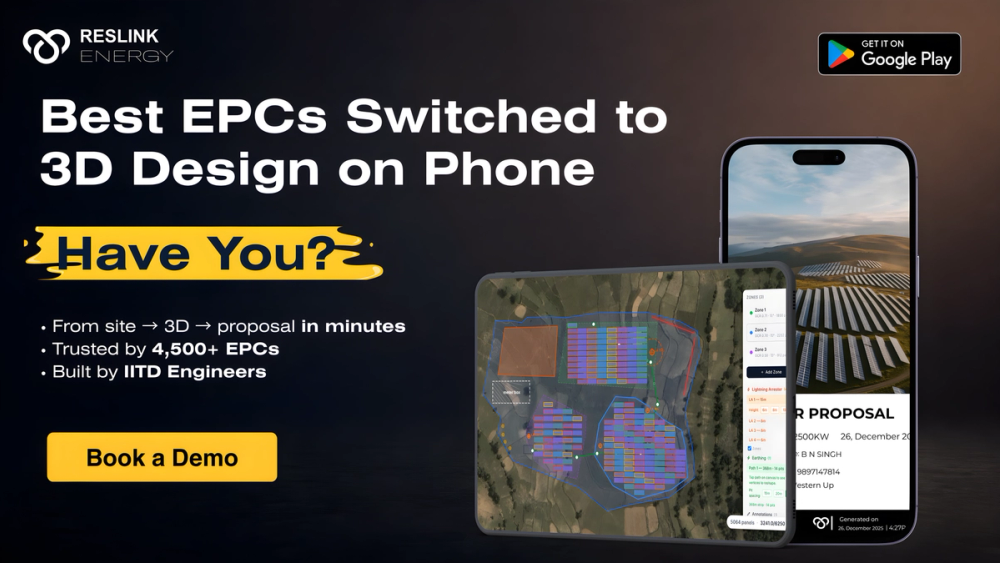
The workflow that consistently closes deals in India: design the system on-site using a mobile app, generate the full solar quotation from the 3D model, and share it directly via WhatsApp before leaving the site. The customer who receives the proposal while the salesperson is still in the building has less time to consider alternatives and a stronger immediate impression than the customer who receives it the next morning by email.
A Note on C&I and OPEX Proposals
The structure above applies primarily to residential solar quotations. For commercial and industrial customers, two additional elements are required.
The first is an OPEX or PPA comparison alongside the CAPEX option. C&I customers are increasingly evaluating the zero-capex model, where a third party owns the system and the customer pays per unit of electricity at a rate below the prevailing DISCOM tariff. A solar quotation that shows only the CAPEX model limits the conversation before it begins. Reslink generates both CAPEX and OPEX proposals from the same 3D design, allowing the salesperson to present both structures on-site.
The second is accelerated depreciation, covered above. Including it in the ROI analysis significantly strengthens the financial case for commercial buyers evaluating solar against other capital expenditure options.
How Reslink Generates This Content
Reslink is the world's first mobile-first solar design software, and it generates the complete solar quotation described in this blog on any device, in under 10 minutes from a completed 3D design.
The generation report is calculated from the actual 3D model with hourly irradiance data for the installation location. The shadow simulation runs across the roof's full obstruction profile through the day and across all seasons. The ROI analysis converts the generation forecast into rupee savings using the customer's current DISCOM tariff rate, with a year-by-year projection to 25 years. PM Surya Ghar subsidy is auto-calculated from system size. ALMM compliance is checked at equipment selection in real time.
Beyond the proposal, Reslink generates the automated Bills of Material (BOM), covering Bills of Electrical and Bills of Structure, and a bank-ready Single Line Diagram in DISCOM-accepted format, from the same 3D design. The proposal itself is only half the workflow, once it's sent, the lead needs somewhere to live. Reslink's CRM keeps that same lead visible through every follow-up, so a customer who takes a week to decide doesn't turn into a re-entered contact in a second system, or worse, a forgotten one. The completed solar quotation is delivered to the customer over WhatsApp before the salesperson leaves the site. 6,000+ solar EPC companies across residential, C&I, open access, and utility-scale projects use Reslink from 3 kW to 1 GW.
For the broader category, what solar quotation software actually is and what to check before choosing one, see the full breakdown here.
Action this week: Pull out your last five proposals and check whether they include a shadow analysis and a site-specific generation report. If the generation forecast is a round number that does not reference the customer's roof obstructions, that is the first thing to fix. Run one Reslink proposal at a real site visit and compare the output to what you currently send. The difference in the proposal makes the decision obvious.
How This Fits Into a Reslink Workflow
Every element above, the generation report, shadow analysis, rupee ROI, subsidy calculation, ALMM check, and BOM, comes from one 3D design rather than five separate steps stitched together after the site visit. That's the actual mechanism behind the close-rate difference this guide is built around: it isn't that Reslink's content is better written, it's that the content is structurally impossible to get wrong or out of sync, because there's only one design feeding all of it.
See this workflow generate a real quotation, on a real site, in under 10 minutes → Book a demo
Frequently Asked Questions
Q1. What content do Indian solar customers care most about in a proposal?
Three areas consistently matter most: a site-specific generation report that accounts for the roof's actual obstructions, a rupee-denominated ROI analysis showing savings at 10, 15, and 25 years, and a shadow analysis that demonstrates the generation numbers are accurate for their specific property. Price matters too, but customers who have seen a shadow analysis and a 25-year savings figure in lakhs of rupees evaluate the proposal as an investment decision, not a procurement comparison.
Q2. Does a solar quotation need to be long to be convincing?
No. Length is not the metric that matters. Content relevance and accuracy are what close deals. A proposal that includes a site-specific generation report, shadow analysis, ROI breakdown in rupees, and a clear pricing section will consistently outperform a longer proposal that lacks these elements. For residential customers, concise and visually grounded content reads better than exhaustive technical documentation. The proposal's job is to give the customer exactly what they need to decide, nothing more.
Q3. What is shadow analysis in a solar quotation and why does it matter?
Shadow analysis is a simulation of how shadows from roof obstructions, water tanks, parapets, AC units, adjacent structures, fall across the panel layout through the day and across seasons. It matters because obstructions not accounted for in the design reduce actual generation below the proposal forecast, sometimes substantially. For Indian rooftops, shadow analysis is often the difference between a system that meets customer expectations and one that underperforms.
Q4. Should the PM Surya Ghar subsidy be shown in every residential proposal?
Yes, always, for residential projects. Show the gross system cost, the applicable PM Surya Ghar central subsidy amount, auto-calculated from system size, and the net cost to the customer after subsidy. Also clarify the payment mechanism: the subsidy is paid by the government directly to the customer's bank account after commissioning, not deducted from the EPC's invoice. This is the most common source of customer confusion in the post-signing stage.
Q5. Should a solar quotation include OPEX or PPA options for commercial customers?
Yes. Commercial and industrial customers increasingly evaluate the OPEX or PPA model, where a third party owns the system and the customer pays per unit of electricity at a rate below the prevailing DISCOM tariff. A solar quotation that shows only the CAPEX option limits the conversation. Reslink generates both CAPEX and OPEX proposals from the same 3D design, allowing the salesperson to present both financial structures on-site and let the customer choose.
Q6. What is ALMM compliance and why should it appear in the solar quotation?
ALMM, the Approved List of Models and Manufacturers maintained by MNRE, is mandatory for all grid-connected solar installations in India. Non-ALMM equipment results in DISCOM inspection rejection after installation. Including a brief ALMM compliance confirmation in the system design section removes a question increasingly asked by informed customers. Reslink checks every panel and inverter against the current ALMM list in real time and flags non-compliant equipment before the proposal is generated.
Q7. What is BOM and how does it connect to the solar quotation process?
Bills of Material (BOM) is the complete material list generated from the 3D design, covering Bills of Electrical, cables, inverters, distribution boards, and Bills of Structure, including mounting rails, purlins, rafters, clamps, and fasteners. While BOM is a procurement document rather than a customer-facing proposal element, generating it from the same design that produced the solar quotation ensures no version mismatch between what was proposed and what is procured.
Q8. How quickly can Reslink generate a complete solar quotation from a site visit?
Reslink generates the complete solar quotation, generation report, shadow analysis, rupee ROI, PM Surya Ghar subsidy, and ALMM compliance confirmation, in under 10 minutes from a completed 3D design, on any device including phones and tablets. The proposal is delivered directly to the customer via WhatsApp before the salesperson leaves the site. No office turnaround, no laptop required, no delay between the site visit and the customer receiving the proposal.
You May Also Like
- Solar Quotation Software for Indian EPCs
- Solar Proposal Software vs Manual Quotation: The India EPC Math
- Design First, Visit Once: The 3D Shift in Solar EPCs
Sources
- MNRE, PM Surya Ghar Muft Bijli Yojana subsidy notification and EPC guidelines
- MNRE, Approved Models and Manufacturers List (ALMM), current edition
- Peer-reviewed study on neighboring rooftop shading effects on PV generation, ScienceDirect, 12.6-28.3% generation discrepancy from unaccounted obstructions
- Income Tax Act, 1961, Section 32, read with Rule 5 and Appendix I of the Income Tax Rules, 1962, 40% first-year accelerated depreciation on solar assets
- Cross-industry WhatsApp Business vs. email open rate data, 2026
Related Articles

Best Solar Software in India: By Type, Then by Use Case
Which type of solar software you actually need, then the right pick by project type: residential, C&I, utility-scale, and multi-state Indian EPCs.
Solar Design Software Stack India: Break-Even Math (2026)
No single tool covers the Indian solar stack. The real break-even formula for licensing PVsyst and AutoCAD in-house versus outsourcing them.
Solar Design Software for Indian EPCs
Solar design software for Indian EPCs: what the category actually covers, how it splits by project type, and why 3D design replaced manual layout.