Germany Solarpflicht 2026: State by State EPC Guide
Why There Is No Single Answer to "Does Germany's Solar Obligation Apply to My Client?"
The Solarpflicht is one of the most searched and most misunderstood topics in German solar in 2026. Clients ask their EPC whether they have to install solar. The honest answer is: it depends entirely on which state the building is in, what type of building it is, and what work is being done on it.
Germany does not have a national solar obligation for private buildings in 2026. Solar policy at the building level is constitutionally a matter of state (Bundesland) law in Germany. Each state has legislated, or chosen not to legislate, its own framework. The result is a patchwork of obligations that vary significantly in scope, threshold, and enforcement. An EPC working across multiple German states needs to know the rules for each state they operate in and to verify against the relevant state building code before advising any client on their obligations.
What follows is a state-by-state overview based on the rules in effect as of June 2026, drawn from state legislation and confirmed reporting from ADAC's April 2026 state-by-state review. EPCs should verify the current status with the relevant state building authority (Landesbauordnung) before advising clients, as state laws are subject to amendment.
The NRW 2026 Expansion: The Biggest Current Change for EPCs
The most significant new development in the 2026 Solarpflicht landscape is North Rhine-Westphalia's expansion of its solar obligation to cover roof renovations of all building types, including residential properties. Previously, NRW's solar obligation applied primarily to new commercial buildings. From 2026, any owner undertaking a significant roof renovation in NRW triggers the obligation for all building types.
NRW is Germany's most populous state with approximately 18 million residents. It has the largest concentration of commercial and industrial rooftop space of any German state. For EPCs operating in NRW, the 2026 expansion means that every significant roof renovation project they are involved in is now a potential solar project by law. A roofing contractor who renovates a residential roof without flagging the solar obligation to the homeowner is leaving the homeowner exposed to enforcement action. An EPC who proactively identifies this trigger point is providing a genuinely valuable service.
What Triggers the Obligation: The 50 m² and 50% Rules
Across all states that have a mandatory Solarpflicht, two thresholds appear consistently. Understanding both is essential before advising any client.
The 50 m² roof area threshold
In most states, the solar obligation only applies to roof areas of 50 m² or more of suitable (solar-accessible) roof surface. Roofs that are heavily shaded, north-facing, or structurally unsuitable for PV are typically excluded. The 50 m² threshold is based on the gross roof area that could technically receive adequate solar irradiance, not the total footprint of the building. A large building with a complex multi-pitch roof and significant shading may have less than 50 m² of suitable area and fall outside the obligation. An EPC who can assess suitable roof area before the client engages a structural surveyor saves the client time and provides immediate value.
The 50% roof renovation trigger
The obligation for existing buildings is typically triggered not by a minor repair or patch but by a significant roof renovation. Most states define this as replacing more than 50% of the roof covering (Dachhaut). A homeowner who replaces a few broken tiles does not trigger the obligation. A homeowner who strips and replaces the full roof covering in the course of a renovation does. EPCs working alongside roofing contractors should establish at the outset of any renovation project what proportion of the roof covering is being replaced. If it crosses the 50% threshold in a state with a mandatory Solarpflicht, the conversation about solar integration begins immediately.

Common Exceptions Across All States
Every state with a mandatory Solarpflicht provides statutory exceptions. An exemption is not automatic: it must typically be applied for through the local building authority (Baurechts- or Bauordnungsamt) and requires documented evidence of the grounds for exemption. Common grounds across all states include:
- Technical unsuitability: The roof structure cannot support the additional load of PV modules without disproportionate reinforcement cost
- Economic unviability: The installation cost is disproportionate to the expected energy or financial return given the specific roof configuration
- Heritage protection: The building is listed under Denkmalschutz (monument protection) and visual alteration is prohibited or restricted
- Orientation: The roof faces predominantly north with insufficient irradiance to meet minimum yield thresholds
- Shading: Permanent shading from adjacent buildings or trees reduces expected yield below a viable threshold
Alternatives are also accepted in some states. Baden-Württemberg, for example, allows a solar thermal installation to substitute for a PV system in fulfilling the obligation. Some states accept participation in a shared community solar facility as an alternative to a rooftop installation on the specific building. Verify the available alternatives with the relevant state authority for each project.
Fines and Enforcement
Non-compliance with the Solarpflicht is treated as an administrative offence (Ordnungswidrigkeit) in all states that have mandated it. Enforcement varies by state, but the consequences are real. ADAC's April 2026 state guide confirms:
- Baden-Württemberg: Fines up to €50,000 for non-compliance. MaStR registration of the installed system required as proof of compliance. Building authority can inspect on-site on reasonable grounds.
- Berlin: Fines between €5,000 and €50,000 depending on building size. Building inspection offices (Bauaufsichtsämter) carry out spot checks. Non-compliant owners must retrofit within one year of enforcement notice.
- Hamburg: Enforcement fines (Zwangsgeld) up to €10,000. Gründachpflicht (green roof obligation) for flat roofs added from 2027 as an additional compliance requirement.
Additionally, building permits can be refused or revoked retrospectively if the Solarpflicht is not met. For a developer or building owner, this means construction projects in states with mandatory obligations that do not include a solar installation plan may not receive final building approval.
What Is Coming Nationally: The Federal Obligation From 2027
Germany is moving toward a national solar obligation, but it is not yet in force. The proposed Gebäudemodernisierungsgesetz (GModG) includes provisions at §106 for a phased federal solar obligation. Under current proposals, this would be introduced gradually from 2027, initially covering larger new and existing non-residential and public buildings, expanded to new residential buildings and parking lots from around 2030. The details of the GModG are still in the legislative process as of June 2026. EPCs should not present this as confirmed law, but it signals the clear direction of travel: the patchwork of state obligations is a transitional arrangement and a national standard is approaching.
How EPCs should use the Solarpflicht in client conversations: For clients in Baden-Württemberg, Berlin, Hamburg, NRW, Bremen, or Lower Saxony planning a new build or major roof renovation, the solar obligation is not a selling point; it is a legal requirement they need to be aware of. The EPC's role is to confirm whether the obligation applies, what system size and coverage percentage is required, and how to document compliance through MaStR registration. The EEG feed-in tariff, KfW 270 financing, and 0% VAT then convert a legal obligation into a financially positive decision rather than a compliance burden.
Reslink's solar design software generates compliant system designs, MaStR-ready documentation, and financial proposals from a single workflow, reducing the administrative overhead for EPCs navigating state-specific Solarpflicht compliance across multiple projects simultaneously.
Frequently Asked Questions
Q1. Does Germany have a national Solarpflicht in 2026?
No. Germany does not have a mandatory national solar obligation for private buildings in 2026. The Solarpflicht is state law, and each of Germany's 16 states sets its own rules. Six states currently have mandatory obligations: Baden-Württemberg, Berlin, Hamburg, Bremen, Lower Saxony, and North Rhine-Westphalia. Bavaria has a non-binding recommendation (Soll-Vorschrift) for residential buildings. The remaining states have no mandatory solar obligation for private residential or commercial buildings. A phased federal obligation is being proposed under the Gebäudemodernisierungsgesetz (GModG) for introduction from around 2027, but this is not yet law. Always verify the current rules in the specific state where the building is located before advising a client on their obligations.
Q2. Does the Solarpflicht apply to existing buildings during a roof renovation?
Yes, in several states. The obligation for existing buildings is typically triggered by a significant roof renovation, defined in most states as replacing more than 50% of the roof covering (Dachhaut). A complete re-roofing project triggers the obligation. Minor repairs do not. The states where roof renovation triggers the Solarpflicht include Baden-Württemberg (since January 2023), Berlin, Hamburg, NRW (expanded to all building types from 2026), and Bremen. In Lower Saxony, the trigger applies to commercial building roof renovations. In Bavaria, a non-binding recommendation applies for residential roof renewals but is not legally enforceable. In states without a Solarpflicht, no obligation exists for existing buildings regardless of the extent of roof renovation. Confirm the specific trigger threshold with the local Bauordnungsamt for each project.
Q3. What are the fines for not complying with the Solarpflicht in Germany?
Fines vary by state. Baden-Württemberg imposes enforcement fines (Zwangsgeld) up to €50,000 and requires MaStR registration as proof of compliance. Berlin imposes fines between €5,000 and €50,000 depending on building size, with a requirement to retrofit within one year of an enforcement notice. Hamburg imposes enforcement fines up to €10,000. In all states with a mandatory Solarpflicht, non-compliance is treated as an administrative offence. Building permits can additionally be refused or revoked retrospectively. Compliance is checked through spot inspections by local building inspection authorities. The EPC's role includes advising the client that documentation of compliance via MaStR registration is a legal requirement, not optional paperwork.
Q4. Can a client get an exemption from the Solarpflicht?
Yes, exemptions exist in all states with a mandatory Solarpflicht, but they must be applied for through the local building authority and supported by documented evidence. Common grounds for exemption include: technical unsuitability of the roof structure, economic unviability where installation cost is disproportionate to expected return, heritage protection (Denkmalschutz) where visual alteration is restricted, predominantly north-facing roof orientation with insufficient irradiance, and permanent shading below a viable yield threshold. Alternatives may also be accepted, including solar thermal installations (in Baden-Württemberg) or participation in a community solar facility. Exemptions are not automatically granted: each case is assessed individually by the Baurechts- or Bauordnungsamt. An EPC who documents the technical grounds for an exemption request professionally is adding genuine value to the client relationship.
Q5. Does the Solarpflicht apply to Bavaria in 2026?
Partially. Bavaria operates a two-tier system in 2026. For new non-residential buildings (commercial, industrial, institutional), a mandatory solar obligation has been in place since March 2023 under BayBO Art. 44a. For new residential buildings and existing residential buildings undergoing a complete roof renewal, Bavaria introduced a Soll-Vorschrift (non-binding recommendation) from January 1, 2025. A Soll-Vorschrift is legally different from a mandatory obligation: ignoring it has no direct legal consequences for the building owner. There is no mandatory Solarpflicht for private residential buildings in Bavaria in 2026. However, the EEG feed-in tariff, KfW 270 financing, and 0% VAT make the financial case for voluntary installation strong regardless of the absence of a legal requirement.
Q6. Is a national German solar obligation coming and when?
A national solar obligation is being proposed under the Gebäudemodernisierungsgesetz (GModG), which includes provisions at §106 for a phased federal solar obligation. Under current proposals, this would be introduced from approximately 2027, starting with larger new and existing non-residential and public buildings and expanding to new residential buildings and parking lots from around 2030. The GModG is still in the legislative process as of June 2026 and its final form may differ from the current draft. EPCs should not present this as confirmed law. The direction of travel is clear: the current patchwork of state obligations is transitional and a national standard is approaching. For EPCs, this means the client conversations about solar obligations will become progressively more consistent across all 16 states, but for 2026 projects the state-specific rules remain the operative framework.
You May Also Like
- Germany Solar Peak Act 2026: The EPC Guide to EEG Feed-In Tariff Changes
- Germany Solar Feed-In Tariff 2026: Why This Is the Last Year to Secure It
- Intersolar Europe 2026: Munich Guide for Solar EPCs
Sources
- ADAC, April 2026 — adac.de — State-by-state Solarpflicht overview: Baden-Württemberg since March 2022 (residential), January 2023 (roof renovations); Berlin January 2023; Hamburg 2023; Bavaria BayBO Art. 44a mandatory for non-residential, Soll-Vorschrift for residential from January 2025; fine ranges confirmed per state
- KSG BW (Primary Law) — Klimaschutz- und Klimawandelanpassungsgesetz Baden-Württemberg: solar obligation for new builds from May 1, 2022 (residential), January 2022 (non-residential and parking); roof renovations from January 2023; 60% of suitable roof area required; fines up to €50,000
- BayBO Art. 44a (Primary Law) — Bayerische Bauordnung Article 44a: mandatory solar for new non-residential buildings from March 2023; Soll-Vorschrift (non-binding) for residential new builds and roof renewals from January 2025
- Berliner ENWG (Primary Law) — Berliner Klimaschutz- und Energiewendegesetz: solar obligation from January 2023; new residential and commercial buildings and significant roof renovations; 30% of gross/net roof area; 50 m² minimum; fines €5,000 to €50,000; MaStR registration required as proof of compliance
- HmbKliSchG (Primary Law) — Hamburgisches Klimaschutzgesetz: solar obligation for new builds and significant roof renovations; 30% of gross roof area; 50 m² minimum; enforcement fines up to €10,000; Gründachpflicht for flat roofs added from 2027
- work5.de, June 2026 (1 week ago) — work5.de — Current June 2026 state overview: Baden-Württemberg, Berlin, Hamburg confirmed with roof renovation trigger; no national obligation; state-by-state patchwork confirmed
Related Articles
Solar & Storage Live UK 2026: EPC Guide
NEC Birmingham, September 22-24. Confirmed speakers, six conference tracks, and the live grid-connection fight EPCs should actually watch.

Solar Design Software for EPCs in Botswana
Botswana's Rooftop Solar Programme runs through BPC. What EPCs need for compliance, and how Reslink fits a market just getting started.
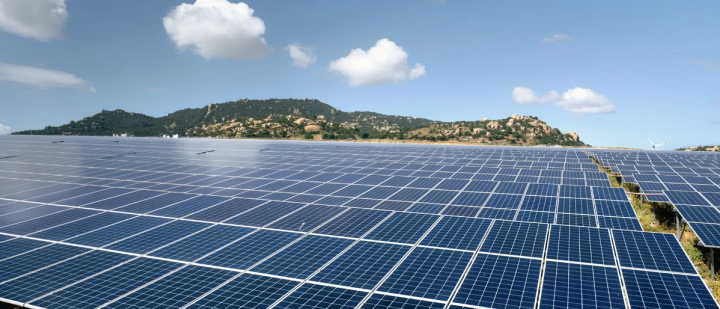
US Energy Storage Hits Record 20.2 GWh in Q2 2026
US energy storage hit a record 20.2 GWh in Q2 2026, 44% paired with solar. What the SEIA/Benchmark data signals for solar EPCs globally.