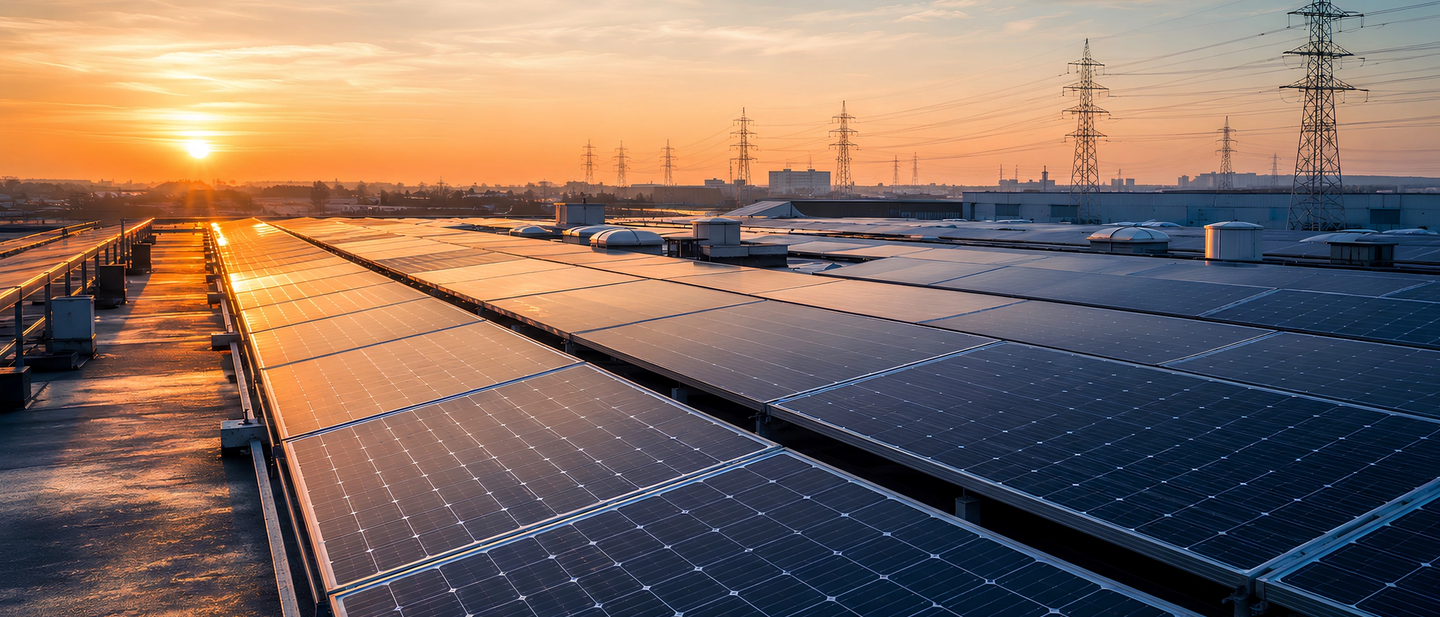
Germany Solar Peak Act 2026: The EPC Guide to Feed-In Tariff Changes
What Germany's Solar Feed-In Tariff Actually Looked Like Before This Law
For 25 years, the EEG gave German solar system owners something almost uniquely valuable in the global solar market: a government-backed, fixed payment for every kilowatt-hour they exported to the grid, locked in for 20 years from the date of commissioning. The rate degraded every six months, but whatever rate you locked in on registration day was yours for two decades. That certainty was the foundation of every solar investment case in Germany since 2000.
The logic worked well when solar was a minor contributor to the grid. It stopped working when solar became Germany's single largest electricity source on clear summer days. By 2024, Germany had over 90 GW of installed solar capacity. On peak days, that capacity generates more electricity than the grid can absorb. Wholesale electricity prices go negative: generators are paying the market to take their power. Under the old EEG, solar system owners still received their fixed feed-in tariff during those negative price periods, regardless of what the market was doing. The government was paying people for generating electricity that was actively destabilising the grid.
The Solarspitzengesetz ended that. It is a direct, targeted fix: stop paying the feed-in tariff when the market price is negative. The policy logic is rational. The financial consequences for EPCs who have not updated their proposals are not.
What the Solar Peak Act Actually Changed: The Three Rules
The Solarspitzengesetz amends three sections of German energy law simultaneously: Section 51 of the EEG (feed-in remuneration), the Metering Point Operation Act (MsbG), and the Energy Industry Act (EnWG). In practical terms for a solar EPC, it creates three distinct obligations.
Rule 1: Zero feed-in income during negative pricing intervals
For all PV systems above 2 kW commissioned since February 25, 2025, the EEG feed-in tariff is suspended during any 15-minute interval when the EPEX SPOT day-ahead price is negative. Zero. Not reduced. Not deferred. Zero. The sun is shining, the system is generating, the inverter is exporting, and the meter is recording nothing for those intervals. If the client's system exported for 457 hours during 2025 and those hours were largely negative-price hours, a portion of those exports earned nothing.
Rule 2: Permanent 60% export cap without a smart meter
For new systems above 2 kW, the feed-in capacity is limited to 60% of the installed system's peak output unless a smart metering system (iMSys) is installed. EPCs should verify the current metering and control status before modelling export volumes in any client proposal. A 10 kWp system without an iMSys can only export up to 6 kWp to the grid. The remaining 40% of generation capacity must go to self-consumption or is curtailed. This limit applies as long as the system operates without an iMSys installed.
Rule 3: Smart meter makes the difference
If an iMSys is installed, the picture changes materially. Lost feed-in hours during negative pricing periods are counted and added to the end of the 20-year support period. The total income over the system's supported life is largely preserved, just shifted later. The full 100% of generation capacity can be exported. And for existing system owners who voluntarily switch to the new framework, PV Magazine confirmed a feed-in tariff increase of €0.006 per kWh as an incentive for the voluntary switch.
The smart meter (iMSys) itself costs charged by the metering point operator at rates set by the local grid operator. For a 10 kWp system, that annual cost is negligible compared to the lost generation value from a permanent 40% export cap. For larger systems, smart-meter rollout obligations on grid operators are stronger, but EPCs should not assume installation timing resolves automatically in every case. Confirm iMSys installation status with the local Messstellenbetreiber before commissioning. For systems between 2 and 7 kWp, the owner has the choice. How an EPC presents that choice determines whether the client makes the right decision.
The number that matters most: German retail electricity costs approximately 28 to 32 cents per kWh, as confirmed by Eurostat household electricity price data. The EEG feed-in tariff for systems up to 10 kW is 7.78 cents per kWh for partial export as of the current February to July 2026 rate period, falling to 7.70 cents per kWh for partial export and 12.22 cents per kWh for full export from August 1, 2026 under the standard EEG degression. Self-consuming one unit of solar generation is worth roughly four times more than exporting it.
What This Costs in Real Money
The financial direction is clear. A system with no adaptation, continuing to operate under a financial model that assumes full FiT compensation for all export hours, will underperform what was promised to the client. A system with battery storage and a Home Energy Management System (HEMS) that prioritises self-consumption and exports only when wholesale prices are positive will recover most of that gap. The precise numbers vary by system size, location, consumption profile, and tariff structure, but the direction is consistent across all configurations: optimising around self-consumption and storage systematically outperforms unshielded export under the Solar Peak Act.
This is the commercial argument for designing German solar systems differently from 2025 onward, and it belongs in every EPC proposal. The EPC who can show a client the difference between a standard export-first design and a self-consumption-optimised design, in writing, with a financial model that reflects the Solar Peak Act, is the EPC who earns the commission on a better system and avoids the complaint from a client whose returns underperformed expectations.
The 60% Cap: Why It Is the Bigger Problem Than Negative Pricing
The negative pricing rule gets most of the attention because it is dramatic: feed-in income going to zero. But in practice, the financial impact of negative pricing hours, spread across an annual total of 457 hours, represents roughly 2 to 8 percent of annual feed-in income depending on the system and location. That is real money, but it is manageable.
The 60% export cap for systems without a smart meter is structurally more damaging because it is permanent and continuous, not episodic. A 10 kWp system that generates 10,000 kWh per year can only export 6,000 kWh at most, even on a clear day in July when demand is high and prices are positive. The other 40% of generation capacity either goes to self-consumption or is wasted. For a client who installed a 10 kWp system specifically because their household consumption during the day justified the size, losing 40% of export capacity could represent €200 to €400 per year in permanently foregone feed-in income.
The fix is to install an iMSys. Costs depend on the metering point operator and applicable regulatory price caps; confirm current charges with the local Messstellenbetreiber before quoting. For larger systems, rollout obligations on grid operators are stronger, but EPCs should not assume installation timing is guaranteed. For systems between 2 and 7 kWp, the EPC should proactively confirm iMSys installation before commissioning. An EPC who commissions a 5 kWp system without raising the smart meter question, and whose client later discovers their system has been running at 60% export capacity for three years, has a complaint on their hands that is both expensive and entirely avoidable.
The one thing to do on every German proposal above 2 kWp: Include a line item for iMSys installation. Explain the binary choice. Without iMSys: 60% export cap, permanent. With iMSys: full export capacity, lost negative-price hours recovered at end of 20-year period. The cost difference is determined by the local Messstellenbetreiber's applicable charges. The income difference can be hundreds of euros per year for the client's entire operating life. This is not a upsell. It is a fiduciary obligation to the client.

How to Update Your German Solar Proposal for the New Reality
Three specific changes are required in every German solar proposal issued for systems commissioned after February 25, 2025.
1. Remove any financial model built before February 2025
Any 20-year financial projection that assumes full feed-in compensation for 100% of export hours is now incorrect. Update the model to reflect: (a) suspension of FiT during negative price periods, modelled as a conservative reduction of 3 to 5 percent of annual feed-in income; and (b) if no iMSys is proposed, the 60% export cap applied to all export calculations.
2. Present the smart meter choice explicitly
Every proposal for a system above 2 kWp should include two scenarios side by side: with iMSys (full export, lost hours recovered, additional annual cost €30) and without iMSys (60% export cap, no recovery of negative-price hours, no additional cost). Most clients choose iMSys when the numbers are presented clearly. The EPC who does not present the choice and defaults to the cheaper option is making a decision on the client's behalf that they have not been authorised to make.
3. Lead with self-consumption, not feed-in
The Solar Peak Act has made self-consumption economics the primary financial case for German solar. At 28 to 32 cents per kWh for imported electricity versus 7.70 cents per kWh for exported electricity, every kilowatt-hour consumed on site is worth four times more than one exported. Proposals that lead with feed-in tariff income as the headline return metric are underselling the actual financial case for the client. Lead with electricity bill reduction. Show the feed-in income as supplementary income. Design the system size around self-consumption first, export second.
Reslink's solar EPC software generates proposals and financial models that can be updated to reflect current EEG rates, iMSys scenarios, and self-consumption versus export splits in a single design workflow. For EPCs working across multiple German clients simultaneously, having a proposal template that automatically applies the correct post-Solar-Peak-Act financial logic removes the manual error risk that comes from updating dozens of individual spreadsheet models.
The Rate Is Also Falling: How EEG Degression Compounds the Solar Peak Act
The Solar Peak Act is not the only mechanism reducing the value of Germany's EEG feed-in tariff for new systems. Running in parallel is the EEG degression, a scheduled automatic reduction of 1% applied to the rates payable to newly commissioned systems on February 1 and August 1 of each year. This has been in place since February 2024 under Section 49 of the EEG.
The degression only affects newly commissioned systems. Once a rate is locked in at commissioning and MaStR registration, it holds for the full 20-year support period, through to December 31 of the twentieth year. The practical consequence: a system commissioned on July 31 locks in a higher rate for 20 years than an identical system commissioned on August 2.
On its own, the annual income difference from one degression step is modest. On a 10 kWp partial feed-in system, it is approximately €5 per year. Over 20 years that is around €100. On a 100 kWp commercial full feed-in system, the difference is closer to €100 per year and €2,000 over the support period. These are not dramatic figures.
The reason they matter is compounding. The Solar Peak Act has already removed income during 457 negative-price hours per year. The degression is now reducing the base rate from which that income is calculated. Both mechanisms push in the same direction. Together they mean the EEG feed-in income case for German solar, while still real and valid, is materially weaker in mid-2026 than it was at the start of 2025. Every proposal still leading with feed-in income as the headline return is understating this reality.
The August 1 closing conversation: For any client in the final stages of a decision, August 1 is a legitimate and defensible urgency point. "The EEG rate drops 1% automatically on August 1. That rate locks in for 20 years. If we commission before the end of July, you get the current rate for two decades. After August 1, it is slightly lower for two decades." Present both scenarios with numbers, state it once, and let the client decide. This is accurate information in service of the client's financial interest, not manufactured pressure.
Frequently Asked Questions
Q1. What is Germany's Solar Peak Act (Solarspitzengesetz)?
The Solarspitzengesetz, effective February 25, 2025, is a German law that suspends EEG feed-in tariff payments for new PV systems above 2 kW during any 15-minute interval when electricity spot prices on the EPEX day-ahead market turn negative. It also permanently caps the export capacity of new systems at 60% of installed peak output unless a smart metering system (iMSys) is installed. The law amends Section 51 of the Renewable Energy Act (EEG), the Metering Point Operation Act (MsbG), and the Energy Industry Act (EnWG) simultaneously. It applies to all systems commissioned since end of February 2025 and does not retroactively affect systems commissioned before that date.
Q2. How many hours per year are affected by negative electricity pricing in Germany?
In 2024, Germany recorded 457 hours of negative electricity pricing, as per official figures cited by PV Tech. The majority of these hours coincided with peak solar generation periods, specifically midday on clear days, weekends, and public holidays when industrial demand is lower and solar output is highest. In May 2025 alone, 129 negative price hours were recorded in a single month as Germany's summer solar season began, per S&P Global Commodity Insights. The number of negative pricing hours is expected to grow as Germany's installed solar capacity continues to increase toward its 215 GW target by 2030. EPCs should use 400 to 500 hours per year as a conservative planning assumption when modelling feed-in income under the Solar Peak Act.
Q3. Is the 60% export cap permanent, or does it go away after a certain period?
The 60% feed-in limit applies as long as no iMSys is installed on the system. It does not expire automatically or lift when national smart meter penetration increases. Installing an iMSys removes the limit. EPCs should verify the metering status of any system before modelling export volumes. The only way to remove the 60% cap from an already-commissioned system is to have an iMSys installed. For systems above 7 kWp, the grid operator is legally required to install an iMSys, so the cap does not apply to larger installations. For systems between 2 and 7 kWp, the installation of iMSys is the owner's choice. EPCs must present this clearly before commissioning, not after.
Q4. Does the Solar Peak Act apply to systems commissioned before February 2025?
No. The Solarspitzengesetz applies only to systems commissioned after February 25, 2025. Systems commissioned before that date continue to receive their locked-in EEG feed-in tariff for the full 20-year support period, including during negative price periods, under the rules that applied at the time of their commissioning. However, owners of pre-February 2025 systems can voluntarily switch to the new framework. As an incentive, voluntary switchers receive a feed-in tariff increase of €0.006 per kWh. This voluntary switch may be worth considering for existing system owners who have installed battery storage and HEMS, since optimising around self-consumption and positive-price export periods can outperform the guaranteed tariff even with the negative-price suspension applied.
Q5. What is an iMSys and what does it cost to install in Germany?
An iMSys (intelligentes Messsystem, or smart metering system) is a certified digital meter with a gateway that records energy flows in 15-minute intervals and communicates with the grid operator in real time. Under the Solar Peak Act, installing an iMSys on a new PV system above 2 kWp removes the 60% export cap and ensures that feed-in hours lost during negative price periods are counted and added to the end of the 20-year EEG support period. iMSys costs depend on the metering point operator and applicable regulatory price caps. Confirm current charges with your local Messstellenbetreiber before quoting them in a proposal. For systems above 7 kWp, the Messstellenbetreiber is legally required to install an iMSys regardless of whether the system owner requests it. For systems between 2 and 7 kWp, the owner requests installation and bears the annual fee.
Q6. How should a German solar EPC change their financial model and proposal for post-February 2025 systems?
Three specific changes are required. First, remove any pre-February 2025 20-year financial model that assumes full feed-in compensation for all export hours. Model feed-in income with a 3 to 5 percent reduction to account for negative-price periods, or use 400 to 500 zero-income hours per year as the planning assumption. Second, include the iMSys choice explicitly in the proposal: show the client the financial difference between a system with iMSys (full export, lost hours recovered, annual metering charge applies) and without (60% feed-in limit, no recovery of lost hours). Third, lead the financial case with self-consumption savings at the full retail electricity price of 28 to 32 cents per kWh rather than with feed-in income at 7 to 8 cents per kWh. Self-consumption is currently four times more valuable than export in Germany. The proposal that correctly frames this will close more convincingly than one that still leads with feed-in tariff income as the headline return.
You May Also Like
- Intersolar Europe 2026: Munich Guide for Solar EPCs
- Germany Commercial Solar Incentives 2026: Full Stack
- Germany Agri-PV 2026: What Solar EPCs Need to Know
Sources
- PV Tech, February 17, 2025 - pv-tech.org - Germany passes Solarspitzengesetz; 457 negative pricing hours in 2024; 60% export cap without smart meter confirmed
- PV Magazine, February 17, 2025 - pv-magazine.com - Solarspitzengesetz details: 20-year period extension with iMSys, voluntary switch incentive of €0.006/kWh, effective date confirmed
- Bundesnetzagentur (Primary) - bundesnetzagentur.de - Current EEG feed-in tariff rates from August 1, 2026: €0.0770/kWh partial feed-in, €0.1222/kWh full feed-in, both for systems up to 10 kW, following the standard EEG degression
- S&P Global Commodity Insights, June 10, 2025 - spglobal.com - 129 negative pricing hours in May 2025; solar capture price below €20/MWh; negative hourly prices trigger EEG payment halts
Related Articles
Solar & Storage Live UK 2026: EPC Guide
NEC Birmingham, September 22-24. Confirmed speakers, six conference tracks, and the live grid-connection fight EPCs should actually watch.

Solar Design Software for EPCs in Botswana
Botswana's Rooftop Solar Programme runs through BPC. What EPCs need for compliance, and how Reslink fits a market just getting started.
US Energy Storage Hits Record 20.2 GWh in Q2 2026
US energy storage hit a record 20.2 GWh in Q2 2026, 44% paired with solar. What the SEIA/Benchmark data signals for solar EPCs globally.