VinEnergo-SunAsia 422 MWp Floating Solar: EPC Guide
The Deal: Who, What, and Where
VinEnergo, the renewable energy arm of Vietnam's Vingroup conglomerate, and SunAsia Energy, a Philippine solar engineering, procurement, and construction company, announced their partnership on June 26, 2026, in Hanoi. It marks VinEnergo's first entry into the Philippine market. The two companies are jointly developing a 422 MWp portfolio valued at approximately $406 million, across three sites:
- Macabebe — Pampanga — 181 MWp
- Sagay — Negros Occidental — 126 MWp
- Silay — Negros Occidental — 115 MWp
All three plants are targeted for commissioning between 2027 and 2028. Over the 18 months following the announcement, the partners are focused on engineering, technology selection, and contractor procurement ahead of construction. ING advised VinEnergo on the transaction; SGV & Co. advised SunAsia. SunAsia CEO Tetchi Capellan described the partnership as driven by "a shared commitment... to strengthen energy security, support economic growth, improve people's lives, and help protect the planet," adding that the model creates "a framework where food production and clean energy generation can thrive together."
The Technology: Pile-Supported, Not Buoyant Floating Solar
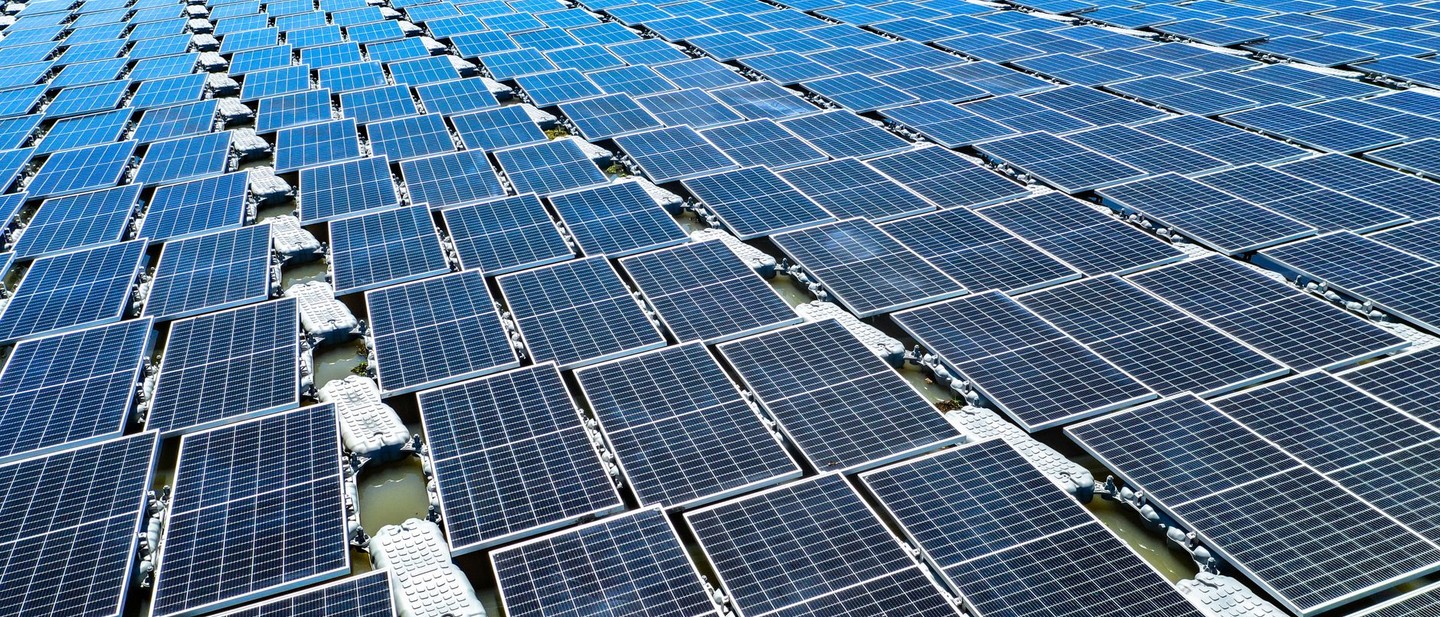
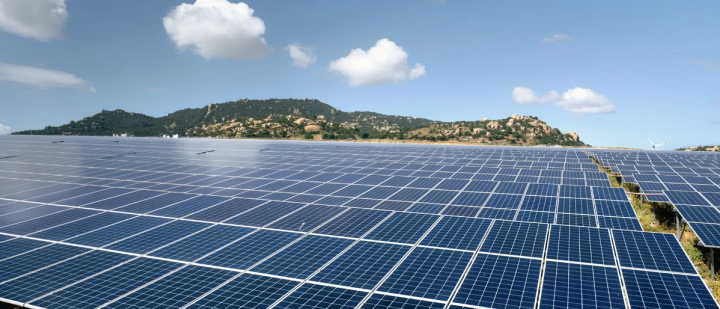
This is the detail worth getting exactly right, since it changes the engineering approach entirely. The panels are mounted on pile-supported structures, fixed on steel piles driven into the water bottom, standing rigid above the water surface. This is a meaningfully different engineering approach from traditional buoyant floating solar, which rests on HDPE or concrete pontoons that flex with wave and water-level movement.
The choice is deliberate and typhoon-driven: a rigid, piled structure holds up better in the Philippines' typhoon belt than a floating platform designed to move with the water. The nearly 700,000 modules across the portfolio sit above active fishponds, allowing aquaculture to continue underneath, the structures are elevated, not floating on the surface, which is what preserves usable water below for fish farming.
Why this matters for EPC scope of work: pile-driving, foundation engineering, and structural load calculations for wind and seismic forces on a fixed elevated structure are a different discipline than mooring system design, anchor points, and dynamic wave-load analysis for a buoyant platform. An EPC bidding into this space, or a similar future project, needs to scope for marine foundation and piling work specifically, not generic "floating solar" float procurement.
Grid Infrastructure: 62 km of New Transmission Lines
The portfolio requires approximately 62 km of new transmission lines across Pampanga and Negros to connect the three sites to the grid. This is a substantial infrastructure component in its own right, separate from the generation assets, and worth factoring into any EPC scope or timeline discussion: transmission line permitting and right-of-way acquisition often run on a different, sometimes longer, timeline than the generation facility itself.
Expected Impact
The developers project the completed portfolio will supply electricity to approximately 278,000 households and reduce carbon emissions by more than 460,000 tons annually, described by the companies as roughly equivalent to planting 21 million trees.
SunAsia's Broader Floating Solar Track Record
Worth understanding as context: SunAsia is not new to water-based solar, but its other major project uses genuinely different technology. In 2023, SunAsia and investment partner BlueLeaf Energy won rights to develop 1.3 GW of true floating solar on Laguna Lake, the Philippines' largest freshwater lake, after winning an auction run by the Laguna Lake Development Authority. That project spans ten lake blocks across roughly 1,000 hectares, with commissioning phased between 2026 and 2030. Unlike the VinEnergo partnership, Laguna Lake genuinely uses buoyant floating platforms. The VinEnergo deal extends SunAsia's footprint geographically, from Luzon into the Visayas, and technically, into pile-supported design for typhoon-exposed sites.
Regulatory and Permitting Considerations
Water-based solar projects of this scale in the Philippines typically require:
- Environmental Compliance Certificate (ECC) from the Department of Environment and Natural Resources (DENR), following an environmental impact assessment.
- Water use and site permits, confirming the project doesn't impair water resources or downstream users, relevant here given the aquaculture co-location.
- Grid interconnection approval from the National Grid Corporation of the Philippines (NGCP) or the relevant local distribution utility, and compliance with current Grid Code requirements.
- Foreign ownership structuring. VinEnergo, as a Vietnamese entity, benefits from the Philippines' 2022 liberalization allowing up to 100% foreign ownership of renewable energy generation projects (DOE Circular No. 2022-11-0034), removing what would previously have been a 40% foreign equity cap.
Correcting the National Target: 35% Share, Not 35 GW
The Philippines' actual renewable energy target, under the National Renewable Energy Program 2020-2040 and reaffirmed in the Philippine Energy Plan 2023-2050, is a 35% share of the power generation mix by 2030, rising to 50% by 2040. This is a percentage-of-generation-mix target, not an absolute 35 GW capacity figure. Solar specifically is expected to carry a large share of the buildout: the DOE has referenced roughly 15.3 GW of new solar installations targeted by 2030 as part of reaching the overall 35% goal.
A 422 MWp portfolio is a meaningful, but proportionally modest, contribution toward that target, useful context for sizing this deal's significance without overstating it.
Financing Considerations for EPCs Evaluating Similar Deals
While specific project-level financing terms for this portfolio haven't been publicly detailed beyond the $406 million overall investment figure, general considerations relevant to water-based solar financing in the Philippines include:
- Foreign advisory involvement, as seen here with ING and SGV & Co., is typical for cross-border deals of this scale, both for deal structuring and Philippine regulatory navigation.
- Multi-site portfolios like this one allow lenders to assess risk across a diversified generation base rather than a single-site project, which can improve financing terms relative to a standalone plant.
- Aquaculture co-location introduces a distinct stakeholder and permitting consideration, since the project's environmental and social approval depends partly on demonstrating continued fishpond viability underneath the structures, not just standard land-use or water-use sign-off.
Action Points for EPCs Watching This Space
- Scope pile-foundation and marine engineering capability specifically, not generic floating-platform experience, for typhoon-belt water-based solar work.
- Track transmission line permitting separately from generation-site permitting, given the 62 km scope here; right-of-way timelines can become the critical path.
- Understand the foreign ownership landscape, the 2022 liberalization to 100% foreign ownership is directly relevant to any EPC working with foreign developers entering the Philippine market, as VinEnergo is here.
- Distinguish pile-supported and buoyant floating solar explicitly in any client-facing material, they involve different engineering disciplines, risk profiles, and typically different cost structures.
Frequently Asked Questions
Q1. Is the VinEnergo-SunAsia project floating solar or a different technology?
It uses pile-supported structures, panels fixed on steel piles driven into the water bottom, standing rigid above the surface, rather than buoyant floating platforms. This is a deliberate typhoon-resilience choice and a meaningfully different engineering approach from traditional floating solar.
Q2. How much is the VinEnergo-SunAsia solar partnership worth?
Approximately $406 million (roughly €357.3 million), covering 422 MWp across three sites in Pampanga and Negros Occidental, announced June 26, 2026.
Q3. When will the VinEnergo-SunAsia solar projects be completed?
The three plants, in Macabebe, Sagay, and Silay, are targeted for commissioning between 2027 and 2028.
Q4. What permits does a project like this require?
Four main approvals: an Environmental Compliance Certificate from DENR following an environmental impact assessment, water use and site permits confirming the project won't impair water resources or downstream users, grid interconnection approval from NGCP or the relevant distribution utility, and, for foreign-backed projects like this one, confirmation of ownership structure under the Philippines' 2022 foreign investment liberalization.
Q5. How does aquaculture co-location affect environmental approval?
It adds a distinct layer to the standard water-use and environmental review. Because the pile-supported structures are designed to preserve usable water and continued fish farming underneath, the project's environmental and social approval depends partly on demonstrating that aquaculture activity can continue viably, not just on standard land-use or water-resource sign-off. This is a specific condition tied to the co-location model, not a generic requirement for all water-based solar.
Q6. What does this deal signal for solar EPCs working in the Philippines?
Two things worth noting. First, it confirms foreign developers are actively entering the Philippine market at scale under the liberalized ownership rules, which creates partnership and subcontracting opportunities for local EPCs like SunAsia beyond this specific deal. Second, it signals growing demand for marine and pile-foundation engineering capability specifically, a narrower, more specialized skill set than standard ground-mount or rooftop EPC work, and one that's likely to become more valuable as typhoon-belt water-based solar expands.
Q7. What is the Philippines' actual renewable energy target for 2030?
A 35% share of the power generation mix by 2030, rising to 50% by 2040, under the National Renewable Energy Program 2020-2040. This is a percentage target, not an absolute 35 GW capacity figure.
Q8. Can a foreign company like VinEnergo fully own a Philippine solar project?
Yes. Since December 2022, foreign investors can own up to 100% of a Philippine renewable energy project, following DOE Circular No. 2022-11-0034, which removed the previous 40% foreign equity cap.
Q9. Is this the same as SunAsia's Laguna Lake floating solar project?
No, they're separate. The Laguna Lake project (1.3 GW, with partner BlueLeaf Energy) uses genuine buoyant floating platforms and is a different, earlier-secured development. The VinEnergo partnership is a new, separate portfolio using pile-supported structures at different sites.
Sources
- PV Tech, "VinEnergo, SunAsia to develop 422MWp floating solar portfolio in Philippines" – confirms deal structure, site breakdown, CEO quote, advisors (ING, SGV & Co.), and module count.
- Vingroup, official press release, "VinEnergo Partners With SunAsia Energy To Develop Solar-On-Water Projects Integrated With Aquaculture In The Philippines" – primary source confirming site capacities, household and emissions impact figures.
- IndexBox, "VinEnergo Enters Philippine Market with SunAsia Energy for 422 MWp Floating Solar" – confirms transmission line scope (62 km) and SunAsia's Laguna Lake precedent with BlueLeaf Energy.
- TechTimes, "Floating Solar Hits 422 MW in Philippines: Pile-Supported Design Preserves Fish Below" – confirms pile-supported structure type, deal value ($406 million), and announcement date/location (June 26, 2026, Hanoi).
- Renewables Now, "SunAsia, VinEnergo to invest in 422 MWp of Philippine floating PV" – corroborates deal value in USD and EUR.
- Philippine News Agency, "New RE plan targets 35% share of power generation by 2030" – confirms the National Renewable Energy Program 2020-2040 target structure.
- Global Trade Alert / UNCTAD Investment Policy Hub coverage of DOE Circular No. 2022-11-0034 – confirms the 100% foreign ownership liberalization for Philippine renewable energy projects.
Related Articles
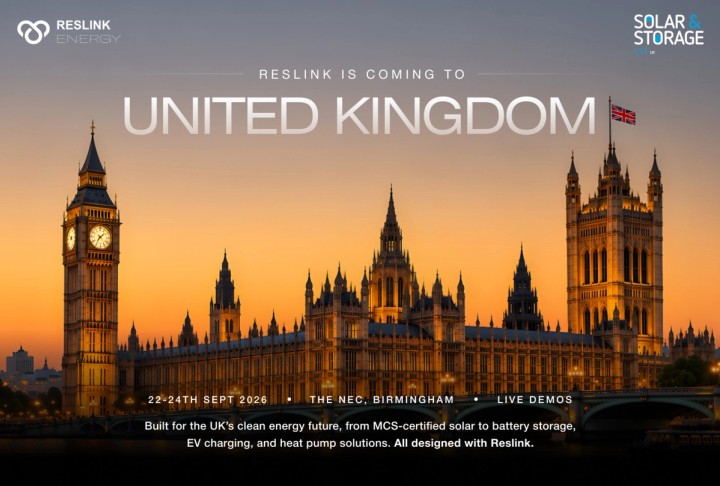
Solar & Storage Live UK 2026: EPC Guide
NEC Birmingham, September 22-24. Confirmed speakers, six conference tracks, and the live grid-connection fight EPCs should actually watch.

Solar Design Software for EPCs in Botswana
Botswana's Rooftop Solar Programme runs through BPC. What EPCs need for compliance, and how Reslink fits a market just getting started.
US Energy Storage Hits Record 20.2 GWh in Q2 2026
US energy storage hit a record 20.2 GWh in Q2 2026, 44% paired with solar. What the SEIA/Benchmark data signals for solar EPCs globally.