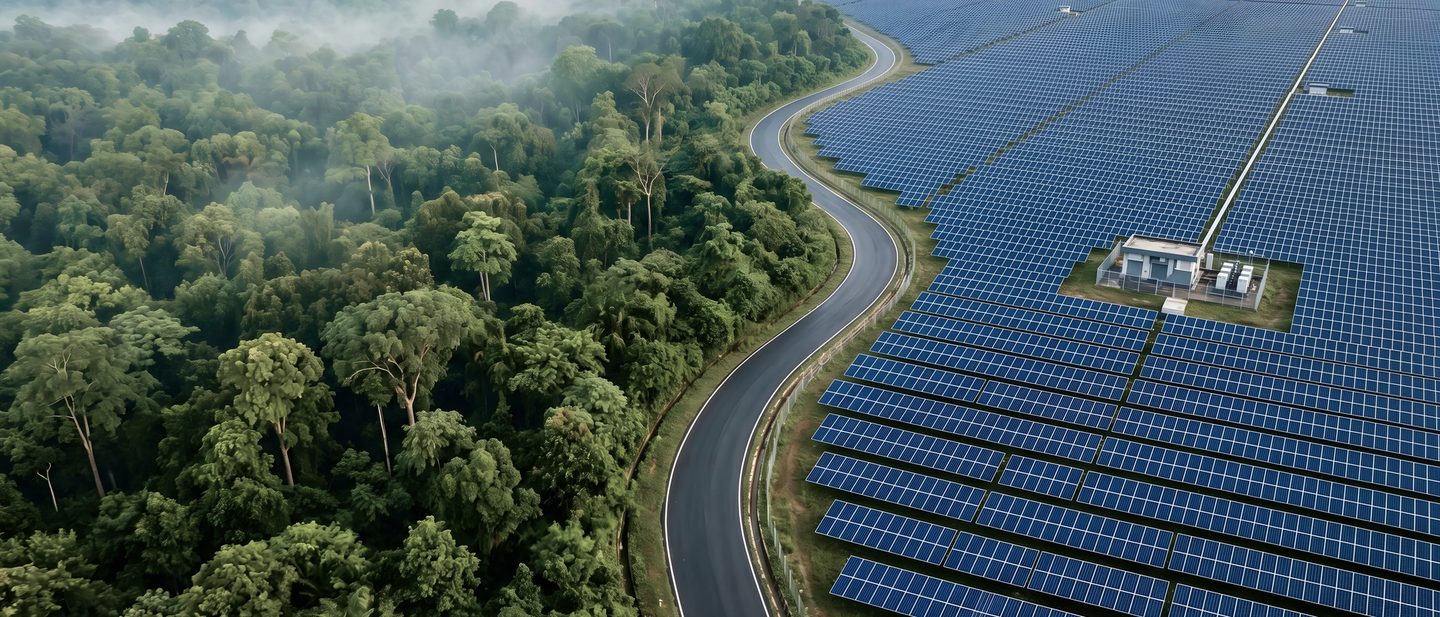
PM KUSUM 2.0 Launch Date, Budget and EPC Guide 2026
Last updated October 13, 2026 (Originally published April 21, 2026)
October 1: MNRE extended financial closure for Components A and C to November 30, 2026. Completion stays March 31, 2027, with no further extension.
September 9: Union Minister Pralhad Joshi says PM KUSUM 2.0 is "set to be announced anytime," speaking at the curtain-raiser for the 7th Agrivoltaics World Conference 2026 (October 21-23, New Delhi).
March: MNRE extends the PM KUSUM Phase 1 completion deadline to March 31, 2027 for projects with a PPA or NTP issued on or before December 31, 2025 (memorandum of March 28). The minister confirms a 10 GW agrivoltaics component and the Rs 50,000 crore outlay figure.
PM KUSUM Phase 1 Is Still Active — What Changed in March 2026
On March 28, 2026, MNRE issued an official memorandum extending Phase 1 completion timelines to March 31, 2027 for eligible projects. The extension came after multiple representations from developers facing financing delays — banks and financial institutions had been reluctant to extend loans beyond the original March 31, 2026 deadline.
The extension applies to all three components, but only for projects where Power Purchase Agreements (PPAs) or Notices to Proceed (NTPs) were issued on or before December 31, 2025. Projects that had not reached this milestone by that date are not covered and will need to be evaluated under PM KUSUM 2.0 when it is formally notified.
MNRE also clarified that committed liabilities under Phase 1 will be carried forward into PM KUSUM 2.0, meaning the financial commitments already made to Phase 1 projects will be honoured even as the scheme transitions to its successor. MNRE has urged states to actively coordinate with banks to expedite financial closure for ongoing projects within the revised timelines.
Revised Component-Wise Deadlines — PM KUSUM Phase 1
Component | Description | Milestone | Revised Deadline |
|---|---|---|---|
Component A & C (FLS) | Feeder Level Solarisation projects under | Financial Closure | November 30, 2026 (extended on October 1) |
Component A & C (FLS) | Feeder Level Solarisation projects under | Project Commissioning | March 31, 2027 |
Component B & C (IPS) | Individual Pump Solarisation under | Project Commissioning | September 30, 2026 |
Where Phase 1 Actually Landed
The original blog referenced 10,203 MW installed across all components. Saur Energy's March 2026 report, citing MNRE data as of December 2025, puts the figures as follows:
Total installed: approximately 10,950 MW across all three components, against a 34,800 MW target. More than 21.77 lakh farmers have benefitted from the scheme to date. Maharashtra has received the highest Central Financial Assistance disbursement at over Rs 4,486 crore, followed by Haryana (Rs 1,307 crore), Rajasthan (Rs 957 crore), Uttar Pradesh (Rs 420 crore), and Gujarat (Rs 330 crore).
Component A has been the most underperforming relative to target, at roughly 7% of the 10,000 MW Component A target. Component C (feeder-level solarisation) has shown strong momentum in FY2025 and is where PM KUSUM 2.0 will concentrate its expanded efforts. This is the component most relevant to EPCs working at district grid scale.

What PM KUSUM Was — and Why Phase 1 Fell Short of Its Target
PM KUSUM — Pradhan Mantri Kisan Urja Suraksha evam Utthaan Mahabhiyan — was India's flagship agricultural solar programme, launched in 2019. It had three components: Component A set up small solar plants (500 kW to 2 MW) on farmer's land sold to DISCOMs; Component B replaced diesel irrigation pumps with solar pumps; and Component C solarised grid-connected agricultural pumps at the feeder level.
The total Phase 1 outlay was Rs 34,422 crore against a target of 34,800 MW. The scheme fell well short of that target, installing approximately 10,950 MW by December 2025 — roughly 31% of target capacity. The gap is largely explained by three structural problems that PM KUSUM 2.0 is being designed to fix.
The financing problem: Component A projects regularly stalled at the financial closure stage because banks were reluctant to lend against farmer-held land. High margin money requirements deterred farmer participation. This is why MNRE needed to extend timelines to March 2027 — and why PM KUSUM 2.0 plans to bring Component A projects under the Agri Infrastructure Fund for concessional credit.
The DISCOM PPA problem: Many Component A projects stalled because DISCOMs were reluctant to commit to buying power from farmers at regulated tariffs. The PPA negotiation between a small farmer-developer and a state DISCOM is structurally unequal and slow. PM KUSUM 2.0 is expected to strengthen payment security mechanisms to reduce DISCOM counterparty risk.
The DCR/ALMM problem: MNRE reaffirmed DCR rules for PM KUSUM Component C projects in October 2025, confirming it would not provide further relaxation of DCR provisions. From June 1, 2026, all PM KUSUM projects commissioning on or after that date must use ALMM List-II certified cells — adding a procurement constraint on top of the existing ALMM List-I module requirement. This intersection with the ALMM mandate is the most immediate compliance issue for EPCs executing Phase 1 projects today.
ALMM mandate applies to PM KUSUM: PM KUSUM is explicitly a government scheme and is covered by the June 1, 2026 ALMM List-II mandate. Any PM KUSUM project — Phase 1 or future 2.0 — commissioning on or after June 1, 2026 must use modules made from ALMM List-II certified domestic cells. This applies to the extended deadline projects too. See the full ALMM compliance guide on Reslink for the current supplier verification process.
Where PM KUSUM 2.0 Actually Stands Today
PM KUSUM 2.0 launch date has not yet been formally announced by MNRE as of this update. The clearest signal yet came on September 9, 2026, when Union Minister Pralhad Joshi told reporters at the curtain-raiser for the 7th Agrivoltaics World Conference 2026 that the scheme is "set to be announced anytime," and that its total outlay is expected to exceed the Rs 50,000 crore figure already indicated. The conference itself runs October 21-23, 2026 at Bharat Mandapam, New Delhi, a plausible window to watch, though not a confirmed notification date. Watch the MNRE website for the formal notification.
Two further signals have come since September. On August 7, the minister told the CII International Energy Conference that PM-KUSUM 1 is complete and closed, and that PM-KUSUM 2 may follow very shortly. On October 1, MNRE said it extended Component A and C financial closure while it finalises the details of PM KUSUM 2.0, and added that completion will not be extended beyond March 31, 2027. Trade press expects battery storage in 2.0, partly because the National Institute of Solar Energy issued a draft in August for solar pump controller specifications that support storage and grid interaction. That is the trade press's reading, not an MNRE statement.
The Union Budget for FY2026-27 was presented on February 1, 2026. The annual budget allocation for KUSUM rose from approximately Rs 2,600 crore in the FY2025-26 budget estimate to approximately Rs 5,000 crore in FY2026-27, an increase of roughly 92%, per PRS India's primary Demand for Grants analysis of the Union Budget 2026-27. This confirms government intent. However, PM KUSUM 2.0 as a separately structured scheme with its own guidelines, component definitions, per-MW benchmark costs, and state-wise targets has not yet been formally notified by MNRE as of this update.
What has been confirmed by government officials and ministerial statements:
- Total outlay: Expected at Rs 50,000 crore — a 45% increase from Phase 1's Rs 34,422 crore, according to pre-budget official sources cited by BusinessToday and Down to Earth
- 10 GW agrivoltaics component: Confirmed by Union Minister Pralhad Joshi at the 4th National Agro-RE Summit, March 2026. Agrivoltaic income could raise farmer earnings from approximately Rs 60,000 per acre to over Rs 1 lakh per acre when electricity generation is combined with crop cultivation, per the minister's statement
- BESS integration: Battery Energy Storage Systems to store daytime solar and dispatch during evening peak hours, improving grid reliability for agricultural feeders
- Feeder solarisation focus: Component C is seen by MNRE as the most scalable element, and PM KUSUM 2.0 will sharpen this focus
- Component A financing fix: Projects to be brought under Agri Infrastructure Fund for concessional credit, addressing the primary reason Component A underperformed in Phase 1
- Phase 1 continuity: Committed liabilities from Phase 1 carry forward into 2.0. Phase 1 projects with PPAs signed by December 31, 2025 continue under revised timelines, eventually absorbed into the 2.0 framework
What is not yet confirmed: per-MW benchmark costs for each component, state-wise capacity allocations, updated subsidy structure and percentages, BESS technical specifications, and the agrivoltaics structural height and spacing standards specific to 2.0.
For EPCs: watch the MNRE PM KUSUM page for the formal notification. When it appears, it will include the per-MW benchmark costs, subsidy structure, and state-wise targets that determine whether a project is commercially viable in your state. This is the document that opens the competitive window.
The Agrivoltaics Angle — A New Project Type for EPCs
The 10 GW agrivoltaics target is significant for EPCs who have never designed this project type. Agrivoltaics means solar panels mounted on elevated structures that allow farming to continue underneath. Panels are spaced more widely than in conventional ground-mounted installations to allow adequate sunlight to reach crops below. This creates a dual-income model for farmers: crop revenue continues alongside 25 years of solar generation income.
For EPCs, agrivoltaics means elevated steel mounting structures that add a material cost premium per kW compared to standard ground-mounted frames. The exact premium depends on structure height, span, and local steel costs — confirm current estimates with your structural steel supplier before project-level financial modelling. The premium is offset by access to farmland that would otherwise be unavailable for solar, and by farmer participation rates that are higher than standard Component A projects because land is not converted away from agriculture.
States like Gujarat, Andhra Pradesh, and Rajasthan have existing agrivoltaics pilot experience from Phase 1 initiatives. EPCs based in these states who want to be positioned for PM KUSUM 2.0 should start building agrivoltaic design capability before the scheme is formally notified and vendor competition intensifies.
Why Component A Has Struggled — and How 2.0 May Fix It
Component A had the most difficulty in Phase 1. Many projects stalled at the PPA stage because DISCOMs were reluctant to commit to buying power from farmers at regulated tariffs. Land availability was a challenge in states where agricultural land is politically sensitive. And financing — the most acute bottleneck — stalled hundreds of projects when banks required collateral that small and marginal farmers could not provide.
The April 2026 CEEW-CSTEP-IISD report estimates that solarising just 10% of agricultural electricity demand could save states significant sums over 25 years: Rs 2,543 crore in Rajasthan, Rs 6,305 crore in Madhya Pradesh, Rs 3,113 crore in Karnataka, and Rs 1,935 crore in Tamil Nadu. Decentralised solar irrigation already costs Rs 3 to 4 per unit — far below utilities' Rs 6 to 7 per unit supply cost. The economic case for PM KUSUM 2.0 is stronger than Phase 1, precisely because Phase 1 demonstrated the model works where execution was clean.
PM KUSUM 2.0 is expected to address Component A's failures by routing Component A projects through the Agri Infrastructure Fund for concessional credit, incorporating stronger payment security through escrow-like mechanisms already proven in states like Madhya Pradesh, and using the agrivoltaics structure to reduce farmer resistance to land-use changes.
Frequently Asked Questions
Q1. Is PM KUSUM still active in 2026, or did it end in March 2026?
PM KUSUM Phase 1 is still active in 2026, but only for legacy projects. MNRE extended the completion deadline on March 28, 2026 to March 31, 2027 for projects where Power Purchase Agreements (PPAs) or Notices to Proceed (NTPs) were issued on or before December 31, 2025. If your PPA or NTP was signed by that date, you are covered by the extension. Projects without a PPA or NTP by December 31, 2025 are not covered and will need to be evaluated under PM KUSUM 2.0 when it is formally notified. On August 7, 2026 the Union Minister said PM-KUSUM 1 is closed and that a second phase may follow very shortly. On October 1, 2026 MNRE extended financial closure for Components A and C to November 30, 2026. The extensions followed widespread financing delays, as banks were reluctant to lend beyond the original March 2026 deadline.
Q2. When was PM KUSUM originally launched?
The Cabinet Committee on Economic Affairs approved PM KUSUM on February 19, 2019, and the scheme launched in March 2019 with a Rs 34,422 crore outlay. That is the original scheme, sometimes referred to as PM KUSUM Phase 1. PM KUSUM 2.0, the successor scheme covered throughout this guide, has not yet been formally notified, and its own launch date remains unconfirmed as of this update.
Q3. When will PM KUSUM 2.0 be formally notified with guidelines?
As of this update, PM KUSUM 2.0 has not yet been formally notified by MNRE with full guidelines, but the signal is stronger than at any earlier point. The Union Budget 2026-27 (February 1, 2026) confirmed the annual KUSUM budget allocation rose from roughly Rs 2,600 crore to Rs 5,000 crore, an increase of approximately 92%, and officials have indicated a total scheme outlay of Rs 50,000 crore. On September 9, 2026, Union Minister Pralhad Joshi told reporters the scheme is "set to be announced anytime," speaking at the curtain-raiser for the 7th Agrivoltaics World Conference 2026, which runs October 21-23 in New Delhi. He also said PM KUSUM 2.0's outlay is expected to exceed the Rs 50,000 crore figure already indicated. Even with this, no notification date has actually been confirmed, and the formal MNRE notification, which will include per-MW benchmark costs, subsidy structure, and state-wise targets, has not yet been released. On October 1, MNRE extended financial closure for Components A and C to November 30, 2026, saying it is still finalising the details of PM KUSUM 2.0. Watch the MNRE PM KUSUM page directly for the official notification.
Q4. What are the revised deadlines for my PM KUSUM Phase 1 project?
The revised deadlines depend on which component you are under and whether your PPA or NTP was issued by December 31, 2025. For Component A and Component C Feeder Level Solarisation (FLS) projects: financial closure was extended on October 1, 2026 to November 30, 2026, and commissioning is due by March 31, 2027. For Component B and Component C Individual Pump Solarisation (IPS) projects: commissioning was due by September 30, 2026. That date has passed, and the October 1 extension covered financial closure for Components A and C only, so confirm your status with your state nodal agency. MNRE has stated that no further extension of the completion timeline will be granted beyond March 31, 2027. For other deadlines, any extension will be considered only on a case-by-case basis, so do not assume a further blanket extension will come. Prioritise financial closure for Component A and C projects before November 30, 2026, as this is the most critical near-term milestone.
Q5. Does the ALMM List-II mandate apply to PM KUSUM projects?
Yes, explicitly. PM KUSUM is a government scheme and is directly named in the MNRE ALMM framework as a programme requiring full ALMM compliance. Any PM KUSUM project, Phase 1 or future PM KUSUM 2.0, commissioning on or after June 1, 2026 must use modules that are: (1) on ALMM List-I for modules, and (2) manufactured using cells from ALMM List-II certified domestic cell manufacturers. MNRE reaffirmed DCR rules for PM KUSUM Component C projects in October 2025 and explicitly stated it would not provide further relaxation of DCR provisions. The June 1, 2026 commissioning deadline determines ALMM List-II applicability, not when the PPA was signed. A project with a December 2025 PPA commissioning after June 1, 2026 must use ALMM List-II compliant cells. Verify your module supplier's current status on the MNRE ALMM portal (12th revision, October 8, 2026) before placing any procurement orders for post-June projects.
Modules supplied to PM KUSUM projects also fall under MNRE's May 2026 warranty SOP, covered in MNRE Solar Module Warranty SOP 2026.
Q6. What is agrivoltaics and how does it differ from a standard solar plant?
Agrivoltaics means solar panels installed on elevated structures at least 2.1 metres above the ground, allowing farming to continue underneath. Unlike a standard ground-mounted plant that occupies the land fully, an agrivoltaic plant shares the land with crops or animal husbandry. The panels are typically spaced more widely to allow sunlight to reach the crops below. For EPCs, this means elevated steel mounting structures that cost more than standard ground-mounted structures. Confirm the current premium with your structural steel supplier. The trade-off is powerful: farmers earn from both crops and solar generation, with the solar income helping to offset the additional structure cost over the project's 25-year life. For EPCs, agrivoltaic projects access farmland that would otherwise be unavailable for solar, since farmers retain agricultural use and typically show lower resistance to the project. This makes Component A viability materially higher under the agrivoltaic model compared to standard ground-mount on agricultural land.
Q7. What size projects will fall under PM KUSUM 2.0 Component A?
Phase 1 Component A covered decentralised solar plants of 500 kW to 2 MW each, set up by farmers, cooperatives, panchayats, or Farmer Producer Organisations on barren or fallow land. The power was sold to the local DISCOM at a pre-fixed tariff. PM KUSUM 2.0 is expected to maintain a similar size range but may allow slightly larger installations, particularly for agrivoltaic projects where elevated structure costs make slightly larger capacities more economical. Final size limits will be confirmed in the official MNRE notification. EPCs who have handled Component A projects before are well positioned for 2.0. The design complexity increases with agrivoltaics, but the core procurement, EPC contracting, and DISCOM coordination processes are familiar territory.
Q8. My Phase 1 project PPA was signed in January 2026, am I covered by the extension?
No. The extension applies only to projects where PPAs or NTPs were issued on or before December 31, 2025. A PPA signed in January 2026 falls outside the eligibility window. Projects not covered by the extension will need to be evaluated under PM KUSUM 2.0 when it is formally notified. MNRE indicated that committed liabilities from Phase 1 will be carried forward into 2.0, which may provide a pathway for projects in this situation. Contact your state nodal agency and the MNRE implementing team for your specific project's options. Do not assume the extension automatically applies. Confirm your PPA issuance date against the December 31, 2025 cutoff directly from your project documentation.
Q9. Is PM KUSUM 2.0 launched?
No, not yet. As of this update, MNRE has not formally notified PM KUSUM 2.0. Phase 1 continues only for legacy projects through March 2027, with financial closure for Components A and C extended to November 30, 2026. The KUSUM budget allocation has risen and the minister has stated a 10 GW agrivoltaics component for 2.0, but the formal notification with benchmark costs and state-wise targets has not been released. Check the MNRE PM KUSUM page directly for the official announcement.
Sources
- Energetica India — March 30, 2026 — energetica-india.net — MNRE extends PM KUSUM project completion deadline to March 31, 2027; covers PPAs and NTPs issued on or before December 31, 2025
- Saur Energy — March 30, 2026 — saurenergy.com — Component-wise revised deadlines; Phase 1 installed capacity data (720 MW / 4,400 MW / 5,830 MW); state-wise fund disbursements; committed liabilities to carry forward into PM KUSUM 2.0
- Renewable Watch — March 31, 2026 — renewablewatch.in — Component A and C FLS: financial closure September 30, 2026; commissioning March 31, 2027. Component B and C IPS: commissioning September 30, 2026
- EQ Magazine — March 28, 2026 — eqmagpro.com — Full component-wise deadline table; eligibility condition (PPA or NTP by December 31, 2025)
- Energetica India — March 11, 2026 — energetica-india.net — Union Minister Pralhad Joshi confirms 10 GW agrivoltaics component at 4th National Agro-RE Summit; farmer income increase to Rs 1 lakh per acre with agrivoltaics
- BusinessToday — January 29, 2026 — businesstoday.in — Rs 50,000 crore total outlay expected; 45% increase; BESS, feeder solarisation focus; concessional financing for Component A via Agri Infrastructure Fund
- Tata Power Blog — February 2, 2026 — tatapower.com — Union Budget 2026-27: KUSUM scheme annual allocation rose from Rs 2,600 crore to Rs 5,000 crore. Note: this is approximately a 92% increase.
- Down to Earth — December 30, 2025 — downtoearth.org.in — Government preparing PM KUSUM 2.0 ahead of Union Budget; Component C feeder solarisation identified as primary focus; Phase 1 framework concluding as scheduled
- IISD / CEEW / CSTEP — April 8, 2026 — iisd.org — State savings estimates from 10% agricultural solarisation: Rajasthan Rs 2,543 crore, Madhya Pradesh Rs 6,305 crore, Karnataka Rs 3,113 crore, Tamil Nadu Rs 1,935 crore over 25 years
- MNRE — Primary — mnre.gov.in — PM KUSUM scheme guidelines and official programme page
- Mercom India — October 2025 — mercomindia.com — MNRE reaffirms DCR rules for PM KUSUM Component C; no further DCR relaxation; PPA deadline December 31, 2025
Related Articles

Maryland Net Metering Cutoff 2027: Confirmed vs Open for EPCs
Maryland closes net metering to new systems at the earlier of 3,000 MW or July 1, 2027. What is set, what the PSC is still deciding.
Delhi Free Rooftop Solar for EPCs: ULA Route vs Open Route
Delhi pays up to ₹78,000 on top of PM Surya Ghar, with a free ULA route under 400 units. What EPCs can sell on each route.
BS 7671 Amendment 4: What Solar and Battery EPCs Must Do
Amendment 4 to BS 7671 becomes the only current edition on 15 October 2026. What the new battery chapter, forms and transition rules mean for EPCs.