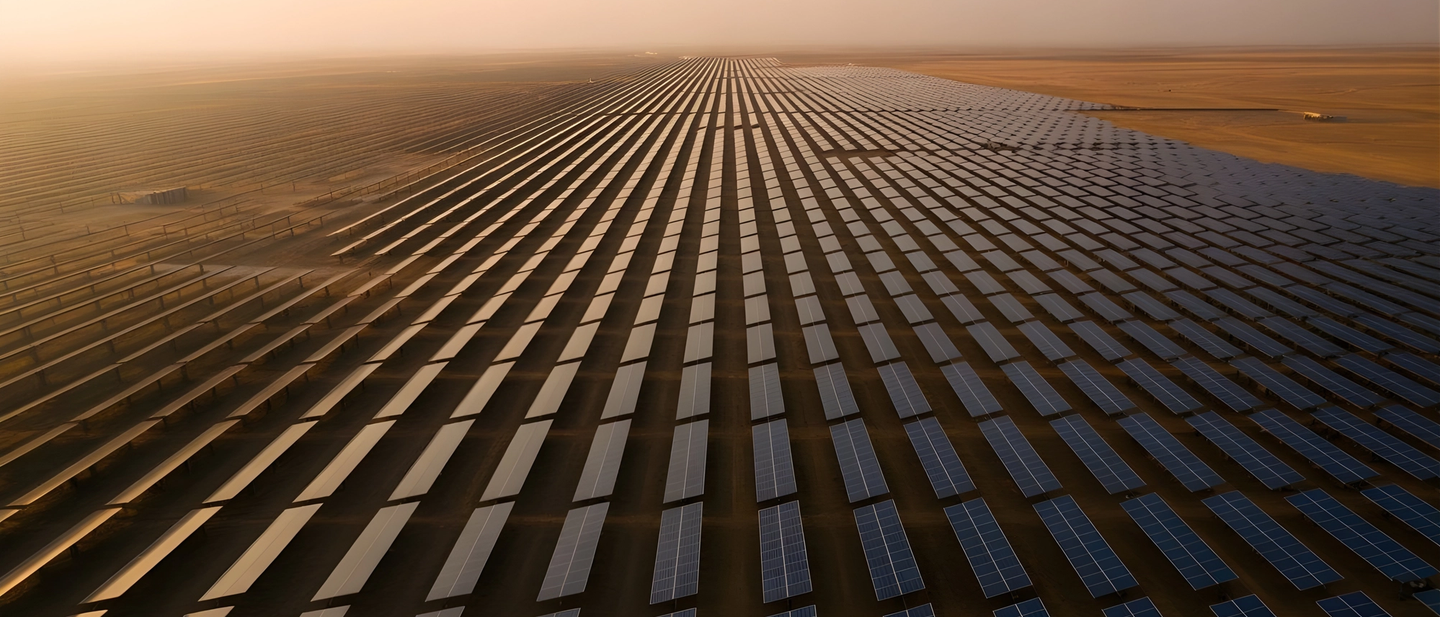
India Is Set to Become the World’s Second Largest Solar Market in 2026
Where India's Solar Market Actually Stands Right Now
India's installed solar capacity reached **162.15 GW as of June 30, 2026**, confirmed by Union Minister Pralhad Joshi in a July 22, 2026 written reply to the Lok Sabha, a 57-fold increase from 2.82 GW in 2013-14. The breakdown: 125.60 GW utility-scale, 30.11 GW rooftop, and 6.43 GW off-grid. Solar additions specifically grew 43% year-over-year in the first half of 2026, with 26.34 GW added between January and June.
NSEFI's April 2026 projection that India would become the world's second largest solar market this year, by annual installations, not total installed capacity, remains directionally supported by this pace. In total installed capacity, India remains third globally behind China and the US, per IRENA's Renewable Energy Statistics 2026, a distinction worth being precise about with clients: India is closing the annual-installation gap fast, not the cumulative-capacity gap.
The reason is straightforward: India's deployment pace has accelerated while the US works through policy uncertainty following changes to federal clean energy incentives, and European markets mature into slower, more incremental growth.
What Got Us Here
The jump from 100 GW to 150 GW in 14 months was driven by a combination of forces working together for the first time. Utility scale ground mounted projects saw 106% growth compared to FY2025, adding around 34.8 GW. Rooftop solar, pushed by PM Surya Ghar, saw a sharp rise in household demand. Additionally, commercial and industrial (C&I) solar crossed the 10 GW mark for the first time, driven by the Green Energy Open Access framework and growing corporate demand for clean power.
India's Manufacturing Chain: Where the Real Gap Still Is
This is where the market's real structural weakness sits, and it's worth understanding precisely rather than gesturing at broadly. As of June 30, 2026, per the same parliamentary reply, India had built roughly **42 GW of solar PV module manufacturing capacity, 11.5 GW of cell manufacturing capacity, and only about 2 GW of ingot-wafer manufacturing capacity** under the PLI scheme specifically, against total PLI awards covering 48.3 GW across the full polysilicon-to-module chain. The gap widens the further upstream you go: India has real module assembly capacity, meaningfully less cell capacity, and almost no domestic polysilicon or wafer production, meaning the country still imports the bulk of its raw polysilicon and wafers even as finished-module manufacturing has scaled.
This is exactly why ALMM List-II, requiring domestically-produced cells (not just modules), has been such a live compliance issue through 2026, cell capacity is the actual bottleneck, not module assembly. The upstream gap, polysilicon and wafers specifically, remains the least developed link in the chain and the one most exposed to import dependency and price volatility.
The financial results are visible in trade data: solar module imports fell from $4,354 million in FY2023-24 to $994 million in FY2025-26, a genuine substitution effect, alongside roughly Rs 73,400 crore invested under the PLI scheme as of June 30, 2026. The Basic Customs Duty on imported panels and ALMM compliance requirements have both reinforced this shift.

What This Means for EPCs Right Now
For Indian solar EPCs, the market expanding to this scale is positive in one important way: there is more work available than at any point in history. Government tenders are being issued steadily. PM Surya Ghar applications continue to flow. C&I demand is rising as companies face Renewable Consumption Obligations. And PM KUSUM 2.0 is expected to unlock another large wave of agricultural solar.
The challenge is on the supply side. ALMM compliance from June 1 will tighten the pool of available modules for government and subsidy projects. Copper costs remain elevated. Project timelines are under pressure because DISCOM approvals have not scaled as fast as the market. EPCs who are prepared — with compliant supply chains locked and efficient project workflows in place — are in a strong position. Those who are not will face delays and cost overruns as the June deadline approaches.
Publicly Listed Companies in India's Solar Value Chain
For context on who's building this capacity, several major Indian solar-sector companies are publicly listed, spanning different parts of the value chain: module and cell manufacturers include Waaree Energies and Premier Energies; Adani Green Energy and Tata Power operate significant renewable generation and EPC businesses; other listed names with solar-sector exposure include Websol Energy System and Solex Energy. This is a factual overview of who operates in the space, not investment guidance, Reslink isn't a financial advisor, and stock performance depends on many factors beyond the sector growth described in this piece. Anyone evaluating these companies as investments should do their own research or consult a qualified financial advisor rather than treat sector growth alone as a signal.
The Next Three Years
NSEFI projects India will need 280 to 300 GW of solar to hit its 500 GW non fossil target by 2030. From 150 GW today, that means adding roughly 130 to 150 GW in the next four years — or about 35 to 40 GW per year. At the pace India set in FY2026, this is achievable. For EPCs, this pipeline is enormous. Residential rooftop alone, with PM Surya Ghar targeting 1 crore more households, represents millions of installations. The C&I segment is just starting. And energy storage, which NSEFI forecasts will hit double digits in capacity within 18 months, will create an entirely new project type for EPCs to work on.

Frequently Asked Questions
Common questions about India's solar growth and what it means for EPCs.
Which country is now the world's largest solar market?
China remains the world's largest solar market by a significant margin — both in total installed capacity and annual additions. India is set to become the second largest in 2026 by annual installations, overtaking the US and EU. In total installed capacity, India is now third globally after China and the US.
How does the 150 GW milestone affect solar prices in India?
The milestone itself does not directly change prices. But the volume growth has had two opposing effects: more domestic manufacturing capacity has kept module prices from rising as much as they could have, but the ALMM compliance requirement, copper prices, and the removal of China's VAT rebate have all pushed costs upward. The net result is that 2026 project costs are approximately 20 to 25% higher than 2025 levels despite the scale of the market. The GST cut to 5% from September 2025 partially offsets this.
What is PM KUSUM 2.0 and when is it expected?
PM KUSUM 2.0 is the next phase of the agricultural solar scheme, which solarises irrigation pumps for farmers and supports small decentralised solar plants on agricultural land. The original PM KUSUM scheme ran through March 2026. PM KUSUM 2.0 has been referenced by NSEFI and MNRE as an upcoming programme but has not yet been formally notified with full details as of this update.
EPCs should watch for MNRE notifications in the coming months for detailed guidelines and capacity targets.
Sources
- NSEFI via Saur Energy — saurenergy.com — "In 2026, India To Be Second Largest Solar Market Globally" (April 12, 2026)
- JMK Research — jmkresearch.com — FY2026 solar capacity data: 44.6 GW solar added, 87% growth, 6 GW wind
- IndexBox — indexbox.io — India FY2026 renewable boom: 275 GW total, 55% solar share (April 2026)
- ANI / Lok Sabha reply — July 22, 2026 — India's installed solar capacity: 162.15 GW as of June 30, 2026, full breakdown by segment, PLI manufacturing capacity figures, import substitution data.
- Business Standard — July 17, 2026 — H1 2026 renewable additions: 30.6 GW total, solar up 43% YoY (26.34 GW added Jan-June).
Related Articles
BS 7671 Amendment 4: What Solar and Battery EPCs Must Do
Amendment 4 to BS 7671 becomes the only current edition on 15 October 2026. What the new battery chapter, forms and transition rules mean for EPCs.
CEA April 2027 Rules for Solar and BESS: Confirmed vs Open
Two CEA rule sets for solar and BESS start 1 April 2027, and a draft list of safety standards is open until 15 November. What EPCs can rely on.

REAP Solar Grant 2026: Build First, Then Apply, What US EPCs Must Do
USDA's REAP final rule takes effect Oct 16: build first, apply with 12 months of data, 25% grant cap, no cropland ground-mount. What US EPCs must do.