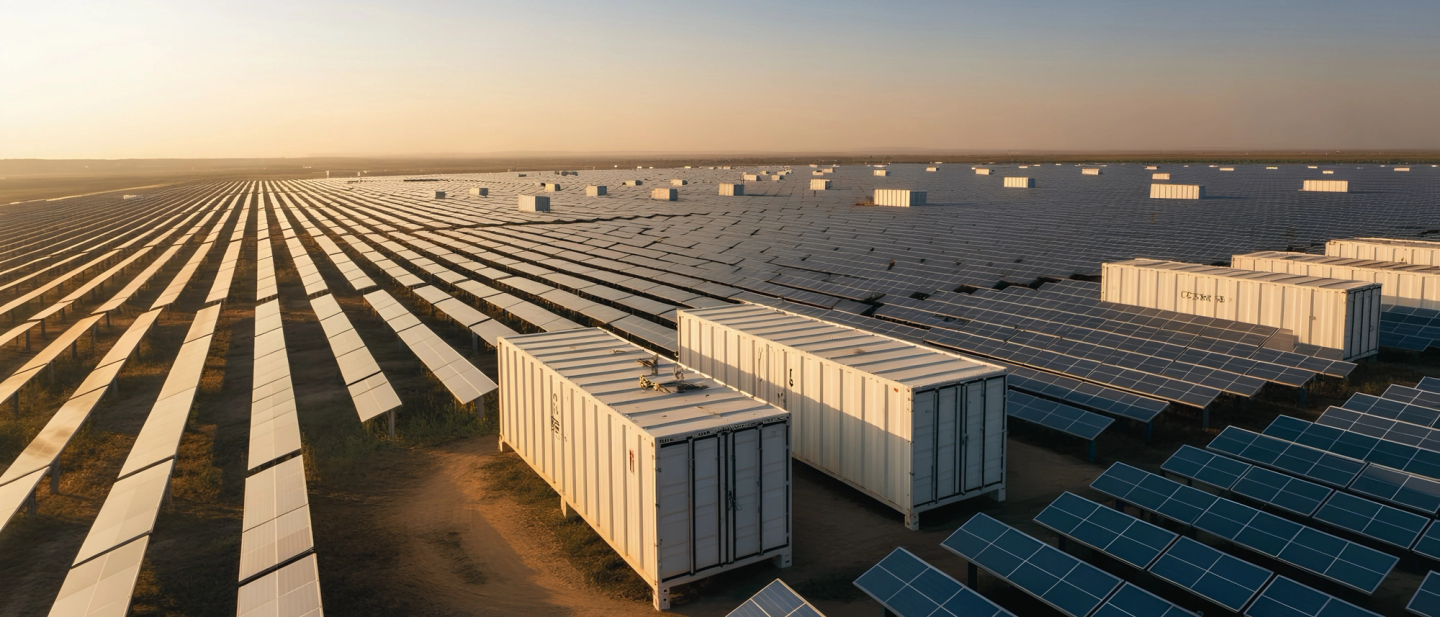
Gujarat BESS Regulations 2026: What the Final Rules Say for EPCs
What GERC Notified and When
The Gujarat Electricity Regulatory Commission published the Grid Interactive Battery Energy Storage System Regulations, 2026 in the Gujarat Government Gazette Extraordinary on October 16, 2026, as Notification No. 10 of 2026. They came into force on publication. This is the state's first dedicated framework for batteries, and it sits alongside the new Gujarat Grid Code notified earlier in October.
The path was short. GERC published the draft on May 12, 2026, took comments from 20 stakeholders and held a public hearing on June 15. In its Statement of Reasons, the Commission said a separate framework was needed to promote grid-interactive storage and give developers regulatory clarity.
The regulations cover planning, procurement, development, operation, scheduling and use of batteries across the state. They apply to generating companies, transmission and distribution licensees, standalone developers, captive plants, prosumers and aggregators.
Where a Battery Can Sit Under the Rules
The rules recognise several ways to deploy storage in Gujarat:
- Co-located with a new or existing renewable or conventional power plant
- Standalone and connected to the grid
- Embedded in the distribution or transmission network
- Behind a customer's meter, under net metering, gross metering, net billing, group net metering or virtual net metering
- Linked to EV charging and battery swapping stations, including vehicle-to-grid and grid-to-vehicle services
For an EPC selling solar plus storage to a factory, the behind-the-meter model is the one to read closely. Regulation 21 lets any consumer or prosumer, including those on net metering or similar arrangements, install a battery, and the section below sets the conditions.

The Rules at a Glance
Topic | What the final rules say |
|---|---|
Minimum size | Above 1 MW and at least 2 hours of storage for standalone projects, connected at 11 kV or above. The size rule does not apply to batteries at distribution transformer level, co-located with power plants, or behind a consumer's meter |
Registration | All grid-connected projects register with GEDA, which must publish its procedure within three months. A battery built into a new renewable project needs no separate registration if that project's registration covers it |
Scheduling | The state load despatch centre schedules and dispatches; charging counts as drawal and discharging as injection |
Grid emergencies | The load despatch centre can override and issue dispatch instructions during a grid disturbance |
Co-located charging | Only through the associated plant. Grid power drawn for charging is billed at the temporary supply tariff, or at the category tariff if the plant keeps contract demand |
Standalone use | Storage services to licensees, sales into the power market and ancillary services. Storage services to captive or third-party renewable projects are not allowed |
Procurement | Mainly competitive bidding, with tariffs set as availability-based fixed charges |
Safety and waste | CEA safety standards, cybersecurity rules and the Battery Waste Management Rules, 2022 |
Behind the meter | Register with GEDA and take the DISCOM's prior permission before commissioning; deviations from technical standards are fixed and certified before synchronisation; a battery fully isolated from the grid skips intimation, inspection and certification |
What the Rules Mean for Small and C&I Systems
The minimum size does not apply to batteries at the distribution transformer level, batteries co-located with generating or captive plants, or batteries a consumer or prosumer installs under net metering, gross metering, net billing, group net metering or virtual net metering. So a factory adding a battery behind its meter is not caught by the 1 MW rule. Regulation 21 sets the conditions: the consumer registers with GEDA, takes the DISCOM's prior permission before commissioning, and meets CEA technical and connectivity standards. Any deviation must be fixed and certified by the DISCOM or the state transmission utility before the battery is synchronised with the grid. A battery that runs in complete isolation from the grid is exempt from the intimation, inspection and certification steps.
Several stakeholder requests were turned down in the Statement of Reasons, and they show where the lines are firm. GERC refused to let a co-located battery charge from several sources, saying scheduling, metering and tracing which source charged the battery would be too difficult today. It refused deemed approval for registrations and left the timelines to GEDA's procedure. It declined to mandate co-location of storage with new renewable projects, calling that a broader policy matter. It declined to let several small batteries combine to meet the minimum size. And it kept round-trip efficiency out of the regulations, leaving it to the purchase agreement and bid documents.
Projects already commissioned, under construction or under execution before notification fall under the new rules, provided they hold a valid battery storage purchase agreement with the distribution licensee and are registered with GEDA.
Three procedures are still to come. GEDA must publish its registration procedure within three months of notification, which is about January 16, 2027. The state load despatch centre has two months, about December 16, 2026, to set procedures for scheduling co-located batteries. Until GEDA's procedure is out, there is no fixed registration timeline.
How Gujarat Compares With Maharashtra
Maharashtra's regulator is going the other way on mandates. Its October draft would require new solar and wind projects seeking grid connectivity to pair them with storage of up to 50% of the applied connectivity, for at least two hours. Gujarat was asked to mandate co-location with new renewable projects and declined.
The practical difference for an EPC is the starting question. In Maharashtra the question is how much storage a connection will need. In Gujarat the question is how a battery you choose to add must be registered, charged and scheduled. Our guides on Maharashtra's battery requirement for commercial solar and the MERC draft rooftop rules cover the other side.
Where Design Software Fits
Storage rules add questions to every solar proposal: where the battery charges from, what contract demand covers it, and whether it is registered. Design software like Reslink keeps the solar design, bill of materials and single line diagram in one file, so those storage assumptions sit next to the design instead of in a separate memo. It does not replace GEDA registration or the scheduling rules.
See the full workflow → Book a demo
Frequently Asked Questions
Q1. Are the Gujarat BESS regulations final?
Yes. GERC published the regulations in the Gujarat Government Gazette on October 16, 2026 (Notification No. 10 of 2026), and they took effect on publication. The draft came out on May 12.
Q2. What is the minimum size of a battery in Gujarat?
For standalone projects, above 1 MW of power with at least two hours of storage, connected at 11 kV or above. The size rule does not apply to batteries at distribution transformer level, batteries co-located with power plants, or batteries installed behind a consumer's meter under net metering or similar arrangements.
Q3. Do I need to register a battery in Gujarat?
Yes. Every grid-connected battery registers with GEDA, and consumers and prosumers also need the DISCOM's prior permission before commissioning. A battery built into a new renewable plant needs no separate registration if that plant's registration covers it. GERC refused deemed approval and left timelines to GEDA's procedure, due within three months.
Q4. Can a solar plant's battery charge from the grid?
Not as a general rule. A co-located battery must charge through its associated plant. If the plant draws grid power for charging without matching contract demand, it pays the temporary supply tariff. If it keeps contract demand, the energy is billed at the category tariff.
Q5. Can a standalone battery serve a captive or third-party solar plant?
No. A standalone battery may provide storage services to licensees, sell into the power market or take part in ancillary services, but not serve captive or third-party renewable projects.
Q6. Does Gujarat require storage with new solar projects?
No. GERC declined to mandate co-location of storage with new renewable projects, calling it a broader policy matter. Maharashtra's draft does propose a storage requirement for new renewable connectivity.
Q7. Do I need permission to add a battery behind my meter in Gujarat?
Yes. A consumer or prosumer must register with GEDA and take the DISCOM's prior permission before commissioning, and the battery must meet CEA standards. A battery that runs fully isolated from the grid is exempt from the intimation, inspection and certification steps.
Final takeaway
Gujarat has written its first rulebook for batteries. It does not mandate storage, but it is specific about how batteries must run: register with GEDA, charge a co-located battery through its own plant, and keep standalone batteries away from captive and third-party projects. For C&I EPCs, the key point is that a battery behind the meter is exempt from the 1 MW rule but still needs GEDA registration and the DISCOM's prior permission.
You May Also Like
- Maharashtra Now Requires Batteries With Commercial Solar
- MERC Draft Rooftop Rules: Net Metering and Storage Changes
- CEA Mandatory Storage for Solar and Wind Projects From 2027
- Gujarat Net Metering Draft 2026: What the New Rooftop Rules Change
- DISCOM Feasibility Approval for Rooftop Solar: Steps and Timelines
- Odisha Rooftop Solar Draft 2026: The Battery Rule Above 10 kW
Sources
- Gujarat Government Gazette Extraordinary, Extra No. 551, October 16, 2026: GERC Notification No. 10 of 2026, Grid Interactive Battery Energy Storage System Regulations, 2026
- Gujarat Electricity Regulatory Commission, Statement of Reasons on the Grid Interactive Battery Energy Storage System Regulations, 2026
- Energy-Storage.News, "Maharashtra's Regulator Proposes Mandatory BESS for Renewable Projects" (October 1, 2026)
This guide reflects the regulations as published in the Gazette on October 16, 2026. GEDA, the load despatch centre and GERC still have procedures to issue, so check for updates before relying on a timeline.
Related Articles
US Commercial Solar + Battery Storage in 2026
Model US commercial solar and battery payback using demand charges, TOU rates, load data, export rules and 2026 EPC cost drivers.
Commercial Solar + Battery India: Cost, Payback & Rules
Commercial solar + battery costs, payback, sizing and 2027 compliance guidance for Indian EPCs.
Maharashtra Now Requires Batteries With Commercial Solar
Maharashtra now requires battery storage on solar above 100 kW. What it costs, how to lease instead of buy, and how EPCs should price it.