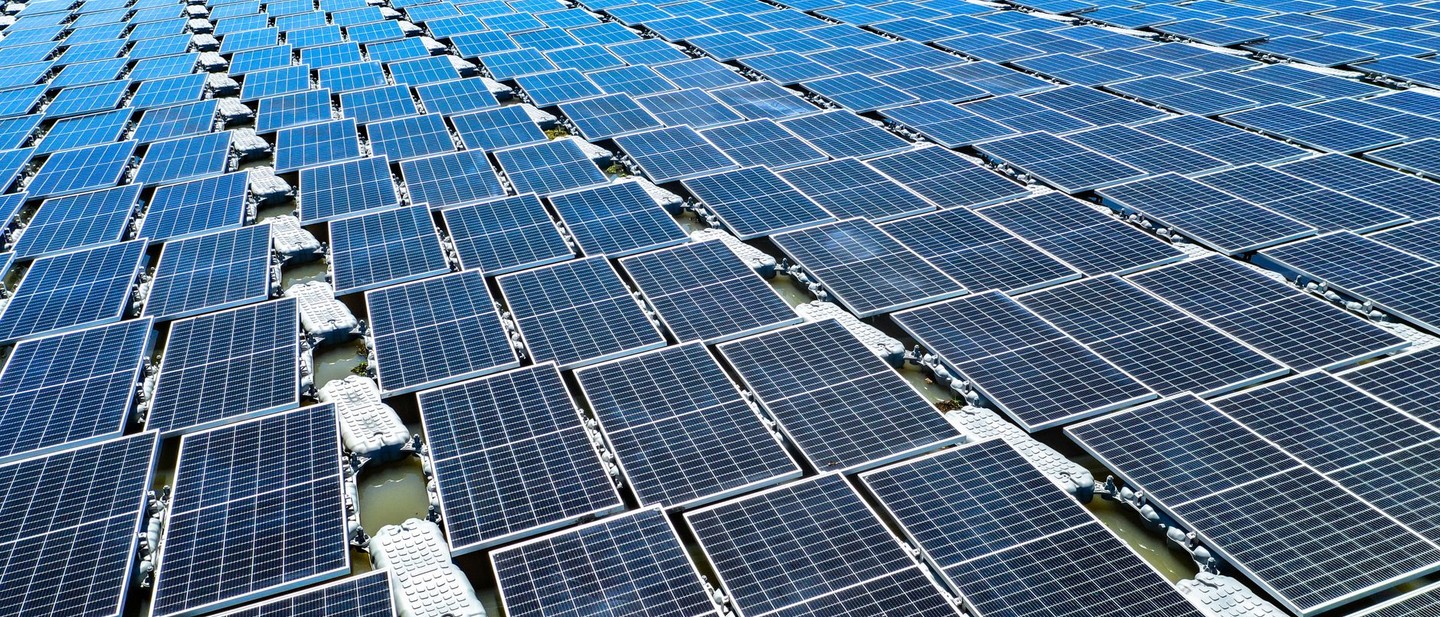
Floating Solar Portfolio Philippines – 422 MWp EPC
Why the 422 MWp Floating Solar Portfolio Matters for the Philippines’ Renewable Landscape
The announcement of a 422 MWp floating solar portfolio in the Philippines represents one of the largest floating‑solar commitments in Southeast Asia. By locating PV systems on existing water bodies, the project adds clean generation without competing with agricultural or urban land uses. This approach aligns with the country’s broader push to diversify its energy mix and improve grid resilience, especially during the monsoon season when water‑level fluctuations can affect generation from traditional hydro assets.
The Philippines government has set an ambitious renewable‑energy goal of 35 GW by 2030, a target outlined in the Department of Energy’s Renewable Energy Roadmap 2030. Achieving that target will require rapid deployment of both ground‑mounted and floating solar, as land constraints are acute on many of the nation’s islands. The 422 MWp portfolio therefore contributes a measurable share toward that national objective while alleviating pressure on scarce land resources.
Floating solar is not brand‑new to the Philippines. In 2020 the country commissioned its first floating‑solar pilots totalling 13 MW, including a 5 MW project at Caliraya Lake and an 8 MW installation at the La Mesa Reservoir. Those early pilots demonstrated that water‑based PV can deliver higher capacity factors and reduced land‑use conflicts, providing a proven template that the new portfolio now scales up.
EPC focus: The scale of the portfolio means EPCs will need to coordinate multiple site builds simultaneously, manage a larger supply chain, and integrate site‑specific engineering solutions to meet local conditions.
Portfolio Overview: Partners, Sites, and Capacity Breakdown
VinEnergo, a global solar EPC and O&M specialist, and SunAsia, a leading Philippine renewable‑energy developer, disclosed that the combined portfolio will total 422 MWp of installed capacity. The portfolio will be distributed across several reservoir sites in Luzon and Visayas, leveraging existing water infrastructure to minimize civil works. While the exact site list has not been publicly detailed, the partnership’s press release confirms that each location will host between 50 MWp and 150 MWp of floating modules, creating a diversified set of generation points that reduce transmission bottlenecks.
Technical Fundamentals of Floating Solar
Floating solar installations consist of three core components:
- Floatation System – buoyant platforms, typically made from high‑density polyethylene (HDPE) or concrete, provide stable support for the PV array while allowing water flow.
- PV Modules – standard utility‑scale monocrystalline or polycrystalline panels rated for high temperature coefficients are mounted on the floatation system.
- Electrical Infrastructure – string inverters, transformers, and cabling are selected to meet marine‑grade corrosion standards and to comply with the Philippine grid interconnection requirements.
The combination of these elements enables a higher capacity factor, often 10‑15 % above comparable ground‑mounted systems, because water cooling improves module efficiency and the installations avoid dust accumulation.
EPC Considerations: Engineering Challenges, Procurement, and Construction Logistics
Engineering Challenges
- Hydrodynamic Loads – Design must account for wind, waves, and water‑level fluctuations. Finite‑element analysis is routinely used to validate float stability.
- Corrosion Management – Marine‑grade materials and protective coatings are mandatory to ensure a 20‑year service life.
- Grid Integration – Voltage regulation and reactive power support are critical on island grids; EPCs must design inverter settings accordingly.
Procurement
- Floatation Supplies – Sourcing HDPE floats from certified manufacturers reduces risk of premature degradation.
- PV Modules – Preference for modules with proven performance under high humidity and temperature conditions.
- Electrical Gear – Inverters must meet IEC 61727 and be listed for offshore or marine environments.
Construction Logistics
- Site Access – Mobilizing heavy equipment onto water bodies requires barges and specialized launch rigs.
- Sequencing – EPCs typically install the floatation system first, followed by module mounting and finally electrical commissioning.
- Safety – Working over water imposes additional occupational‑health protocols, including personal flotation devices and rescue plans.
Regulatory and Permitting Landscape for Floating Solar in the Philippines
The Philippine Department of Energy (DOE) has issued guidelines for floating solar projects that outline the required permits:
- Environmental Compliance Certificate (ECC) – Issued by the Department of Environment and Natural Resources (DENR) after an environmental impact assessment that includes water‑quality monitoring and algae‑growth mitigation.
- Water Use Permit – Granted by the National Water Resources Board (NWRB) confirming that the project will not impair water resources or downstream users.
- Interconnection Agreement – Approved by the National Grid Corporation of the Philippines (NGCP) to ensure compliance with the latest Grid Code amendment concerning offshore and floating generation.
All permits must be secured before civil works begin, and the DOE recommends early engagement with local government units to streamline approvals.
Environmental Monitoring and Water‑Quality Requirements
The ECC process requires a baseline water‑quality study covering temperature, dissolved oxygen, and turbidity. Developers must submit a mitigation plan to prevent algal blooms caused by reduced sunlight penetration. DENR circular 2023‑01 outlines that continuous monitoring is mandatory for the first five years of operation, with quarterly reports submitted to the regional office. Failure to meet these conditions can result in the suspension of the ECC and a halt to construction activities.
EPC focus: Incorporating the water‑quality monitoring plan into the project schedule early can avoid costly delays during the ECC approval stage.
Financing and Revenue Models for Large‑Scale Floating Solar Projects
Financing a 422 MWp portfolio typically involves a mix of equity, debt, and green‑bond instruments. Key considerations include:
- Debt‑to‑Equity Ratio – Projects of this size often target a 70:30 debt‑to‑equity split, leveraging the predictable cash flow from power purchase agreements (PPAs).
- PPA Structures – Long‑term (10‑15 year) PPAs with utilities provide revenue certainty, while stand‑alone corporate PPAs are also gaining traction.
- Incentives – The Philippines offers a Feed‑in‑Tariff (FiT) for renewable projects, and floating solar may qualify for additional incentives under the DOE’s “Floating Solar Pilot” scheme, which provides a premium on the standard FiT rate.
Engaging with multilateral development banks, such as the Asian Development Bank (ADB), can also unlock concessional financing options that improve project viability.
Insurance Considerations
Floating solar projects face distinct risk profiles, prompting insurers to tailor coverage. A typical package includes:
- Construction All‑Risk (CAR) – Covers damage to floats, modules, and equipment during erection and commissioning.
- Marine Liability – Protects against third‑party claims arising from water‑related incidents, such as accidental spills or navigation hazards.
- Performance (PPA) Insurance – Guarantees that the project will meet its expected generation output, mitigating revenue risk for lenders.
Regional insurers and specialty firms have launched dedicated floating‑solar policies following guidance from Energy Storage.news on emerging coverage trends in Southeast Asia.
Recommended Design and Simulation Tools for Floating Solar Plant Layout
Accurate layout planning is essential for maximizing energy yield and minimizing shading. The following software packages are widely adopted by EPCs working on floating solar:
- Helioscope (by SAM) – Offers comprehensive module‑level shading analysis and supports marine‑grade floatation modeling.
- PVsyst – Provides detailed performance simulation and grid‑integration studies, with a module to import floating‑platform geometry.
- OpenSolar – Cloud‑based platform that integrates site‑survey data, allowing rapid iteration of float arrangement and cable routing.
Selecting a tool that can import GIS data and handle water‑body contours accelerates the design phase and improves stakeholder confidence.
Timeline & Next Steps for EPCs Looking to Participate
- Month 0‑3: Secure EPC contract, finalize site list, and begin permitting (ECC, water‑use, interconnection).
- Month 4‑6: Complete detailed engineering design using recommended simulation tools; place orders for floatation systems and PV modules.
- Month 7‑12: Mobilize construction teams, install floatation platforms, and mount PV modules.
- Month 13‑18: Electrical commissioning, grid connection, and performance testing.
- Month 19‑24: Commercial operation date (COD) achieved; handover to O&M team.
EPCs that can demonstrate a proven track record in marine‑environment projects will be prioritized during the partner selection process.
Reslink’s integrated solar design workflow can import floating‑solar specifications directly into its engineering platform, allowing EPCs to generate compliant layouts, BOMs, and project documentation in a single, automated step.
Frequently Asked Questions
Q1. What is floating solar and how does it work?
Floating solar installs photovoltaic modules on buoyant platforms that rest on the surface of reservoirs, lakes, or ponds. The platforms keep the panels elevated, allowing water cooling to improve module efficiency while preserving the land underneath for other uses. Electrical output is fed to the grid through marine‑rated inverters and cabling that meet the Philippine Grid Code.
Q2. What insurance products are typically required for floating solar projects in the Philippines?
Floating solar projects face distinct risk profiles, prompting insurers to tailor coverage. A typical package includes Construction All‑Risk to protect floats, modules, and equipment during erection; Marine Liability for third‑party claims arising from water‑related incidents; and Performance (PPA) Insurance that guarantees the project will meet its expected generation output, mitigating revenue risk for lenders. Regional insurers have launched dedicated floating‑solar policies following guidance from Energy Storage.news on emerging coverage trends in Southeast Asia.
Q3. Who are VinEnergo and SunAsia?
VinEnergo is a multinational solar EPC and operations company with a portfolio of utility‑scale projects across Asia, Europe, and the Americas. SunAsia is a Philippine renewable‑energy developer focused on solar and wind projects and is active in securing land and water‑right agreements for large‑scale deployments. Their joint announcement marks the first coordinated effort to develop a 422 MWp floating‑solar portfolio in the country.
Q4. What are the technical requirements for a 422 MWp floating solar plant?
Each site must employ HDPE or concrete floatation systems designed for local wind and wave conditions, use utility‑scale PV modules with high temperature coefficients, and install marine‑grade inverters that comply with IEC 61727. Electrical designs must satisfy the latest Philippine Grid Code amendment for offshore generation, including voltage regulation and reactive‑power support. All components must be selected to endure at least 20 years of operation in humid, saline environments.
Q5. What are the key EPC challenges in floating solar projects?
Key challenges include accurately modeling hydrodynamic loads, sourcing corrosion‑resistant materials, managing logistics for barge‑borne equipment, and meeting the layered permitting process (ECC, water‑use, interconnection). EPCs also need to coordinate simultaneous builds across multiple reservoirs, which demands robust project‑management tools and a scalable supply‑chain strategy.
Q6. How does the 422 MWp floating solar portfolio fit into the Philippines’ renewable energy targets?
The portfolio adds significant capacity without consuming arable land, supporting the Philippines’ goal of achieving 35 GW of renewable generation by 2030. By diversifying generation sources and leveraging existing water bodies, the project helps balance seasonal demand and improves grid stability, especially during periods of high rainfall.
Q7. What financing options are available for large‑scale floating solar projects in the Philippines?
Financing typically blends equity from project sponsors with senior debt from commercial banks, often supplemented by green‑bond issuances. Long‑term PPAs with utilities provide revenue certainty, while the DOE’s floating‑solar incentive scheme can increase the effective tariff. Multilateral development banks, such as ADB, also offer concessional loans for renewable‑energy projects that meet environmental and social safeguards.
Q8. What design software is best for floating solar plant layout?
Helioscope, PVsyst, and OpenSolar are the leading tools used by EPCs for floating‑solar design. They support module‑level shading analysis, import of GIS water‑body data, and integration of marine‑grade floatation geometry, enabling accurate energy‑yield predictions and optimized panel placement.
Q9. How long is the expected timeline for construction and commissioning?
A typical 422 MWp floating‑solar program spans 18‑24 months from contract award to commercial operation. Early permitting (ECC, water‑use, interconnection) can be completed within the first six months, after which site preparation, floatation installation, module mounting, and electrical commissioning proceed in phased stages.
Related Articles

Solar ITC Compliance File: What EPCs Must Document
Beyond the July 4 deadline: the documentation, MACR paper trail, and 10-year FEOC recapture obligation EPCs must manage after a solar ITC claim.

2026 Top Solar Contractors USA – Who Leads the EPC Market?
Discover which U.S. EPC firms topped the 2026 ranking, how it was compiled and what it means for solar contractors.
Thailand Rooftop Solar Incentives 2026 – EPC Guide
Learn how Thailand's 2026 rooftop solar legal framework and incentives cut costs, speed approvals, and create new EPC opportunities.