400 MW Solar EPC Contract Rajasthan – What EPCs Need to Know
What This Award Is and Where It Stands
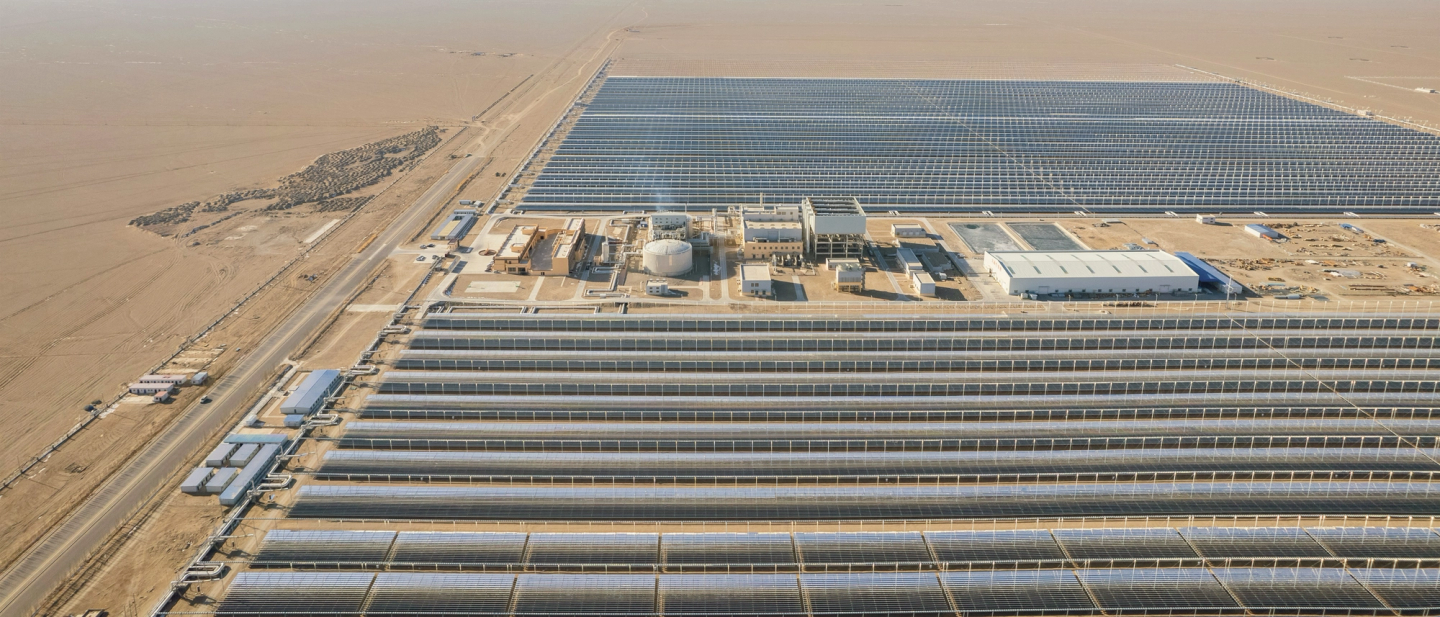
Chandigarh-based Hartek Power's Renewables Business Unit has secured a 400 MW utility-scale solar EPC project in Rajasthan, according to a company announcement carried by Saur Energy and other trade press outlets in the first two weeks of July 2026. As Renewable Watch reported on 9 July 2026, the project will be developed in two phases comprising two 200 MW plants, with a combined installed capacity of 299.2 MWac on 400 MWdc. The gap between those two numbers is the ordinary DC-to-AC ratio of an oversized panel array feeding a smaller inverter block \u2014 not a discrepancy in the reporting.
The scope, as described in the company's own release, covers detailed engineering, procurement, installation, construction, testing and commissioning of both the solar PV plant and an associated 220 kV pooling substation that Hartek will also build to evacuate the project's power to the grid. It explicitly extends to handling owner-supplied equipment, grid interconnection, and final project commissioning \u2014 meaning Hartek carries commissioning risk even for equipment it did not itself procure. Hartek Power's Executive Director and CEO, Simarpreet Singh, framed the win around a broader point worth taking at face value from an execution standpoint: that the focus must be on building both renewable capacity and the grid infrastructure needed to integrate it efficiently, a statement carried by SolarQuarter on 7 July 2026.
This is not Hartek's first large Rajasthan build. The company commissioned a 300 MWac (435 MWp DC) utility-scale plant across 1,209 acres in the state in April 2024, and in October 2025 it secured a separate Rs 474 crore EPC order for a global renewable IPP covering complete EPC works, pooling substation infrastructure and grid connectivity \u2014 the same three-part shape of scope repeated on the 400 MW award. No source discloses a district, site, land area or phase-wise commissioning date for the current project, and none of the earlier orders' figures should be carried across to it.
Reading the Scope of Work Line by Line
An EPC bidding a contract shaped like this one is not pricing "400 MW of solar." It is pricing four separate obligations, each governed by a different regime.
The Plant: 299.2 MWac on 400 MWdc, Built in Two Phases
The headline 400 MW is DC panel capacity; 299.2 MW is what actually reaches the grid side through the inverters. That distinction matters for every downstream calculation \u2014 module count, string design, and any output guarantee written into the EPC contract needs to specify which number it is measured against. Rajasthan's 2007 land-allotment rules cap a single tranche of government land allotment for solar at 50 MW, with the balance held in reserve pending State Level Empowered Committee approval once the first tranche is used — the corpus does not confirm whether this specific provision has been amended since 2007. Nothing in the public record ties that staged-release mechanism specifically to this project, since no source confirms whether the site sits on government-allotted land at all.ilds.
The 220 kV Pooling Substation and What It Must Meet
Hartek's scope includes building the 220 kV pooling substation that evacuates power from the plant to the grid. The plant behind that substation now falls under CEA's newly notified CEA (Technical Standards for Construction of Electrical Plants and Electric Lines) Regulations, 2026, which insert a new chapter covering solar, floating solar, onshore and offshore wind and battery storage, as Indian Infrastructure reported on 16 April 2026. Under those standards, renewable energy plants above 10 MW must install automatic weather stations, and plants generally need power plant controllers, segregated communication systems, power quality meters, ride-through capability and reactive power control modes in line with grid connectivity norms. At 299.2 MWac, this project sits well above that 10 MW threshold on every count, which means the substation and plant design need to carry this equipment list as a baseline BOM item, not an optional extra.
Owner-Supplied Equipment: Who Owns the Handover Risk
The scope explicitly covers handling owner-supplied equipment \u2014 items the project company buys directly and hands to Hartek to install. This is a recognised structure in utility-scale solar EPC contracting: key supplies, most often modules, are procured by the project company and free-issued to the EPC contractor rather than bought by the contractor itself, according to PwC's April 2024 paper on solar EPC contracting practice. Where that happens, three-way side deeds are typically signed between the project company, the EPC contractor and the supplier, so that the contractor still has a contractual route back to the supplier if the free-issued equipment turns out to be defective or underperforming. For an EPC accepting owner-supplied equipment onto a site it is responsible for commissioning, that side-deed structure is the difference between carrying warranty risk on equipment it never chose, and having somewhere to point when that equipment fails.
Grid Interconnection and Final Commissioning
The scope's last line item \u2014 grid interconnection and final project commissioning \u2014 is where the regulatory ground is currently shifting fastest. CEA has released draft Technical Standards for Connectivity to the Grid Regulations, 2026, intended to replace the 2007 Connectivity Regulations, and SolarQuarter's report on the draft from 16 July 2026 sets out what it would require. As drafted, the regulations would apply to all entities connected to the grid at 33 kV and above, covering both new and existing facilities \u2014 a scope wide enough to catch a 220 kV pooling substation many times over. Every generating unit would need a Unique Registration Number through CEA's e-GEN portal before receiving grid connectivity, and the draft lays out a structured process: interconnection studies, submission of technical data, execution of connectivity agreements, approval of protection and communication systems, physical interconnection, trial operation and commercial commissioning. None of this is in force yet \u2014 stakeholder comments are open by email until 17 August 2026 \u2014 but it maps directly onto the "grid interconnection and final project commissioning" line in Hartek's scope, and an EPC signing a contract with that same line item today should assume some version of this seven-gate process is what "final commissioning" will mean by the time this project reaches it.
The Rules and Dates That Bind This Scope in 2026
- 10 March 2021 \u2014 MNRE issues the first ALMM List-I for solar PV modules, the baseline module-approval list still in force today.
- 31 July 2025 \u2014 MNRE issues the first ALMM List-II for solar PV cells, four years after the module list, closing a gap that had let cell sourcing run unregulated.
- 28 July 2025 \u2014 MNRE's press release confirms the 1 June 2026 effective date for mandatory ALMM-listed cells stands as previously notified, and states that for projects bid out by government agencies, including Section 63 bids, the cell requirement becomes mandatory one month after the cell list is published \u2014 which, since that list was published 31 July 2025, means the requirement switched on for those bids by 31 August 2025.
- 31 August 2025 / 1 June 2026 \u2014 Two different MNRE documents summarised by AZB & Partners give conflicting bid-submission cutoffs for exemption from List-II: MNRE's FAQs of 23 September 2025 point to 31 August 2025, while an endnote citing an MNRE office memorandum of the same date points to 1 June 2026. Neither this ledger nor a public source resolves which governs; an EPC needs to check its own project's bid date against MNRE's FAQ directly rather than assume either cutoff.
- 22 September 2025 \u2014 GST on solar modules, cells and wind turbine generators drops from 12% to 5%.
- 12 September 2025 \u2014 MNRE issues draft amendments proposing to extend ALMM to wafers under a new List-III, with compliance proposed to commence from 1 June 2028.
- 21 November 2025 \u2014 The four Labour Codes (IR Code 2020, Code on Wages 2019, Social Security Code 2020, OSH Code 2020) come into force, making written appointment letters mandatory for every worker, including daily wage and contract labour.
- 16 April 2026 \u2014 CEA notifies the Technical Standards for Construction of Electrical Plants and Electric Lines Regulations, 2026, bringing solar plants above 10 MW under a fixed equipment standard.
- 1 June 2026 \u2014 ALMM List-II compliance becomes mandatory across the board (subject to the bid-date exemptions above), and modules remaining on List-I are required to use cells from List-II or risk de-listing.
- 6 July 2026 \u2014 MNRE's current List-I update, the most recent of several revisions this year (also updated 1 May, 1 March and 7 February 2026).
- 7-9 July 2026 \u2014 Hartek's 400 MW Rajasthan award is reported across trade press.
- 16 July 2026 \u2014 CEA releases the draft Technical Standards for Connectivity to the Grid Regulations, 2026.
- 22 July 2026 \u2014 The 8th Revision of ALMM List-II for solar PV cells is issued, the eighth revision in under twelve months.
- 17 August 2026 \u2014 Stakeholder comment window on the draft connectivity regulations closes.
- 31 December 2026 \u2014 MNRE's limited window for commissioning net-metering and open access projects without List-II compliance runs out, with no blanket extension beyond it.
What EPCs Bidding at This Scale Must Get Right Now
- Re-check ALMM list currency at procurement, not at bid. List-I has moved roughly every two months this year and List-II has been revised eight times since July 2025; a module or cell that was compliant when the tender was priced can fall off the list before it is delivered, and any change in bill of materials or manufacturing process typically forces re-validation of that model's listing.
- Confirm your project's actual bid-date exemption before assuming List-II does not apply. With MNRE's own documents giving two different cutoff dates (31 August 2025 and 1 June 2026) for exemption based on last bid submission date, verify against MNRE's FAQ directly rather than defaulting to whichever date is more convenient.
- Treat procurement from a listed manufacturer as necessary but not sufficient. Non-compliance includes deploying an unlisted model or a different bill of materials than the one approved, or mixing compliant with non-compliant components on the same site \u2014 all of which can happen even when every invoice names an ALMM-listed manufacturer.
- Build CEA's 2026 construction standard equipment list into the design and BOM from day one, since automatic weather stations, power plant controllers, segregated communications, power quality meters and ride-through capability apply to any plant above 10 MW, not as optional line items to be added if the client asks.
- Price Rajasthan's commissioning-delay exposure into the schedule. A flat penalty of Rs 2,00,000 per MW applies for delay up to 15 months, with a further Rs 2,000 per day per MW on top of that for every day beyond 15 months if RREC's Board grants an extension \u2014 and on government-allotted land, missing commercial operation altogether can trigger cancellation of the allotment itself.
- If your project connects at 33 kV or above, read the draft connectivity regulations before 17 August 2026 and comment if the e-GEN registration or seven-gate connectivity process would change your commissioning sequence. The draft would apply to both new and existing facilities, so a project reaching interconnection after these regulations are finalised may need to run this process even if it was not written into the original contract.

Land, Labour and Liability: The Practical Detail Behind the Scope
Rajasthan's land rules sit upstream of any EPC's site-access date. RREC acts as the state's nodal agency for project registration and approval, facilitating government land allotment, power evacuation approval and bay allocation, and execution of PPAs — steps that gate when the EPC can actually get on site and when it can connect.nect. Where the land is government-allotted, the ceiling is 2.5 hectares per MW up to a 23% plant load factor, rising by 0.1 hectare per MW for every additional 1% of PLF, and the plant must be set up within two years of the date of allotment. Miss that window and the allotment is liable to cancellation, with unused land reverting to the state. The rules also exclude land within 0.5 km of a revenue village's inhabited area for non-polluting plants, and 1.5 km for polluting plants \u2014 a constraint worth confirming before a site is finalised, not after.
Labour compliance on a project this size is not a back-office matter. Any establishment employing 10 or more construction workers must register under the BOCW Act within 60 days of commencing work, separately in each state where a site sits, and covered establishments must pay a welfare cess of 1% of construction cost, with unpaid or under-assessed cess attracting a demand plus a 2% per month penalty from the due date, according to Futurex Management Solutions' compliance guide. Under the CLRA Act, a principal employer must register before engaging 20 or more contract workers on any day of the preceding 12 months, and remains ultimately liable for minimum wages, PF contributions, ESIC contributions and BOCW welfare benefits if a labour contractor defaults \u2014 liability that climbs back up the chain to whichever entity holds the EPC contract. Since the four Labour Codes came into force on 21 November 2025, written appointment letters are mandatory for every worker, including daily wage and contract workers. And increasingly, government tender evaluations require bidders to produce EPFO compliance certificates, ESIC registration documents, BOCW registration certificates and, in some cases, contractor CLRA licence copies as part of the tender documentation itself \u2014 meaning labour compliance now gates the ability to bid, not just the ability to operate once work starts.
On the contract itself, the terms a lender will actually accept follow a predictable shape. Banks financing a solar project generally require a fixed completion date, a fixed completion price, output guarantees, and liquidated damages for both delay and performance, according to PwC's paper on solar EPC contracting. Total contractor liability is commonly capped at 100% of the contract price, while delay and performance liquidated damages are each typically sub-capped at 10-15% of contract price, with a combined cap of 20-25%. Performance liquidated damages are usually calculated as the net present value of the revenue forgone over the life of the project from any capacity shortfall \u2014 so an EPC underdelivering output on a 299.2 MWac plant is not just paying for the shortfall in year one, but for its present-value equivalent across the plant's operating life. The contract is also meant to give the project company a single point of responsibility, with the contractor answerable for design, engineering, procurement, construction, commissioning and testing, and it should state clearly that the project company \u2014 not the contractor \u2014 is the party that corresponds with government agencies and the offtaker. PwC's own account of what sank some solar EPC contractors — grid connection delays and constraints, unidentified site risks, and supply chain delays, cited in the context of the COVID-era Australian market and the collapse of contractor RCR Tomlinson — is worth sitting with: those same three risk categories sit precisely at the interconnection-and-commissioning end of the Hartek scope, where the rules are least settled right now.
One number worth carrying into a bid price: because EPC project contracts are taxed on a 70:30 composite basis \u2014 70% of value at the goods rate, 30% at the standard 18% service rate \u2014 September 2025's GST cut on modules, cells and wind turbine generators from 12% to 5% brought the effective GST rate on an EPC contract down to roughly 8.9%. That is a margin input, not a scope item, but it changes the arithmetic behind any price an EPC puts against a project this size.
We built Reslink's design platform to check every panel and inverter against the current ALMM list in real time at equipment selection, and to generate the DISCOM-format single line diagram and full bill of materials from the same 3D model, precisely because the list an EPC checked at bid stage is rarely the list that governs at procurement.
Frequently Asked Questions
Q1. Is the 400 MW figure in the Hartek award the AC capacity or the DC capacity?
It is DC. The project comprises two 200 MW phases with a combined installed capacity of 299.2 MWac on 400 MWdc, meaning the panel field is sized at 400 MW but the inverters and grid connection are rated for 299.2 MW. Any output guarantee, LD calculation or interconnection study built off this project needs to specify which of the two figures it is referencing, since they differ by roughly 25%.
Q2. Does ALMM List-II apply to every module and cell on this project?
List-II applies to solar PV cells and became mandatory for most projects from 1 June 2026, with narrower earlier triggers for government-bid projects tied to the cell list's 31 July 2025 publication date. MNRE's own documents give two conflicting bid-submission cutoffs \u2014 31 August 2025 in its FAQs and 1 June 2026 in an accompanying endnote \u2014 for which projects are exempt from List-II regardless of commissioning date, so exemption status has to be checked project by project rather than assumed from either date alone.
Q3. What happens if a module drops off ALMM List-I after it has already been specified in the design?
From 1 June 2026, modules remaining on List-I are required to use cells from List-II or they risk being de-listed, and any change in a manufacturer's bill of materials or manufacturing process typically triggers re-validation of that model's ALMM status. Since List-I has moved roughly every two months through 2026 and List-II has already gone through eight revisions since July 2025, a module compliant at bid stage is not guaranteed to remain compliant at procurement, which is why the check needs to happen again close to order placement.
Q4. Do CEA's 2026 construction standards apply to a 299.2 MWac plant like this one?
Yes. The CEA (Technical Standards for Construction of Electrical Plants and Electric Lines) Regulations, 2026 require renewable energy plants above 10 MW to install automatic weather stations, and plants generally need power plant controllers, segregated communication systems, power quality meters, ride-through capability and reactive power control modes. At 299.2 MWac, this project is roughly thirty times that 10 MW threshold, so none of this equipment is optional.
Q5. Is the draft grid connectivity regulation from CEA already in force?
No. CEA's draft Technical Standards for Connectivity to the Grid Regulations, 2026 were released on 16 July 2026 and remain open for stakeholder comment by email until 17 August 2026. As drafted, they would apply to all entities connected at 33 kV and above, covering both new and existing facilities, and would require a Unique Registration Number through CEA's e-GEN portal before connectivity is granted \u2014 but none of this is a current legal obligation while the comment window is open.
Q6. What financial exposure does a delayed commissioning date create in Rajasthan?
Under Rajasthan's renewable energy policy, delay up to 15 months attracts a flat penalty of Rs 2,00,000 per MW, and if RREC's Board grants an extension beyond 15 months, a further Rs 2,000 per day per MW applies for each day past that mark. On government-allotted land specifically, missing commercial operation within the prescribed time can also trigger cancellation of the land allotment itself, with the land reverting to the state.
Q7. Who is liable if a labour subcontractor on the site fails to pay minimum wages or PF?
Under the CLRA Act, the principal employer \u2014 the entity that registered to engage 20 or more contract workers on any day in the preceding 12 months \u2014 remains ultimately liable for minimum wages, PF contributions, ESIC contributions and BOCW welfare benefits if the labour contractor defaults. On a project this size, that liability sits with whichever entity holds the head EPC contract, regardless of how many tiers of subcontracting sit beneath it.
Q8. How does owner-supplied equipment change the EPC contractor's risk on a project like this?
Owner-supplied, or free-issue, equipment is procured directly by the project company and handed to the EPC contractor to install, but Hartek's scope explicitly still covers handling that equipment, grid interconnection and final commissioning \u2014 meaning the contractor carries commissioning risk on equipment it did not select or buy. The standard mitigation is a three-way side deed between the project company, the EPC contractor and the equipment supplier, so the contractor has a direct contractual route back to the supplier if free-issued equipment underperforms.
Sources
- Saur Energy: Hartek Power Wins 400 MW Solar EPC Project in Rajasthan
- Renewable Watch: Hartek Power Bags 400 MW Solar EPC Order in Rajasthan
- SolarQuarter: Hartek Power Wins 400 MW Solar EPC Project in Rajasthan
- SolarQuarter: CEA Releases Draft 2026 Grid Connectivity Regulations
- MNRE: Approved List of Models and Manufacturers (ALMM)
- PIB: MNRE press release on ALMM for solar PV cells, 28 July 2025
- AZB & Partners: ALMM/RLMM Compliance \u2014 A Regulatory Deep Dive
- Indian Infrastructure: CEA Notifies Technical Standards for Construction Regulations, 2026
- Rajasthan Renewable Energy Policy, 2023
- Rajasthan Land Revenue (Allotment of Land for Renewable Energy Power Plants) Rules, 2007
- PwC: EPC Contracts in the Solar Sector
- Futurex Management Solutions: Construction Payroll Compliance \u2014 BOCW & Contract Labour
- Reslink: Two Policy Changes That Are Improving EPC Margins Right Now
- Reslink: Design First, Visit Once: The 3D Shift in Solar EPCs
Related Articles

NFCC BESS Guidance 2026: What's Confirmed, What's Open for UK EPCs
NFCC's updated BESS guidance cut spacing to 3 feet with UL 9540A testing. What's confirmed, what's still unresolved, and what to bring to planning.

MCS 2027 Deadline: What's Actually Changing for Solar and Battery EPCs
Every MCS-certified installer must move to the redeveloped Scheme by 31 March 2027. What's actually changed, why the date matters twice, and what to do now.

Solar BOM Automation: What It Actually Fixes
A quantity error on DC cable alone can erode 6-9% of project margin. See what BOM automation actually solves, and what still needs a manual check.