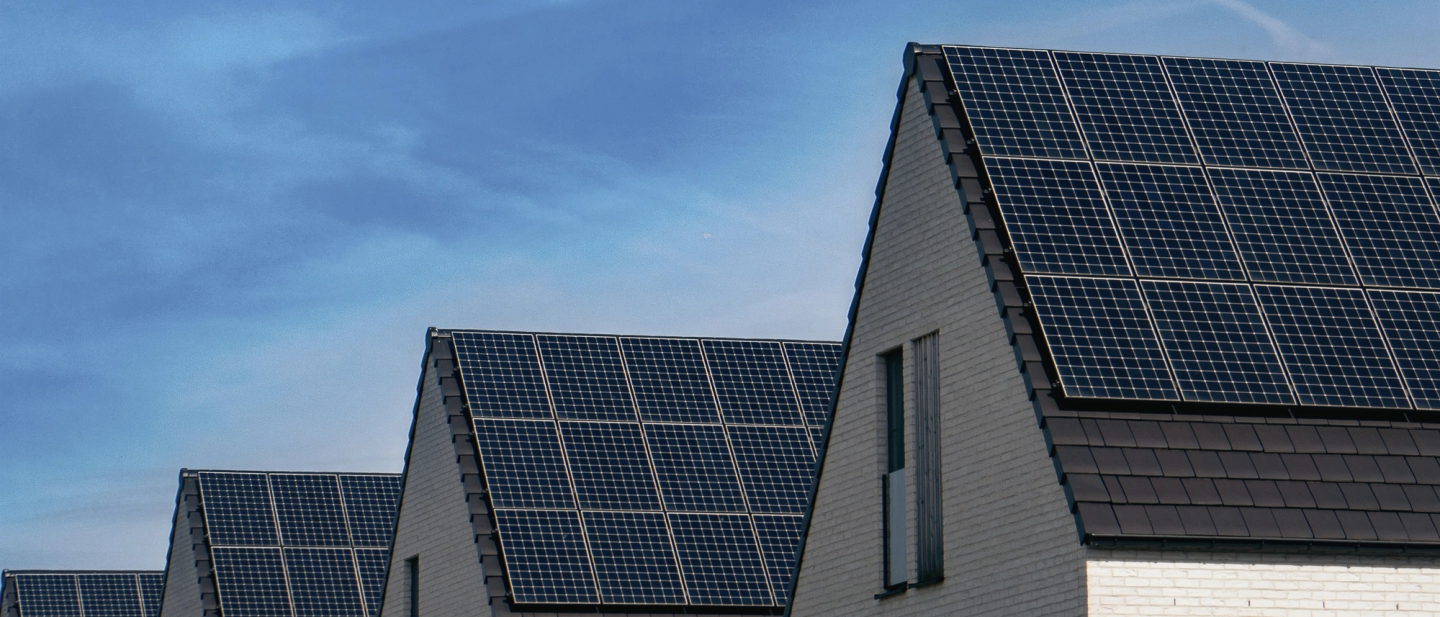
Thailand Rooftop Solar 2026: What EPCs Must Know
Thailand's 2026 Reforms Are Three Separate Measures, Not One Law
1. Factory license removal (effective December 28, 2024). Ministerial Regulation Re: Designation of Type, Kind, and Size of Factories (No. 3), B.E. 2567, eliminated the requirement for factories outside industrial estates to obtain a รง.4 (Ror Ngor 4) factory license before installing rooftop solar, regardless of system capacity. Previously, systems exceeding 1,000 kW required this license. This is a genuine, meaningful simplification for C&I EPCs.
2. Building permit streamlining (published in the Royal Gazette November 19, 2025, effective immediately). Ministerial Regulation No. 72, B.E. 2568, issued under the Building Control Act, reduces structural certification and building alteration permit requirements that previously created delays and added cost, particularly for smaller-scale projects.
3. Foreign Business Act liberalization (approved in principle May 12, 2026). The Thai Cabinet approved two draft subordinate instruments to delist certain reserved business activities under the Foreign Business Act B.E. 2542 and reduce licensing requirements for foreign business operators in this space. As of this update, these remain draft instruments moving through the legislative process, not yet final law.
Royal Decree 805: A Residential Tax Deduction
Royal Decree No. 805, B.E. 2569, published in the Royal Gazette in early March 2026 and effective March 3, 2026, grants individual taxpayers a personal income tax deduction of up to THB 200,000 for installing a grid-connected rooftop solar system on a residential building. Key terms:
- Applies to individuals, not companies, and only to systems up to roughly 10 kWp.
- Applies once per taxpayer, claimed in the tax year the system receives grid connection approval from MEA or PEA.
- The claimant's name on the e-Tax invoice must match the electricity meter registration.
- Runs through December 31, 2028.
The same decree separately introduces a 150% corporate tax deduction on certified energy-saving machinery carrying the DEDE/EGAT 5-star Energy Efficiency Label, also through December 31, 2028. This is a broader energy-efficiency equipment incentive, not a rooftop-solar-specific one, and shouldn't be conflated with the residential solar deduction above.
This residential deduction is the only confirmed tax incentive tied specifically to rooftop solar installation itself. Commercial and industrial projects draw on a separate mechanism, covered next.
The Real C&I Incentive: BOI Category A2
For commercial and industrial rooftop solar, the incentive that actually matters is administered by Thailand's Board of Investment, not a rooftop-specific grant program. Confirmed directly against BOI's own published guidance: renewable energy electricity generation projects, including solar, fall under Activity 7.1.2, qualifying for Category A2 promotion.
What Category A2 provides:
- Corporate income tax exemption for up to 8 years, capped at the total investment amount (excluding land and working capital costs).
- Exemption from import duty on qualifying machinery not manufactured domestically.
- Non-tax incentives: land ownership rights for foreign-owned project companies (an exception to standard Foreign Business Act restrictions) and streamlined hiring of foreign technical experts.
This is a well-established framework, not a new 2026 program, and it's the actual mechanism EPCs should be building into commercial proposals.

How to Actually Apply for BOI Category A2
The process is more structured and more predictable than most Thai regulatory procedures, which is itself worth noting to clients weighing the administrative burden. Applications are filed through BOI's e-Investment Promotion System, and promotion attaches to a specific activity code, Activity 7.1.2 for solar and renewable electricity generation. BOI publishes service timeframes for each stage, and if documentation is complete, the timeline is largely predictable rather than open-ended.
After approval, the applicant must accept the promotion and submit the certificate application within 6 months of acceptance, a window that can be extended up to three times in one-month increments if needed. If the project company isn't yet established, registration with the Department of Business Development must follow within 6 months of approval. Once complete documentation and the signed Promotion Acceptance Form are submitted, BOI typically issues the Promotion Certificate within 10 working days.
The certificate triggers two further deadlines worth building into a project timeline: machinery import duty exemption rights run for 30 months from certificate issuance, and the company must commence full operations within 36 months, both extendable on request if a genuine delay arises. Post-certificate, companies must file semi-annual progress reports via BOI's e-Monitoring System each February and July. This tightened recently: since March 30, 2026, companies in the implementation phase must report quarterly instead, within 60 days of each quarter's end, under BOI Announcement No. 8/2569. Non-compliance with reporting risks suspension or revocation of the incentive, so this isn't a one-time filing to forget about once the certificate is in hand.
One step EPCs should flag for clients rather than assume is handled elsewhere: if the promoted activity involves any Foreign Business Act-restricted element, the company separately needs to notify the Department of Business Development under Section 12 and obtain a Foreign Business Certificate. This runs in parallel to, not as part of, the BOI process itself.
What the 8-Year Exemption Actually Looks Like in Practice
The mechanic is worth walking through in generic terms, since the value depends entirely on project-specific numbers. BOI exempts corporate income tax on net profit from the promoted activity, not merely reduces it, and the exemption period begins from the date of revenue derivation after the certificate is issued, not from the certificate date itself. The cumulative exemption is capped at the total investment amount, excluding land and working capital costs, so an unusually profitable project could exhaust its exemption cap before the full 8 years elapse, a scenario worth modeling explicitly in any client-facing financial projection rather than assuming the full 8-year window will always apply at face value. For a typical commercial rooftop project sized well within its investment cap, the practical effect is that corporate tax on the electricity-generation profit is fully exempted for the promoted activity throughout the 8-year window, a meaningfully larger benefit than a partial credit or accelerated depreciation schedule alone.
Net Billing: What It Actually Pays, and Who Qualifies
Thailand operates a net billing scheme, not net metering, an important distinction. Excess electricity exported to the grid is purchased at a fixed rate, currently 2.20 THB/kWh, set by the Energy Regulatory Commission in May 2022, compared to a retail rate of roughly 4 THB/kWh. This is tied to the same residential, sub-10 kWp systems covered by Royal Decree 805, with agreements running up to 10 years. A true net metering scheme, crediting exported power at the full retail rate, remains under government consideration but has not been implemented as of this update.
For C&I rooftop projects, self-consumption, offsetting a factory's own high-tariff daytime usage, remains the primary value driver, not grid export at the net billing rate.
What Still Needs Direct Verification Before You Quote a Client
Two areas where the picture is either evolving or was reported with less certainty, worth confirming against erc.or.th or dede.go.th directly before using in a client-facing proposal:
- IEAT industrial estate self-consumption exemption. Solar rooftop projects for electricity generation and sale within Industrial Estate Authority of Thailand zones still require standard land use and business commencement permits. A specific exemption for self-consumption-only projects within industrial estates was reported as under internal IEAT discussion, with an expected notification that may or may not have been finalized by now. Confirm current status directly before assuming this exemption applies.
- Any further FBA liberalization. The May 2026 Cabinet approval was "in principle" for draft instruments, not final law. Confirm current status before advising a foreign client on ownership structure based on this alone.
Action Checklist for EPCs
- Cite the actual governing instruments by name in client-facing materials: Ministerial Regulation No. 3 B.E. 2567, Ministerial Regulation No. 72 B.E. 2568, and Royal Decree No. 805 B.E. 2569.
- Build BOI Category A2 into commercial proposal financial models, this is the real, applicable C&I incentive.
- Keep the residential tax deduction and the C&I incentive pathway clearly separate in any proposal or marketing material; conflating them misrepresents what a commercial client is actually eligible for.
- Model the investment cap explicitly when projecting BOI Category A2 savings, an unusually profitable project can exhaust the cap before 8 years elapse.
- Verify IEAT and FBA status directly for any project inside an industrial estate or involving foreign ownership before finalizing deal structure.
- Confirm current net billing quota status with MEA/PEA before promising a client grid-export revenue stream, since quota availability has fluctuated.
Frequently Asked Questions
Q1. What laws actually govern rooftop solar in Thailand in 2026?
Three separate instruments: Ministerial Regulation No. 3 B.E. 2567 (factory license removal, effective December 2024), Ministerial Regulation No. 72 B.E. 2568 (building permit streamlining, effective November 2025), and Royal Decree No. 805 B.E. 2569 (tax deductions, effective March 2026). There is no single consolidated rooftop solar law; each instrument covers a different part of the framework.
Q2. What tax incentive applies to commercial and industrial rooftop solar in Thailand?
The primary mechanism is BOI Category A2 (Activity 7.1.2), offering up to an 8-year corporate income tax exemption capped at total investment, plus import duty exemption on qualifying machinery. This is separate from Royal Decree 805, which applies only to individual residential taxpayers.
Q3. Is Royal Decree 805 available to businesses?
The rooftop solar deduction under Royal Decree 805 applies to individual taxpayers only, for residential systems up to roughly 10 kWp. The decree separately includes a 150% corporate deduction for DEDE/EGAT 5-star certified energy-saving machinery, a different, broader incentive not specific to rooftop solar.
Q4. What is Thailand's current net billing rate for solar?
2.20 THB/kWh, set by the ERC in May 2022, applicable to residential systems up to 10 kWp under 10-year agreements. This is net billing, not net metering; exported power is purchased at this fixed rate rather than credited at the full retail tariff.
Q5. Do factories still need a license to install rooftop solar in Thailand?
Factories outside industrial estates no longer need a factory license for rooftop solar of any capacity, following Ministerial Regulation No. 3 B.E. 2567, effective December 28, 2024. Projects within industrial estates may still face additional requirements; confirm current IEAT status directly.
Q6. How long does BOI Category A2 approval take?
The Promotion Certificate is typically issued within 10 working days of complete documentation, though the applicant has up to 6 months to accept and submit after initial approval. Machinery import duty exemption runs 30 months from certificate issuance, and full operations must commence within 36 months, both extendable on request.
Sources
- Hunton Andrews Kurth, "Thailand Eases Regulations for Solar Rooftop Installations" – confirms Ministerial Regulation No. 3 B.E. 2567 and the รง.4 factory license removal, effective December 28, 2024.
- Tilleke & Gibbins, "Thailand Eases Rules for Solar Rooftop Installations" – confirms Ministerial Regulation No. 72 B.E. 2568 (published November 19, 2025) and the May 12, 2026 Cabinet approval of draft FBA liberalization instruments.
- Bangkok Global Law, "Thailand Removes Statutory Requirements for Rooftop Solar Panel Installations" – corroborates the building permit streamlining details.
- Bizwings, "Thailand Introduces Tax Incentives for Solar Rooftop Installation and Energy-Efficient Machinery" – confirms Royal Decree No. 805 B.E. 2569, its residential-only scope, THB 200,000 cap, and the separate 150% machinery deduction.
- Bizwings, "How to Apply for BOI Promotion in Thailand: Process, Timeline, and Documents Overview" – confirms application timeline, the 6-month acceptance window, 30-month machinery import period, 36-month operations deadline, and the quarterly e-Monitoring rule effective March 30, 2026 (BOI Announcement No. 8/2569).
- AIM Bangkok, "How to Apply for BOI Incentives in Thailand: A Guide for Foreign Investors" – corroborates the semi-annual reporting baseline and Foreign Business Certificate requirement.
- ExpatTaxThailand, "Thailand Tax Break for Rooftop Solar Installations" – independently confirms Royal Decree 805 terms and the 2.20 THB/kWh net billing rate.
- Thailand Board of Investment (boi.go.th), official FAQ page – primary source confirming Activity 7.1.2 and Category A2 classification for solar/renewable electricity generation.
- Lorenz & Partners, "Renewable Energy Projects in Thailand, Legal and Tax Considerations" – corroborates the 8-year BOI corporate income tax exemption structure, capped at total investment.
Related Articles
Solar & Storage Live UK 2026: EPC Guide
NEC Birmingham, September 22-24. Confirmed speakers, six conference tracks, and the live grid-connection fight EPCs should actually watch.

Solar Design Software for EPCs in Botswana
Botswana's Rooftop Solar Programme runs through BPC. What EPCs need for compliance, and how Reslink fits a market just getting started.
US Energy Storage Hits Record 20.2 GWh in Q2 2026
US energy storage hit a record 20.2 GWh in Q2 2026, 44% paired with solar. What the SEIA/Benchmark data signals for solar EPCs globally.