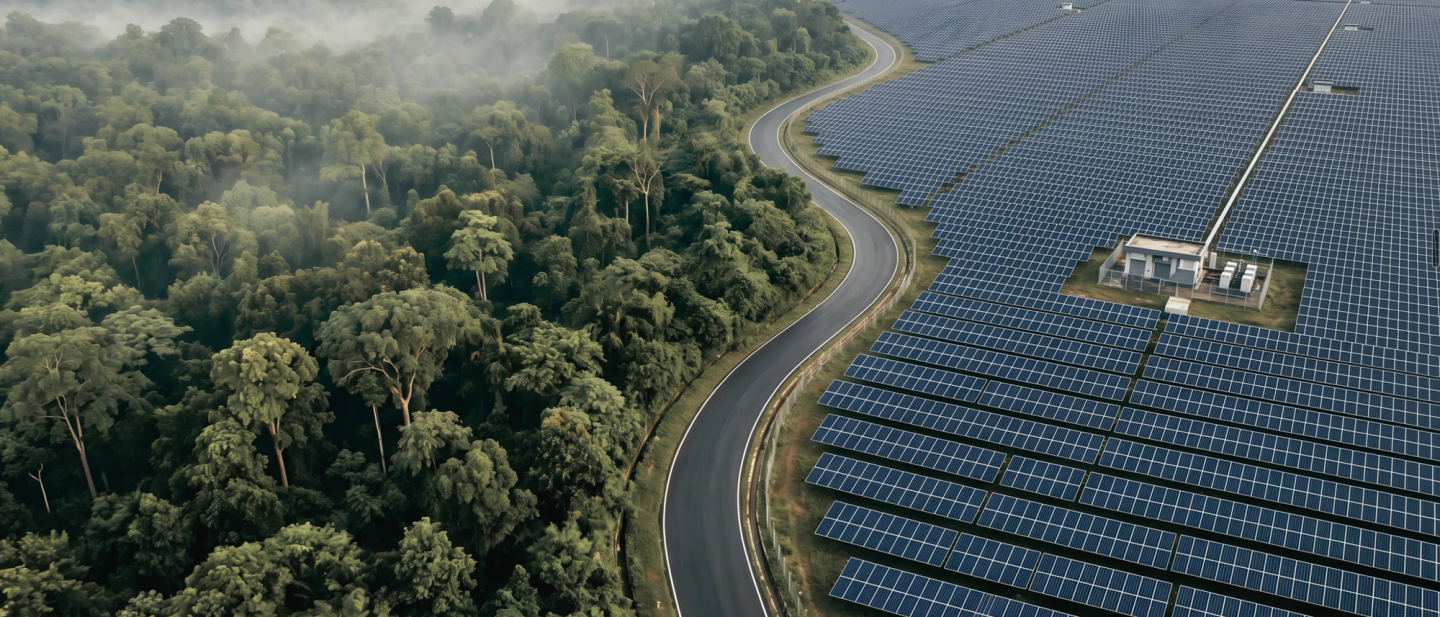
Solar Energy Laws and Regulations in India 2026
Quick Answer
Question | Answer |
|---|---|
Is Grid-Connected Rooftop Solar Phase-II still accepting new applications? | No. It was superseded by PM Surya Ghar in February 2024. Phase-II now exists only as a legacy claims track. |
What's the current Phase-II claims deadline? | November 30, 2026, extended from December 31, 2025, for installations already at redeemed, inspected, or installed stage. |
Where do new residential rooftop applications go? | Through PM Surya Ghar's National Portal, not Phase-II. |
What is the current national RPO/RCO target? | 35.95% for FY2026-27, rising to 43.33% by FY2029-30, not the flat 3% figure still circulating in older content. |
Are the Green Energy Open-Access Rules currently active? | Yes, amended and implemented, but confirm any subsequent changes directly given ongoing amendment activity through 2026. |
What the Solar Energy Laws and Regulations Cover
India’s solar energy framework is built around three pillars: renewable purchase obligations (RPO), Renewable Energy Certificates (REC), and scheme‑driven incentives. The Ministry of New and Renewable Energy (MNRE) oversees policy, while the Central Electricity Regulatory Commission (CERC) and State Electricity Regulatory Commissions (SERCs) issue detailed regulations for grid connectivity, forecasting, and tariff structures.
Key elements include:
- Current renewable purchase/consumption obligation rules for obligated entities.
- REC eligibility and issuance under applicable CERC regulations.
- PM Surya Ghar / state rooftop rules for residential rooftop.
- Green Energy Open Access for eligible consumers.
- ALMM, BIS, CEA/grid-code and state/DISCOM rules for equipment and interconnection.

Practical takeaway for EPCs: The combination of RPO mandates, REC trading, and extended rooftop incentives creates a predictable demand pipeline, but compliance hinges on precise state‑level tracking and timely certification.
The original Grid‑Connected Rooftop Solar Phase‑I, introduced in 2015, targeted commercial and industrial buildings up to 1 MW and offered a cash incentive. Phase‑II supersedes that scheme, consolidating incentives and extending eligibility through 2026, which means EPCs no longer need to manage two overlapping programmes.
State Electricity Regulatory Commissions (SERCs) publish detailed RPO schedules, compliance timelines, and procedural guidelines specific to each jurisdiction. EPCs must consult the relevant SERC portal to verify local targets before finalising project sizing.
How the Regulatory Landscape Is Categorised
National Solar Mission (NSM)
Launched on 11 Jan 2010, the NSM seeks to position India as a global solar leader. It set the ambition of harnessing 748 GW of solar potential by covering roughly 3 % of waste land with PV modules.
State‑wise Solar RPO Targets
The Renewable Consumption Obligation (RCO), which has replaced the older Renewable Purchase Obligation (RPO) framework under an Energy Conservation Act notification effective FY2024-25, sets the current national trajectory: 29.91% in FY2024-25, rising to 33.01% in FY2025-26, 35.95% in FY2026-27, and reaching 43.33% by FY2029-30, notified by the Ministry of Power. States publish their own compliance schedules within this framework, and individual state ceilings can exceed the national trajectory. EPCs must align project sizing with the current Ministry of Power notification and the relevant state SERC schedule, not a fixed national percentage, to avoid penalties.
Grid‑Connected Rooftop Solar Phase‑II (Extended)
Phase-II was superseded by PM Surya Ghar: Muft Bijli Yojana when that scheme launched in February 2024. New residential rooftop applications go through PM Surya Ghar's National Portal, not Phase-II, this programme no longer accepts new applications. Phase-II's March 31, 2026 date, extended back in October 2022, governs the programme's overall budget window (Rs 11,814 crore across the residential CFA and DISCOM incentive components), not an invitation for new project development. The current, relevant development is that MNRE extended the deadline for submitting CFA claims under legacy Phase-II applications, specifically those that reached the redeemed, inspected, or installed stage, to November 30, 2026, up from the earlier December 31, 2025 cutoff. This matters only for clients with an old Phase-II application already in the pipeline.
Green Energy Open‑Access Rules (Amended)
The amendment synchronises open‑access provisions with solar RPO/REC policies, easing grid‑connection procedures for solar generators. This change reduces administrative lag for EPC‑driven projects.
Solar Potential Metrics
India enjoys 250‑300 sunny days annually, with radiation levels of 1 600‑2 200 kWh / m². The total incident solar energy is estimated in the several thousand terawatt‑hours per year, and covering 3 % of waste land could meet the nation’s entire electricity demand.
MNRE also publishes high‑resolution solar resource maps that detail regional irradiation levels. EPCs use these maps to prioritize sites with the highest solar yield, streamline land‑acquisition assessments, and justify project economics to financiers.
Current Status and Deadlines for EPCs
- Grid-Connected Rooftop Solar Phase-II is superseded by PM Surya Ghar for all new residential applications, effective February 2024. Phase-II remains open only for CFA claims on legacy installations already at redeemed, inspected, or installed stage, with that claims deadline now extended to November 30, 2026. Do not present Phase-II as a route for new 2026 projects. For current residential rooftop business, use PM Surya Ghar and state-level net-metering/subsidy rules; for C&I rooftop, verify state/DISCOM and open-access/gross-metering rules.
- National RCO trajectory is 35.95% for FY2026-27, not a flat 3% figure, rising each year through FY2029-30. This is the actual compliance target driving obligated-entity demand for solar; size projects and compliance strategy against the current Ministry of Power notification.
- Quarterly REC Settlement Periods – RECs are settled on a quarterly basis; missing a submission window can result in non-compliance penalties for distributors and downstream EPCs.
- Green Energy Open-Access Rules – The revised open-access framework has been implemented; confirm current operational status and any subsequent amendments against MNRE's open-access rules page, since this has been an active area of amendment through 2026.
What EPC Teams Should Do Now
Step | Action | Why It Matters |
|---|---|---|
New residential client | Route through PM Surya Ghar's National Portal | Phase-II hasn't accepted new applications since February 2024 |
Client with an old Phase-II installation | Check claim status, file before November 30, 2026 | Legacy claims window, real deadline, real subsidy money at risk if missed |
Any project sizing decision | Confirm the current state RPO/RCO schedule directly with the relevant SERC | The national trajectory is a floor, individual states can and do set higher targets |
C&I open-access project | Verify current Green Energy Open-Access status directly against MNRE's page | Ongoing amendment activity through 2026 means the rules keep shifting |
Any REC-generating project | Register early with the central registry | Certification takes up to 30 days; missing a quarterly settlement window creates penalty exposure |
Common Mistakes to Avoid
- Presenting Phase-II as a route for new projects. It isn't, hasn't been since PM Surya Ghar launched in February 2024.
- Quoting the flat 3% RPO figure still circulating in older content. The current national trajectory is 35.95% for FY2026-27, rising to 43.33% by FY2029-30.
- Assuming the national RCO trajectory is the actual target for a given state. Individual states can and do set schedules above the national baseline, check the relevant SERC directly.
- Treating the March 31, 2026 Phase-II date as 2026 news. It was set in October 2022, it's a budget and implementation window, not a new development.
- Conflating Phase-II claims with PM Surya Ghar's subsidy structure. They're governed by different guidelines, a legacy Phase-II claim doesn't follow PM Surya Ghar's CFA rules.
Supporting Information for EPC Decision‑Making
Financial Incentives and Subsidies
Many states offer additional subsidies for exceeding these thresholds. Beyond monetary subsidies, several states provide reduced transmission charges or accelerated depreciation benefits for projects that surpass the baseline RPO. These incentives are typically outlined in the state‑specific renewable energy policy documents hosted on the respective SERC portals. EPCs must verify eligibility criteria before claiming such benefits.
Technical Standards
CERC and SERC regulations prescribe technical criteria for inverter efficiency, grid‑feed‑in compliance, and forecasting accuracy. Aligning equipment selections with these standards reduces the risk of post‑commissioning re‑work.
In particular, CERC mandates that inverters transmit real‑time generation data to the grid operator’s SCADA system, as stipulated in the grid code, to support accurate forecasting and grid stability.
Project Documentation
All RPO‑related filings must be supported by audited generation data, REC certificates, and a compliance statement signed by the EPC’s designated officer. Missing documentation can trigger penalties under the CERC’s enforcement framework.
EPC’s role clarified: Maintain a central compliance register, automate data capture from SCADA, and ensure that every generation report matches the REC issuance timeline.
Where Reslink Fits In This Conversation
A client's actual subsidy route, PM Surya Ghar, a legacy Phase-II claim, or straight open-access C&I, depends on specifics that are easy to get wrong: application date, installation stage, connected load, DISCOM. Getting this right at the proposal stage avoids client-facing mistakes and lost claims. Reslink's proposal workflow builds the eligibility and financial picture for the specific route a project actually qualifies for, rather than treating every residential rooftop inquiry as a single generic case. If your team is fielding client questions about which scheme actually applies to their specific installation, worth seeing how that gets resolved inside a single proposal.
See the full mobile design-to-proposal workflow a new rep would actually run → Book a demo
Frequently Asked Questions
Q1. What is the current national solar RPO requirement for EPCs in India?
There is no single “current national solar RPO requirement for EPCs” that should be quoted as 3%. RPO / renewable consumption obligations apply to obligated entities under current central and state regulations. EPCs should verify the applicable CERC/SERC rule for the project’s offtaker, DISCOM or obligated entity.
Q2. How does the Phase‑II Rooftop Solar extension affect project timelines?
It doesn't, for new projects. Phase-II hasn't accepted new applications since PM Surya Ghar launched in February 2024. The only current relevance is for legacy installations already submitted under Phase-II, MNRE extended their CFA claims deadline to November 30, 2026, so any client with an old, unclaimed Phase-II installation should file before that date rather than assume the window has closed.
Q3. Which states have the highest solar RPO targets, and how should EPCs prioritize them?
The national RCO trajectory itself rises from 29.91% (FY2024-25) to 43.33% (FY2029-30), and individual states can set schedules above this baseline. EPCs should check the current state SERC schedule directly, since state-level targets and the national trajectory both change over time and neither should be treated as fixed.
Q4. What are the key compliance documents required under the Green Energy Open‑Access Rules?
Applicants must submit a grid‑connection request, an electrical single‑line diagram, a compliance certificate for CERC/SERC technical standards, and evidence of REC registration. The recent amendment synchronises these requirements with the solar RPO/REC framework, streamlining the process.
Q5. How do Renewable Energy Certificates (RECs) work for commercial solar projects?
Each REC represents 1 MWh of verified solar generation. REC eligibility, issuance, and trading depend on applicable REC regulations, registration, metering, and compliance conditions. EPCs should integrate a REC tracking module into their O&M software to ensure quarterly settlement compliance.
Q6. Are there any financial incentives tied to exceeding state‑level RPOs?
Yes. Many state renewable energy departments offer additional capital subsidies or reduced transmission charges for projects that push the local RPO beyond the baseline. EPCs must consult the latest state‑specific policy documents to claim these benefits.
Q7. What technical standards must inverters meet for grid‑connected projects?
CERC mandates that inverters achieve a minimum efficiency and possess active power‑factor correction. They must also support real‑time forecasting data exchange as prescribed by SERC regulations. Compliance ensures eligibility for REC issuance and avoids grid‑stability penalties.
Q8. How do India’s solar energy laws and regulations enforce compliance penalties for missed RPO or REC deadlines?
RPO or renewable consumption obligation enforcement generally applies to obligated entities under applicable regulations; do not frame all solar generators as directly fined unless a specific rule applies.
Q9. Where can EPCs find the official RPO tracker and policy documents?
All RPO targets, state policies, and related guidelines are hosted on the Ministry of New and Renewable Energy website under the “Solar RPO and REC Framework” section. The latest scheme amendments and open‑access rule documents are available in the “Policies and Regulations → Schemes” portal.
Q10. What is the process for registering a project’s RECs on the central registry, and how long does certification take?
After commissioning, the EPC must submit the plant’s generation data to the central REC registry via the online portal specified by MNRE. The registry verifies the data against metering records and issues REC certificates, typically within 30 days of a complete submission. Early registration ensures that quarterly settlement cycles are met without delay.
Sources
- Ministry of New and Renewable Energy – Solar RPO and REC Framework. https://mnre.gov.in/en/solar-rpo-and-rec-framework
- Ministry of New and Renewable Energy – Policies and Regulations (general portal). https://mnre.gov.in/en/policies-and-regulations
- Ministry of New and Renewable Energy – Schemes and Guidelines (Grid‑Connected Rooftop Solar Phase‑II extension). https://mnre.gov.in/en/policies-and-regulations/schemes-and-guidelines/schemes
- Ministry of New and Renewable Energy – Solar Overview. https://mnre.gov.in/en/solar-overview
- Mercom India – Government Amends Green Energy Open‑Access Rules. https://mercomindia.com/government-amends-green-energy-open-access-rules
Related Articles
CEA April 2027 Rules for Solar and BESS: Confirmed vs Open
Two CEA rule sets for solar and BESS start 1 April 2027, and a draft list of safety standards is open until 15 November. What EPCs can rely on.
REAP Solar Grant 2026: Build First, Then Apply, What US EPCs Must Do
USDA's REAP final rule takes effect Oct 16: build first, apply with 12 months of data, 25% grant cap, no cropland ground-mount. What US EPCs must do.
Future Homes Standard Solar (L3): Confirmed vs Open for UK Installers
Future Homes Standard solar: Requirement L3 applies to new homes in England from 24 March 2027. The sizing benchmark, exemptions and open points.