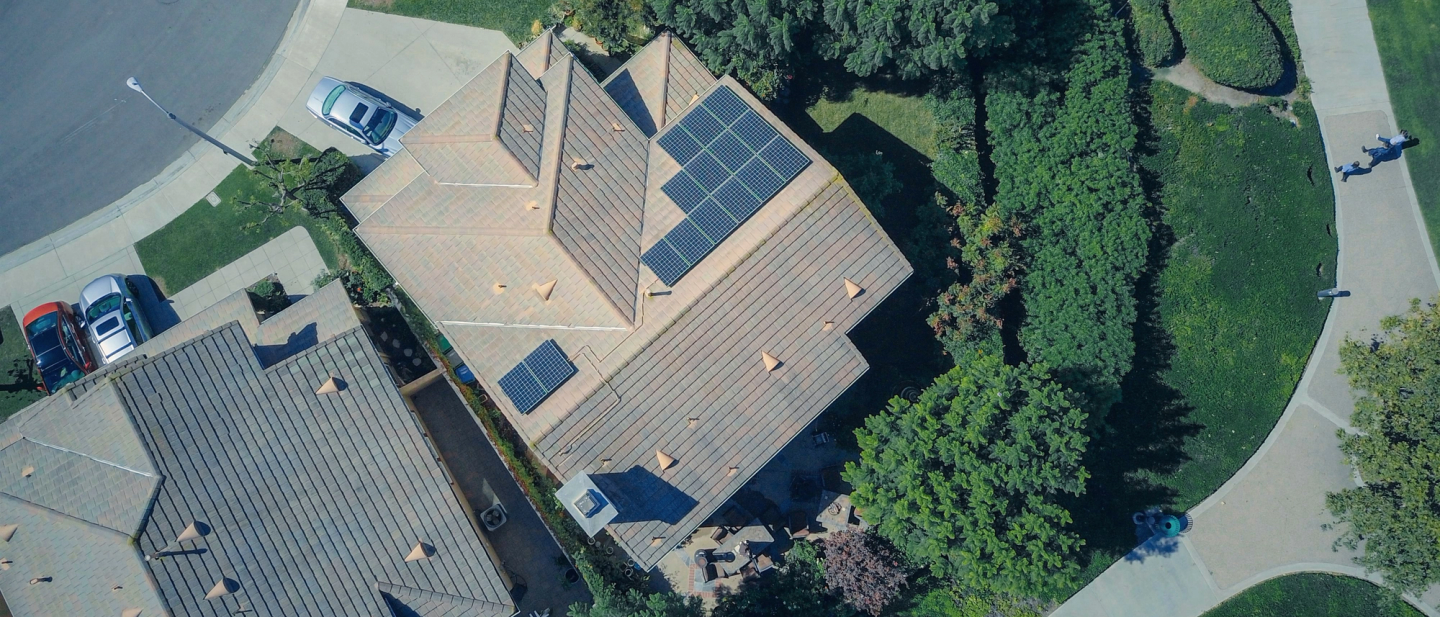
REAP Solar Grant 2026: Build First, Then Apply, What US EPCs Must Do
 Shashank·Founder·October 10, 2026·11 min read
Quick answer
Question | Short answer |
|---|---|
When does the new REAP rule take effect? | October 16, 2026. USDA published the final rule on October 1 and left comments open until November 2. Application windows will be set in a later funding notice. |
What is the biggest change for solar? | The project must be finished and operating before the owner applies. Applications need 12 months of actual production data and 12 months of energy use from before installation. |
How big is the grant now? | Applicants must provide at least 75% of project cost, so the grant is capped at 25%. Requests run from $1,500 up to $500,000 for renewable energy systems. |
Which solar projects are now ineligible? | Ground-mount systems on certified cropland, multi-location projects, systems without matching historical energy use, and new systems that use any component from a foreign adversary country. |
Who can apply? | Agricultural producers and rural small businesses that are existing, highest-level owners, meet the SBA small-business size and keep a current ratio of at least 1:1. The project must be in a rural area. |
Is a grant guaranteed? | No. REAP is competitive and scored. USDA says funding for every eligible application is not guaranteed, and unfunded applicants must re-check eligibility and reapply in a later cycle. |
Why this matters for US solar EPCs
REAP has been a main funding route for farm and rural-business solar. The new rule turns it upside down. The owner now pays for and builds the system first, and USDA scores the application afterwards, using a year of real production data.
That changes the sale. An EPC can no longer tell a farm customer that a grant application is pending while construction starts. It also moves risk onto design choices made today: where the array sits, how large it is, and which components go in it. A system that breaks one of the new rules cannot be fixed after it is built.
USDA says it expects the uncertainty over an award to shape purchase decisions, and the rule points applicants to REAP's separate guaranteed loan program for up-front financing. The rule also follows a March 31, 2026 stakeholder announcement that stopped USDA from processing pending applications. The rule says those applicants can resubmit if they meet the new requirements.
What changes on October 16
Topic | Before | From October 16 |
|---|---|---|
When the owner applies | Before or during construction | After the project is completed and operating |
Performance data | Projections, then annual outcome reports for two or three years after award | 12 months of actual production plus 12 months of pre-installation data, at application |
Project timing | No rule | The project must end 12 to 24 months before the application. In the first window after the rule, 12 to 36 months |
Competition | State and national competitions | One national scoring process. USDA picks the top two applications in each state that meet the minimum score, then funds in rank order |
Applications | One renewable and one efficiency application a year | One application per federal fiscal year per applicant |
Award size | Larger renewable grants were allowed under earlier funding notices, per trade press | $1,500 minimum. $500,000 maximum for renewable energy systems and $250,000 for efficiency |
Eligibility rules that shape a solar design
The rule sets limits that an EPC can design around, or fail on.
Rule | What it means in practice |
|---|---|
No ground-mount solar or wind on certified cropland | USDA uses the Farm Service Agency cropland definition. Roof-mounted systems are not barred by this rule. Check site classification before design |
System must match documented historical energy use | Systems that cannot show matching historical use are ineligible. Size to 12 months of bills, not to the roof |
Battery storage capped at 120% of average energy use | Measured over the 12 months before installation. Adding storage to an existing system, and standalone storage, are ineligible |
No component from a foreign adversary country | Applies to ground-mount and roof-mount solar and wind. Applicants must list country of origin for the panel, inverter, racking and monitoring software |
One location per application | A multi-location project is no longer eligible |
Simple payback must not exceed the system's useful life | A system with a very long payback fails |
Rural location, no shared meter with a residence | The shared-meter provision was removed. Only listed residential uses qualify |
Site owned or leased 12 months before the project period | Lease terms are now spelled out |
The foreign adversary list comes from Commerce's rule at 15 CFR 791.4: China (including Hong Kong and Macau), Cuba, Iran, North Korea, Russia, and the Maduro regime in Venezuela. The preamble adds that projects completed before the rule was published have an exception, so past customers can move to non-adversary components. This is separate from the FEOC rules for the federal solar tax credit, which use a different test.
The money: what a 25% grant looks like
Cost sharing must cover at least 75% of project cost. The grant is therefore at most 25%, with the $500,000 maximum applying to renewable energy systems.
Project cost | Maximum grant at 25% | Applicant's share |
|---|---|---|
$100,000 | $25,000 | $75,000 |
$400,000 | $100,000 | $300,000 |
$2,000,000 | $500,000 | $1,500,000 |
$3,000,000 | $500,000 (capped) | $2,500,000 |
These figures are our arithmetic on the rule's 25% share and $500,000 cap. A REAP guaranteed loan can be requested separately for the same project, and the grant and loan together cannot exceed 75% of project cost. Each applicant, counting entities with the same owners, is limited to one award per federal fiscal year.
Conflict of interest: a risk for turnkey EPCs
The rule requires arm's-length transactions and names system installers among the relationships that can create a conflict of interest. The conflict examples USDA lists include a developer that conducts the feasibility study, writes the application, provides financing, installs the system or buys the tax credits, and an entity affiliated with the applicant that installs the system and takes a profit.
The preamble does not say how this applies to an EPC that designs, installs and prepares paperwork for a customer. Check 7 CFR 4280.104 and 4280.106 before you bundle these services for a REAP customer. Separating roles, or taking legal advice first, is the cautious route.
Timeline and what is still unknown
Date | Event |
|---|---|
October 1, 2026 | Final rule published |
October 16, 2026 | Rule takes effect |
November 2, 2026 | Comment period closes |
To be set | Application windows, in a funding notice. USDA also plans an online application portal |
Existing applications with a signed agreement before October 16 continue under the earlier rules. For the first window, the project can end 12 to 36 months before the application. That means a farm or rural customer whose system was finished in the past three years can apply, if it meets the other rules.
What EPC teams should do now
Step | Action |
|---|---|
1. Screen the pipeline | Flag every farm or rural prospect planning a ground-mount system and check whether the land is certified cropland |
2. Revisit past customers | List farm and rural systems finished in the last 12 to 36 months and check site type and component origin |
3. Size to the bills | Collect 12 months of utility bills and size the system against them in a design tool like Reslink |
4. Record component origin | Keep country of origin for the panel, inverter, racking and monitoring software, ideally attached to a BOM in a tool like Reslink |
5. Plan the data trail | Install production monitoring and agree who holds the 12 months of data |
6. Do not promise a grant | Put the award uncertainty in writing in the proposal |
7. Separate roles | Get advice before bundling design, installation, financing and grant writing |
8. Consider commenting | Submit comments by November 2 if the rule affects your business |
Where design software fits
The new rule turns three design-stage decisions into eligibility tests: the site, the size against actual use, and the origin of every component. Reslink supports site mapping on a phone, 3D design with shading, and a bill of materials tied to the design, so those records exist before a customer ever applies.
See the full workflow → Book a demo
Frequently Asked Questions
Q1. Can a project that is already built still apply?
Yes, if it meets the other rules. In the first window after the rule, the project's end date can be 12 to 36 months before the application. Ground-mount on cropland and the other limits still apply. The preamble gives projects completed before publication an exception from the foreign adversary component ban.
Q2. Can a customer combine a REAP grant with a REAP guaranteed loan?
Yes. They are applied for separately, and the grant and loan together cannot exceed 75% of project cost. The rule points to the guaranteed loan as a way to cover up-front costs now that the grant comes after construction.
Q3. Does roof-mounted solar on a barn or other building still qualify?
The cropland ban covers ground-mount systems, so a roof-mounted system is not barred by it. It still has to meet the component, historical-use, rural-location and other rules.
Q4. How many applications can one owner file?
One per federal fiscal year, and entities with the same owners count together, including sole proprietorships. If an applicant wins, it receives one award in that year.
Q5. Can battery storage be added later and funded?
No. Adding storage to an existing renewable system, and standalone storage, are ineligible. Storage must be part of the original project and sized at no more than 120% of average energy use.
Q6. How does a REAP grant interact with the federal solar tax credit?
The rule does not address it. Tax treatment of the grant and any effect on a credit are questions for the customer's tax advisor, not for a proposal.
Q7. How can a customer or EPC comment on the rule?
Through Regulations.gov, under docket RBS-26-BUSINESS-0529, by November 2, 2026. USDA says it welcomes input that may inform future guidance or rulemaking.
Final takeaway
REAP now rewards projects that are finished, right-sized and documented. For an EPC, that means the work that used to follow a grant award, such as proving production and component origin, now happens in the design and the proposal.
Screen the pipeline for cropland ground-mounts, size every system to a year of bills, keep component origin on file, and tell customers the grant is a possibility, not a promise.
You May Also Like
- How to Calculate FEOC MACR Under Notice 2026-15
- Solar ITC Compliance File: What EPCs Must Document
- US Solar Tariffs 2026: Section 232 Polysilicon Guide
Sources
- Federal Register (Primary): 91 FR 62600, October 1, 2026, USDA final rule with comment period, docket RBS-26-BUSINESS-0529: build-first model, 12 months of data, eligibility limits, grant limits, conflict-of-interest examples, dates.
- eCFR (Primary): 15 CFR 791.4, Commerce's list of foreign adversaries.
- American Agriculture Network, October 5, 2026: americanagnetwork.com, USDA's announcement of the final rule and the coming application window.
Rules can change before the first application window. Check the USDA Rural Development REAP page and the funding notice before advising a customer.
Related Articles
CEA April 2027 Rules for Solar and BESS: Confirmed vs Open
Two CEA rule sets for solar and BESS start 1 April 2027, and a draft list of safety standards is open until 15 November. What EPCs can rely on.

Future Homes Standard Solar (L3): Confirmed vs Open for UK Installers
Future Homes Standard solar: Requirement L3 applies to new homes in England from 24 March 2027. The sizing benchmark, exemptions and open points.
MERC Draft Rooftop Rules: Net Metering and Storage Changes
MERC draft rooftop solar rules for Maharashtra: monthly banking above 3 kW, storage above 100 kW and a 70% feeder cap. Comments close 12 October.