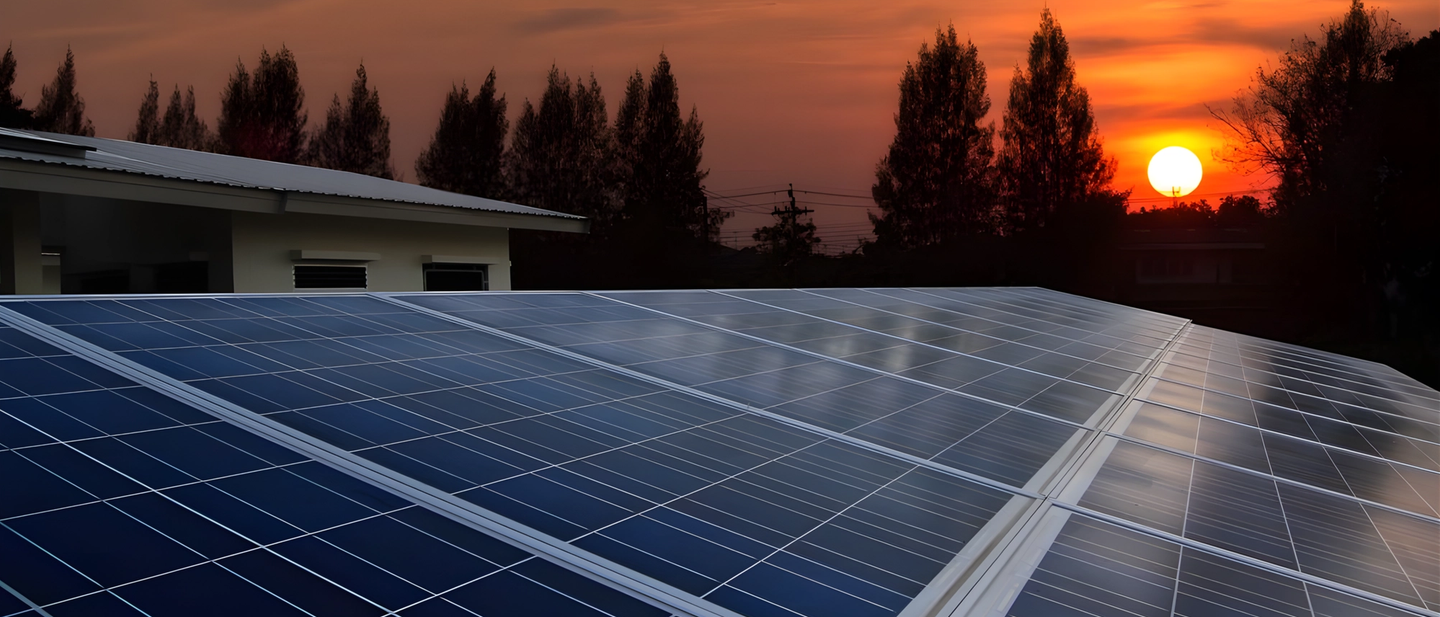
PM Surya Ghar Has Installed 25 Lakh Systems. The Target Is 1 Crore. The 75-Lakh Gap Is the Biggest EPC Opportunity in India Right Now.
Update (April 6, 2026): This blog has been substantially refreshed with official Parliament data. As of March 5, 2026, 25,02,217 rooftop solar systems have been installed under PM Surya Ghar — against a target of 1 crore. That's a 75-lakh gap. The Parliamentary Standing Committee has formally flagged slow progress and logistical bottlenecks. The FY27 deadline is 12 months away. This is the story every rooftop EPC needs to understand.
The Numbers That Should Keep Every Rooftop EPC Up at Night
India's Parliament received a report this March. The Union Minister of State for Power told the Rajya Sabha directly: as of March 5, 2026, a total of 25,02,217 rooftop solar systems have been installed under PM Surya Ghar: Muft Bijli Yojana. The scheme's target is 1 crore households — 10 million homes — by financial year 2026-27.
The arithmetic is brutal. 25 lakh installed. 75 lakh remaining. Approximately 12 months to the target deadline. That's roughly 206,000 installations per month, or about 6,900 per day, every day, for the rest of FY27.
The Parliamentary Standing Committee did not sugarcoat this. It expressed concern about "slow implementation and logistical bottlenecks." It flagged "inconsistencies" in how the data was being reported. The committee's verdict was clear: at current pace, the target will not be met without a dramatic acceleration.
The Gap Is the Opportunity
The scheme disbursed ₹14,585 crore in FY26 alone — nearly double the ₹7,823 crore in FY25. The money is flowing. Applications are being submitted — 63 lakh applications received as of March 5. The bottleneck is not demand. It is execution. There are not enough competent EPCs moving fast enough to convert applications to commissioned systems.
This is not a policy failure; it is a capacity failure. And that capacity failure is the single largest near-term opportunity in Indian rooftop solar. Every EPC that can execute rooftop installations quickly, accurately, and with proper DCR compliance documentation is sitting at the front of a queue that the government desperately needs to clear.
The ₹78,000 subsidy for a 3 kW system — up to 60% on the first 2 kW and 40% on the next 1 kW — remains fully intact. The scheme is demand-driven: any residential consumer with a grid connection can apply. The digital portal is working. Net metering systems are being installed. The missing ingredient is speed of execution.
What "9.56 GW Added" Actually Means
As of March 20, the scheme had added 9,566.89 MW of rooftop capacity across India. That is roughly 9.56 GW in approximately 25 lakh installations — implying an average system size of around 3.8 kW per home. The government projects that these installations will generate 1,000 billion units of electricity over their 25-year lifetime and reduce 720 million tonnes of CO2-equivalent emissions.
But translate these numbers back to EPC economics. 25 lakh installations at an average project value of, say, ₹1.5 to ₹2 lakh per system — that's ₹37,500 to ₹50,000 crore in project value already executed. The remaining 75 lakh systems represent ₹1.1 to ₹1.5 lakh crore of work that needs to be done by FY27.
Even if the deadline slips — and it likely will — the work still happens. The target doesn't disappear; it carries forward. Which means the rooftop EPC opportunity is not a sprint; it's a sustained multi-year wave of demand underwritten by government policy, subsidy budget, and 63 lakh waiting applications.

Speed Is the Only Competitive Advantage That Matters
In a market defined by a backlog this large, the EPC that can design, propose, and install fastest wins. Manual proposal preparation — site visits, hand-drawn layouts, manually typed BOMs — creates bottlenecks at every step. The EPCs scaling fastest in this environment are those using digital design tools that let them go from site survey to client-ready proposal in under 10 minutes.

Related Articles
India’s Solar Grid Is Sending 35 GW of Power Nowhere
Crisil Ratings warns that over 35 GW of India's renewable capacity faces grid curtailment risk in FY27. Rajasthan and Gujarat are worst hit. Here is what it means for EPCs.
State-Level BESS Tenders Are Now the Fastest-Growing Segment in Indian Solar
West Bengal just floated a 500 MW / 2,000 MWh BESS tender. Telangana, Gujarat, and Maharashtra are all in the game. State-level storage tenders are exploding — here's what EPCs need to know.

India Hits 143 GW Solar Milestone — What this Really Means for EPCs
India's solar capacity has crossed 143 GW with 88% of new RE additions coming from solar. Here's what this record-breaking pace means for EPC opportunity, workload, and strategy in 2026.