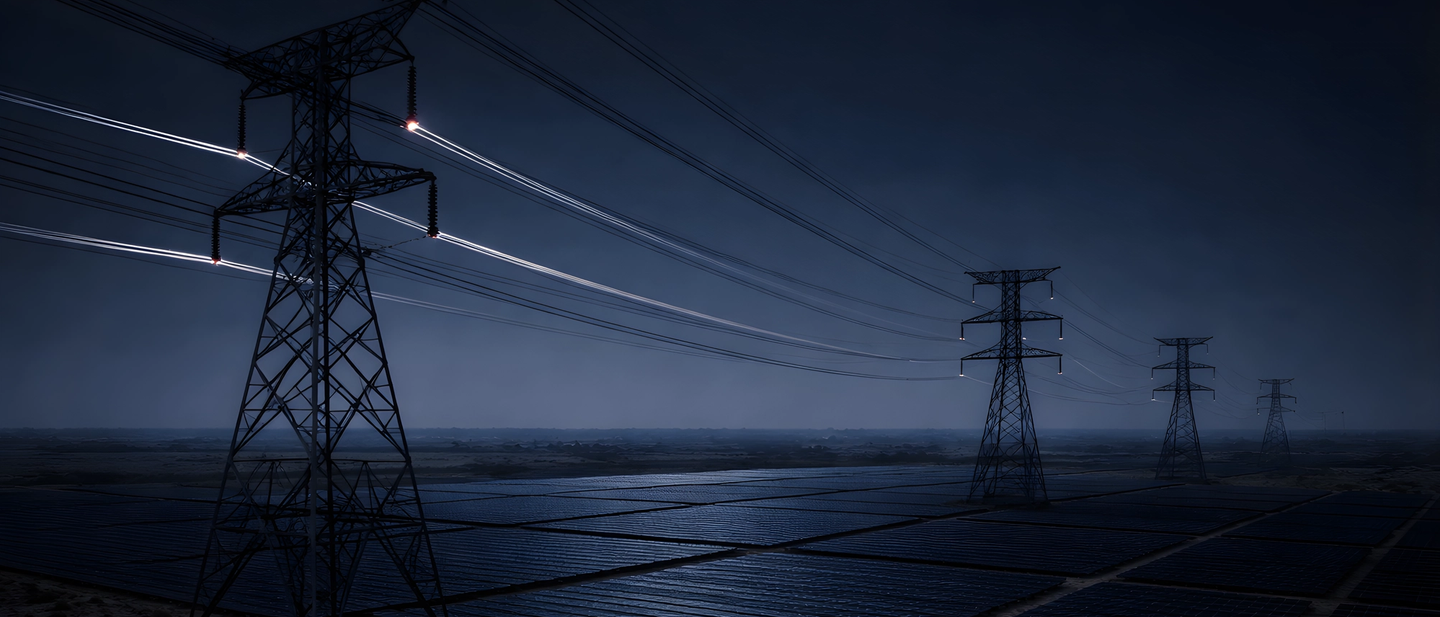
India’s Solar Grid Is Sending 35 GW of Power Nowhere
The Number That Should Change How Every EPC Selects a Site
India added a record more than 36 GW of solar capacity in 2025. In the same period, it curtailed an estimated 2.3 TWh of solar power — enough electricity to power approximately 400,000 homes for an entire year — because the grid could not absorb what the panels were generating. That curtailment did not happen because demand was absent. It happened because transmission infrastructure fell behind capacity additions, leaving commissioned solar plants without firm evacuation pathways and forcing grid operators to switch off generation that had no place to go.
Crisil Ratings released a report in March 2026 that puts this in sharper terms. More than 35 GW of renewable energy capacity in India could face grid curtailment risk in fiscal 2027, the agency warned, because of a growing mismatch between how fast solar capacity is being commissioned and how slowly the transmission network is expanding to serve it. For EPCs building or planning projects in India's highest-solar states, this is not a macroeconomic observation. It is a direct threat to the financial performance of every project that lacks firm, long-term grid access.
Understanding TGNA — and Why It Is the Source of the Problem
To understand the curtailment crisis, you need to understand the difference between two types of grid access: Temporary General Network Access, known as TGNA, and Long-Term General Network Access, or LT GNA. Projects with LT GNA have dedicated transmission infrastructure, multi-year scheduling rights, and priority evacuation — meaning when the grid is congested, their power gets through first. Projects with TGNA have time-bound, provisional access to the transmission network, no dedicated infrastructure, and much lower evacuation priority when the system is under pressure.
Between April and December 2025, TGNA projects accounted for approximately 80% of all curtailment in India. In the five months from November 2025 to February 2026, these projects saw nearly 39% of their total capacity curtailed. In Rajasthan and Gujarat — which together account for 45% of India's renewable energy generation capacity — TGNA capacity of 13 to 14 GW experienced curtailment of up to 50% during the worst periods. A solar plant designed to generate at a capacity utilisation factor of 22% running at 11% because it cannot evacuate power is not a functioning asset. It is a financial loss in physical form.
Crisil estimates that approximately 20 GW of fresh inter-state transmission system capacity will be commissioned on TGNA in fiscal 2027. Combined with the 17 GW of TGNA capacity already in the system as of February 2026, total exposure to curtailment risk could reach 35 to 37 GW during the coming financial year. The agency notes that these projects could convert to LT GNA as transmission expansion comes online — but the timing of that conversion is not guaranteed, and projects in the interim period absorb the financial impact directly.
What Grid Oscillations Are Adding to the Risk
The curtailment problem is compounded by a secondary and more acute issue: grid instability. The Central Electricity Authority's chairman, Ghanshyam Prasad, flagged this in a public address that drew significant industry attention. As solar and wind generation accounts for a larger share of India's power mix, the grid is losing the rotational inertia that coal and hydro plants provided naturally. Coal plants spinning large turbines generate inertia that stabilises grid frequency. Solar panels connected through inverters do not. As the coal fleet's share of real-time generation declines during peak solar hours, the grid becomes more sensitive to sudden changes in solar output — leading to frequency variations and voltage oscillations that Prasad described as "really dangerous."
GRID India, which manages the national electricity grid, reported that it curtailed 23 GW of renewable energy between May and November 2025 specifically to manage grid stability and safety. The compensation paid for curtailed generation over this period has been estimated at between ₹5.75 trillion and ₹6.99 trillion, according to energy think tank Ember — a staggering cost that ultimately flows through the system and affects how DISCOMs and grid operators approach future renewable procurement.

The Practical Implications for EPC Site Selection and Project Design
For EPCs, the curtailment situation has several direct implications that should change how projects are evaluated before a single panel is installed. The first and most important is to verify grid access status before accepting any project — not after commissioning when the problem becomes visible through performance data. A project site that appears viable based on solar irradiance and land availability may be economically unviable if it can only obtain TGNA rather than LT GNA. Clients who rely on your project's performance to justify their investment decision deserve to know this upfront.
The second implication concerns geography. Rajasthan and Gujarat are experiencing the most severe curtailment, precisely because they have the most solar capacity and the most pronounced daytime generation surplus. EPCs active in these states should build curtailment probability explicitly into their yield projections and financial models. Presenting a client with a 22% capacity utilisation factor when the actual realised figure in a TGNA zone may be 13 to 15% is a misrepresentation that will damage the client relationship and the EPC's reputation when the performance data arrives.
The third implication is that battery storage is no longer just a revenue-enhancement feature — it is increasingly a curtailment-mitigation tool. By storing excess generation during peak solar hours and releasing it during evening demand peaks, storage-integrated projects can improve both their effective capacity factor and their grid friendliness. The government has acknowledged this explicitly, with policies such as hour-split access and storage integration incentives pointing in the same direction.
Source: Crisil Ratings — "More than 35 GW of renewable capacity faces curtailment risk in fiscal 2027" (March 17, 2026), confirmed in Business Standard, PV Magazine India, and Construction World. GRID India curtailment data from Ember report "Beyond Capacity" (January 2026). CEA Chairman quote from Business Standard (March 3, 2026).
Related Articles
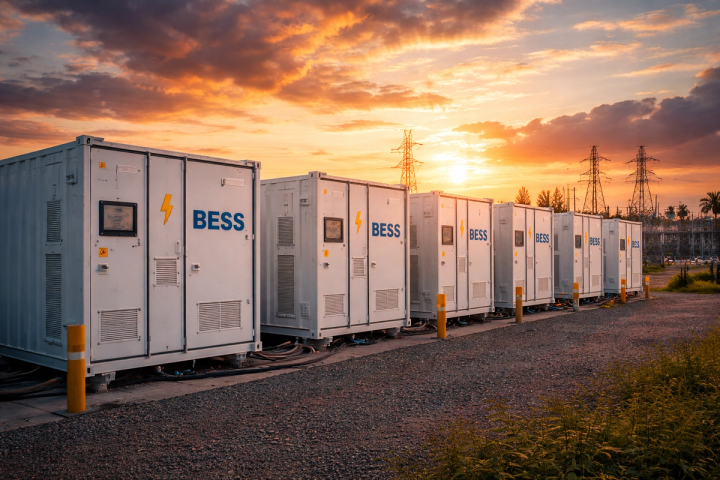
State-Level BESS Tenders Are Now the Fastest-Growing Segment in Indian Solar
West Bengal just floated a 500 MW / 2,000 MWh BESS tender. Telangana, Gujarat, and Maharashtra are all in the game. State-level storage tenders are exploding — here's what EPCs need to know.

India Hits 143 GW Solar Milestone — What this Really Means for EPCs
India's solar capacity has crossed 143 GW with 88% of new RE additions coming from solar. Here's what this record-breaking pace means for EPC opportunity, workload, and strategy in 2026.
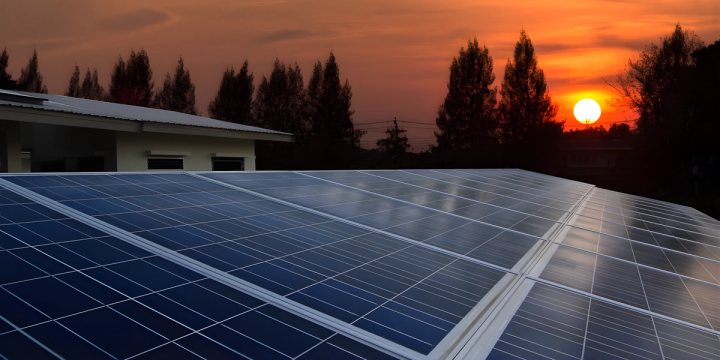
PM Surya Ghar Has Installed 25 Lakh Systems. The Target Is 1 Crore. The 75-Lakh Gap Is the Biggest EPC Opportunity in India Right Now.
25 lakh installed, 1 crore targeted. Parliamentary committee flags slow progress, FY27 deadline looming. Here's why India needs 2,300 rooftop installations per day — and what that means for EPCs.