Non-DCR Solar Panels After June 2026: What's Actually Banned, What's Still Allowed
Update (April 6, 2026): The June 1 deadline remains firm — no extensions have been announced. A new development adds urgency: India's certified domestic cell capacity (26.5 GW) covers only 12.6% of its module production capacity (210 GW). This means a DCR panel supply squeeze is likely before June — EPCs should lock supply now.
The Confusion Is Real — And It's Costing EPCs Money
Since late 2025, the phrase "Non-DCR panels will be banned from June 2026" has been spreading through WhatsApp groups, YouTube channels, and installer networks across India. Some of it is accurate. Most of it is oversimplified. And when EPCs make procurement decisions based on incomplete information, the financial consequences can be severe.
Here is what the Ministry of New and Renewable Energy (MNRE) has actually mandated, and what it means for your projects right now.
What Is Actually Happening on June 1, 2026
The ALMM List-II — the Approved List of Models and Manufacturers for solar PV cells — becomes mandatory for most projects commissioned on or after June 1, 2026. This is not a ban on Non-DCR panels in all contexts. It is a mandate that for government-backed projects and net-metered / open-access installations, the modules used must be made from cells that appear on ALMM List-II — which, by definition, are domestically manufactured cells.
The Supply Squeeze Nobody Saw Coming
Here is the number that should worry every EPC right now: India's total solar module manufacturing capacity is approximately 210 GW. Its ALMM-certified domestic cell capacity? Just 26.5 GW — covering only 12.6% of module capacity. Even as new cell manufacturing facilities come online in 2026, the gap between module demand and compliant domestic cell supply is enormous.
What this means in practice: the subset of modules that will be ALMM List-II compliant after June 1 is significantly smaller than total module supply. As the deadline approaches, demand for those compliant modules will spike. EPCs that wait until May or June will find themselves competing for a constrained pool of DCR-compliant stock.
The Hormuz crisis adds a second layer. Non-DCR panels, many of which are imported from China, face increased shipping disruption risk and elevated freight costs on routes affected by the broader crisis. Even for projects where Non-DCR is still permitted, import-dependent supply chains are less reliable than they were six months ago.

The 16-Digit Certificate Requirement
One detail that many EPCs are not yet tracking: MNRE has amended the ALMM order to require a unique 16-digit certificate for every DCR module claimed under government schemes. This traceability requirement is now the exclusive mechanism for DCR verification. If a manufacturer cannot provide this certificate, the module will not pass compliance review — regardless of its technical specifications.
The Three Things You Need to Do
Before April 30
- Audit your pipeline: For every project expected to commission after June 1, determine whether it is DCR-required. Government tender, PM Surya Ghar subsidy, or open-access / net-metered = DCR required.
- Lock supply early: Contact ALMM List-II compliant vendors now, before the June rush compresses availability. Request their traceability certificate process.
- Update client proposals: If a proposal assumes non-DCR modules for a subsidy-linked installation, it needs to be revised. Non-compliant installations will have subsidy claims rejected.
Related Articles
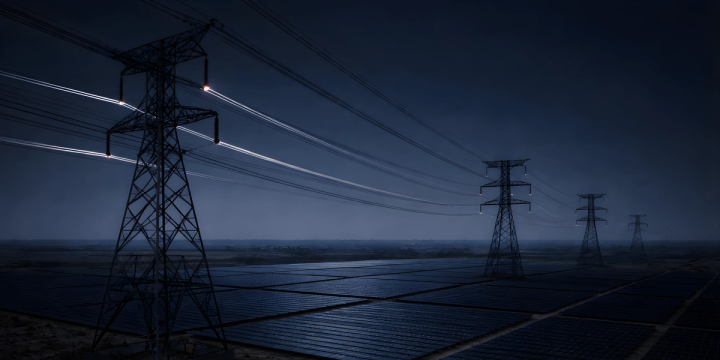
India’s Solar Grid Is Sending 35 GW of Power Nowhere
Crisil Ratings warns that over 35 GW of India's renewable capacity faces grid curtailment risk in FY27. Rajasthan and Gujarat are worst hit. Here is what it means for EPCs.

State-Level BESS Tenders Are Now the Fastest-Growing Segment in Indian Solar
West Bengal just floated a 500 MW / 2,000 MWh BESS tender. Telangana, Gujarat, and Maharashtra are all in the game. State-level storage tenders are exploding — here's what EPCs need to know.

India Hits 143 GW Solar Milestone — What this Really Means for EPCs
India's solar capacity has crossed 143 GW with 88% of new RE additions coming from solar. Here's what this record-breaking pace means for EPC opportunity, workload, and strategy in 2026.