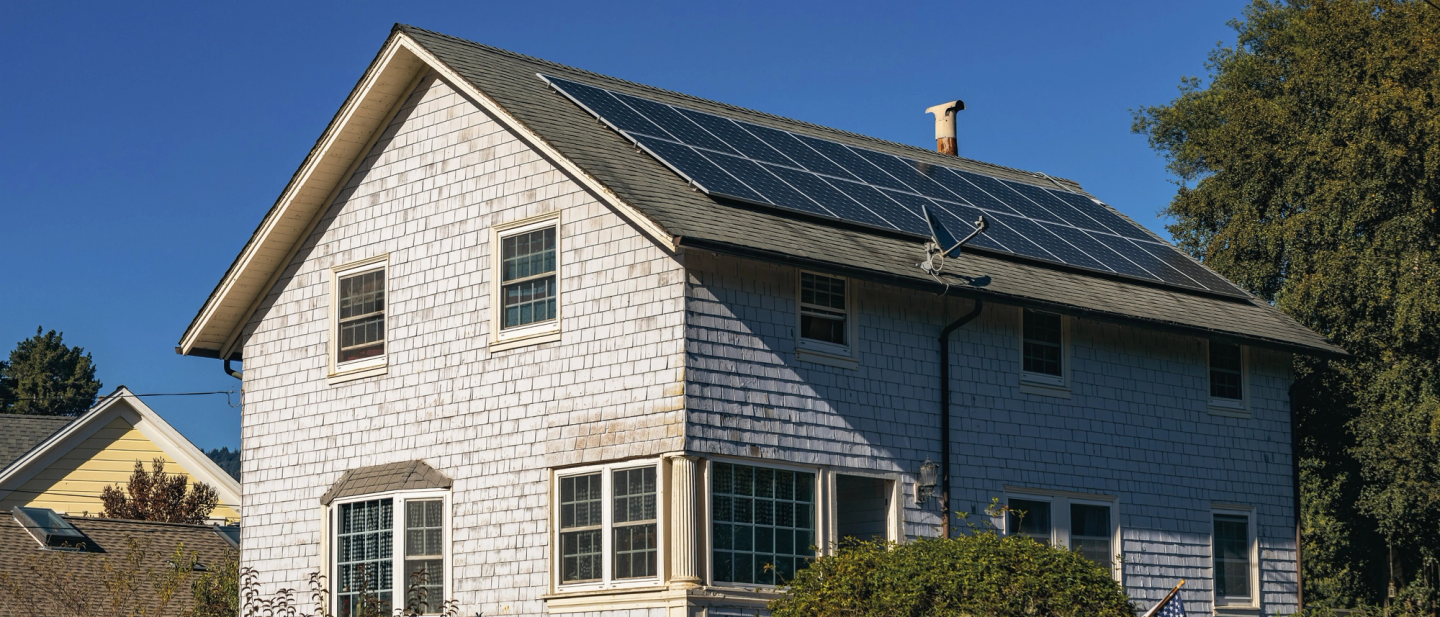
Megawatts for Maryland Grants: Rules, Bids and the Nov 30 Deadline
What the Program Is
Megawatts for Maryland is a state grant auction run by the Maryland Energy Administration (MEA). The Utility RELIEF Act of 2026 created it, and it is funded from the state's Strategic Energy Investment Fund. MEA says up to $100 million is available in this FY27 round, and the total awarded may be more or less. Trade reports say another $100 million is expected for FY28, which would make the program $200 million over two years.
The money helps pay for development, construction and interconnection of grid-scale projects. It is not a rebate on a small system. Grants range from $1 million to $80 million per project, unless MEA raises the maximum.
Applicants must be businesses or electric companies. Nonprofits, state and local governments, federal and foreign government bodies, school bodies and universities cannot apply. A company can submit several applications, but each covers one project, and each project can have only one application and one bid.
Key Dates
- Issued: October 26, 2026.
- Stage 1 (preliminary application): closes November 30, 2026 at 3 pm Eastern, through MEA's online portal.
- Stage 2 (binding bid and full documents): due January 22, 2027 at 3 pm Eastern, only for applicants MEA approves in Stage 1.
- Awards: expected in spring 2027.
- After an award: a letter of commitment within 21 days, and a signed grant agreement within three months.
- Missing information: MEA gives seven calendar days to supply anything it flags in either stage.
Which Projects Qualify
Project type | Minimum size | Notes |
|---|---|---|
Solar and other Tier 1 renewables | 5 MW-ac | Includes land-based wind, qualifying biomass, landfill and wastewater gas, small hydro under 30 MW |
Battery storage | 20 MWh-ac and 4 hours of discharge | Standalone, or co-located with Tier 1 generation, whether or not that generation is net metered |
Hybrid (generation plus storage) | Each part meets its own minimum | Costs must be split between the generation and the storage |
A project must be in Maryland and seeking interconnection to the PJM transmission system or a utility distribution system. It must also already be under development, meaning it has site control and has started its regulatory process, and it must not be substantially complete.
Several things rule a project out:
- Tier 1 generation that will be net metered, including projects in the Maryland Community Solar Program. A battery co-located with a net-metered system can still apply for the battery.
- Anything under the size minimums.
- Projects without site control or without a started regulatory process.
- Projects that conflict with MEA's Fossil Fuels Policy.
- Battery projects where a utility is recovering the capacity cost through its rate base.
- Projects that combine the grant with Maryland's Energy Storage Capacity Credits or other state energy funding for the same scope.
Federal tax credits are not excluded. In fact, Stage 2 asks applicants to state whether they plan to use the investment or production tax credit and to explain how the project qualifies.
How the Auction Picks Winners
The auction is a closed bid. Each applicant offers a price in dollars per MWh-ac, meaning the grant it asks for per megawatt hour it expects to deliver to the grid over the project's commercial life. MEA fixes the assumptions for technology lifetime and degradation, and applicants cannot change them. The total grant is then calculated by formula in MEA's bid calculator.
Price is the only scoring factor, at 100%. The lowest bid gets the highest score. MEA ranks bids and awards grants until the funding or the program's capacity target runs out. It also sets a maximum bid price that it has not disclosed, and any bid above it is not eligible. Partial grants are possible if the money runs short, and grants larger than the formula result are not.
The practical effect is that every extra MWh a project delivers lowers its price for the same grant. That favours projects with strong output, and it is why the output documents matter: solar projects must support their first-year MWh with a model such as PVWatts, PVSyst or HelioScope, and batteries must assume one full cycle a day, 365 cycles a year, with a stated round-trip efficiency and depth of discharge.
What Winners Must Put Up
The grant is paid in full only when the project reaches commercial operation. Until then the developer carries the cost, and MEA requires protection:
- A bond or guarantee for 10% of the grant. That is $100,000 on the smallest grant and up to $8 million on the largest. It can be a surety bond, a fully funded escrow account or an irrevocable letter of credit, and it stays in place for the whole implementation period.
- A signed grant agreement within three months of the award, and a letter of commitment within 21 days.
- About seven years from the grant agreement to reach commercial operation and meet reporting milestones, with extensions possible for good cause.
- Renewable energy credits from grant-funded Tier 1 generation, which must eventually be retired in an account the state can access.
- Maryland-qualified contractors. Work must be done by staff and contractors who hold the required Maryland licences and certifications, and companies the grantee contracts with must be in good standing with the state tax department.
Some costs incurred before the grant agreement date can still be reimbursed.
What Stage 1 Asks For
Stage 1 is a screening round, but it takes real paperwork. Applicants submit:
- An organisational chart showing everyone who owns more than 5% of the project.
- A narrative of up to five pages, which must describe one completed US project at least half the size of the proposed one, with commercial operation in the last seven years.
- Proof of that completed project: a commercial operation certificate, a utility interconnection agreement with permission to operate, commissioning and testing reports from the EPC, stamped single line diagrams or as-built specs, or a power purchase agreement acknowledgment.
- Dun & Bradstreet reports. An applicant or sponsor rated high risk on payment, delinquency or failure scores is ineligible.
- Proof of site control: ownership, or an option, lease or easement running at least 20 years.
- Proof that a regulatory process has started: a PJM new service request confirmation or project ID for transmission-connected projects, or the Maryland Public Service Commission case number or advance notice for distribution-connected projects, or evidence of an exemption.
- A timeline of completed milestones, a map, and a signed attestation.
Stage 2 adds the bid calculator and MEA's project financial model, three years of audited financial statements, lender and EPC references, a full milestone timeline, evidence of contact with county or local officials, a site plan showing layout and point of interconnection, and the output modelling.

What This Means for Solar and Storage EPCs
The announcement names EPCs in several places, so the program will reach contractors before any money does.
- Quotes will be requested early. Stage 2 requires itemised budgets, EPC proposals or quotes and cost breakdowns, with generation and storage costs separated for hybrids. Stage 1 closes in about five weeks, and Stage 2 follows roughly eight weeks after that.
- An EPC contract is a listed milestone, as is notice to proceed. Developers will want to show both.
- Your past work can qualify a developer. Commissioning and testing reports from an EPC are one accepted way to prove a completed project, as are stamped single line diagrams and as-built specs.
- Commercial operation date risk lands on the developer, because payment waits for it and a bond backs it. Expect that pressure to show up in EPC schedules and delay terms.
- Maryland licensing matters. Work must be done by contractors holding the required state certifications.
Where Design Software Fits
Stage 2 needs a site plan showing the layout and the point of interconnection, and the cost documents must separate generation from storage. Design software like Reslink produces the layout, bill of materials and single line diagram for the solar side, and supports ground-mount feasibility up to 1 GW, so the plan and the quote come from one set of assumptions. MEA asks for the energy output model from a tool such as PVWatts, PVSyst or HelioScope, which is a separate step.
See the full workflow → Book a demo
Frequently Asked Questions
Q1. What is Megawatts for Maryland?
A state grant auction for grid-scale solar and battery projects, run by the Maryland Energy Administration under the Utility RELIEF Act of 2026, with up to $100 million in this FY27 round.
Q2. What are the deadlines?
Stage 1 closes November 30, 2026 at 3 pm Eastern, and Stage 2 bids are due January 22, 2027 at 3 pm Eastern. Awards are expected in spring 2027.
Q3. Can rooftop or community solar projects apply?
No. Net-metered Tier 1 projects, including community solar, are excluded, and generation must be at least 5 MW-ac. A battery co-located with a net-metered system can apply for the battery alone.
Q4. How is the winner chosen?
Only price counts. The bid is the grant requested per MWh delivered over the project's life, and the lowest bids rank highest until the funding or capacity target is used up.
Q5. When is the grant paid?
In full, when the project reaches commercial operation. Winners must post a surety bond, escrow or letter of credit worth 10% of the grant, and have about seven years to finish.
Q6. Can the grant be combined with other incentives?
Not with Maryland's Energy Storage Capacity Credits or other state energy funding for the same project scope. Federal tax credits are not excluded, and applicants must explain their plan for them.
Q7. Does an applicant need past project experience?
Yes. Stage 1 requires one completed US project at least half the size of the proposed project, with commercial operation in the past seven years, plus a document proving it.
Final takeaway
This is a developer's program with a short fuse: Stage 1 closes in about five weeks and asks for site control, a started interconnection process and a comparable operating project. For EPCs, the useful signals are early quote requests, a hard commercial operation date pressure, and a chance to be named in a developer's proof of experience.
You May Also Like
- Maryland Net Metering Cutoff 2027: Confirmed vs Open for EPCs
- REAP Solar Grant 2026: Build First, Then Apply, What US EPCs Must Do
- US Interconnection Queue 2026: Solar and Storage Wait Times
Sources
- Maryland Energy Administration, FY27 Megawatts for Maryland Funding Opportunity Announcement (October 26, 2026)
- Office of the Governor of Maryland, Governor Moore Launches Program to Increase Energy Generation, Lower Electricity Costs (October 2026)
- pv magazine USA, Maryland launches $200 million competitive grant program for solar and energy storage (October 28, 2026), for the FY28 funding figure
This guide reflects the Maryland Energy Administration's funding announcement as of October 28, 2026. MEA can modify the announcement, so check the program page before relying on a date or figure.
Related Articles
Odisha Rooftop Solar Draft 2026: The Battery Rule Above 10 kW
Odisha's draft rooftop rules: a battery for every system above 10 kW, net metering limited to some consumers, and six ways to connect.
Gujarat Net Metering Draft 2026: What the New Rooftop Rules Change
Gujarat's draft rooftop rules: five metering options, a 30% offset cap for non-residential users, virtual net metering to 4 MW and a battery rule.
PM Surya Ghar Complaint Against Vendor: How to File and What Happens
Filing a PM Surya Ghar complaint against a vendor: the portal route, helpline, MNRE's 8 and 15 day SOP clock, and where to escalate.