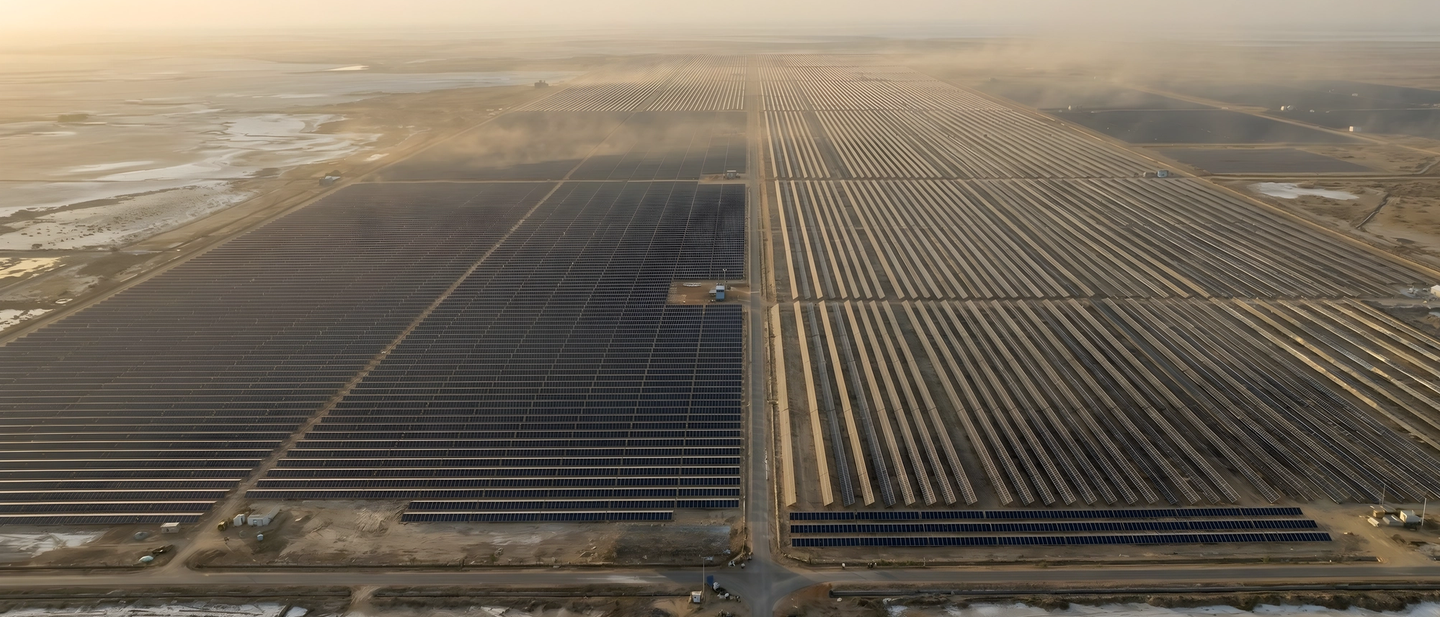
KPI Green’s Playbook: From First 15 MW to a 4.74 GW Solar Empire
One Company. One Blueprint Every EPC Should Study.
In 2021, KPI Green Energy's milestone announcement read: "Successfully commissioned 15 MW of capacity for Phase 1 under the Independent Power Producer (IPP) category." That line from a company milestones page that reads like a diary of deliberate, sequential execution, is the starting point for understanding how one of India's most successful solar IPP businesses was built.
As of Q3 FY2026, KPI Green Energy has a total solar portfolio of 4.74 GW across IPP and Captive Power Producer (CPP) categories. In January 2026, the company commissioned a 240 MWp solar project at the Khavda Solar Park in Gujarat — the same solar park where NTPC just crossed 10 GW. Its subsidiary Sun Drops Energia recently signed a battery energy storage purchase agreement with GUVNL for 445 MW / 890 MWh of standalone BESS. Its consolidated revenue in 9 months of FY26 exceeded ₹1,931 crore with profit after tax exceeding ₹354 crore. Its market capitalisation as of January 2026 stood at over ₹8,733 crore.
KPI Green’s rise was not just a story of scale; it was also a story of sequencing, financing, and execution discipline. It happened because of a specific, repeatable sequence of strategic decisions made over approximately five years. That sequence is directly replicable by any well-run mid-sized EPC with ambition, patience, and operational discipline.
The Five Strategic Moves That Built the Portfolio
Move 1: Launch CPP alongside IPP from day one. The Captive Power Producer model — where an industrial consumer holds equity in the solar project and buys the power for their own consumption — allows an EPC-turned-developer to build ownership stakes without requiring the full balance sheet exposure of a standalone IPP. KPI Green launched the CPP business category early and used it to build a diversified client base. The CPP model provides a captive offtaker (the equity-holding industrial client), which significantly de-risks the revenue side of the asset. This is the model that most mid-sized EPCs can start with today — find an existing commercial client who wants long-term energy cost certainty, offer them 26% equity in the project in exchange for a 20-year offtake PPA, and use the EPC margin from construction to partially fund your own equity contribution.
Move 2: Use institutional debt early and aggressively. KPI Green's milestone timeline includes a specific entry: "Power Finance Corporation Ltd. (PFC) approved and signed a facility agreement to part finance 25 MW solar plant." Then later: "Switching from PFC to SBI results in a reduction in interest rates from an average of 11.30% p.a. to 7.45% p.a." This two-step — get institutional debt early, then refinance to better terms as the track record grows — is a sophisticated financial move that reduces the cost of capital as the portfolio scales. Many EPCs approaching the IPP transition think in terms of equity capital: "how do I find ₹20 crore to buy this plant?" The smarter question is: "how do I structure this so project debt finances 70–75% of it, and I only need ₹5–6 crore of equity?" PFC, IREDA, and increasingly commercial banks like SBI offer project finance for solar IPP assets at competitive rates for developers with proven execution track records.
Move 3: Build hybrid expertise before it was mainstream. KPI Green's recent commissions include a 92.15 MWp hybrid renewable energy project — wind and solar together — achieved grid synchronization ahead of schedule. The company is working on a 250 MW solar and a 370 MW hybrid project both expected to commission by October 2026. This hybrid capability is not an accident. KPI Green has consistently expanded its technical envelope to include technologies and project types that carry higher margins and create more differentiated value for offtakers. Solar-only ground-mount projects are commoditising; hybrid and storage-integrated projects are where the premium still exists.
Move 4: Scale procurement to match portfolio scale. KPI Green recently placed a ₹15 billion (₹1,500 crore) order with Emmvee for TOPCon bifacial modules. That is a large, long-term procurement commitment that allows Emmvee to plan production and allows KPI Green to lock pricing at scale. As your portfolio grows, your procurement leverage grows with it. The EPC buying 500 kW of modules per month has no pricing leverage over a manufacturer. The developer buying 250 MW per year in a single order has substantial leverage. The path from "price taker" to "price maker" in module procurement runs through portfolio scale.
Move 5: Add BESS before the market mandates it. Sun Drops Energia's 445 MW / 890 MWh BESS agreement with GUVNL positions KPI Green at the frontier of India's storage market — before utility-scale BESS has become a commodity. The lesson here mirrors Move 3: companies that build competency in a technology before it is mainstream capture the early-mover margin. BESS in 2026 is where solar-plus-storage in 2021 was — real, growing, but not yet widely executed. The companies who build BESS competency in 2026 will be the preferred BESS contractors and developers of 2028.
What You Can Start With Today
KPI Green's full playbook requires scale that most readers don't have yet. But the first two moves — CPP with industrial equity partners, and early institutional debt — are available to any EPC with a solid execution track record and an existing C&I client relationship. If you have installed solar for an industrial client who trusts you and pays their bills on time, you have the foundation for a group captive CPP project. If you can identify one such project per year and retain 26–49% equity, you are three to five years from a portfolio that generates meaningful recurring revenue.
Data Source: All KPI Green milestones from KPI Green Energy's official milestone page and SolarQuarter (March 2026). Revenue (₹1,931 Cr 9M FY26) and PAT (₹354 Cr) from company disclosures. Market cap (₹8,733 Cr) as of January 20, 2026 per company website. Khavda 240 MWp commissioning from SolarQuarter (March 2026). Sun Drops Energia GUVNL BESS agreement from Mercom India/RenewableWatch (March 2026).
Related Articles
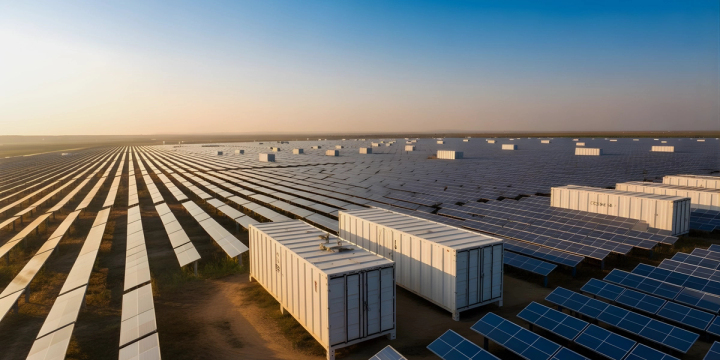
92 GWh of Battery Projects, a 900 MW EPC Turning IPP, and the Pivot to Energy Security
India's battery storage pipeline hits 92 GWh. EPCs are becoming IPPs. The solar business model is shifting under your feet. Here's how to stay ahead.

Oil at $126, Hormuz Shut, LPG Vanishing — Why Solar Just Became India’s Most Important Business
The Hormuz crisis has sent oil past $126 and shut India’s LPG supply. Here’s why solar EPCs are now critical to India’s energy survival — and how to capitalize.