
Japan FIP Auction Deadline 2026: September 30 Guide for EPCs
The Distinction That Most EPCs Miss: Bid vs Certification
When EPCs discuss the September 30 deadline, the typical framing is "submit a bid before September 30." That framing is incomplete and can be fatally misleading. September 30 is not the bid submission date. It is the FIP certification (FIP認定) date. The two are separated by a procedural chain that takes months.
Winning a bid in a FIP auction (FIP入札) operated by OCCTO (電力広域的運営推進機関, the Organization for Cross-regional Coordination of Transmission Operators) awards you a provisional contract. To convert that provisional contract into FIP certification, the document that entitles your project to 20 years of Feed-in Premium revenue, you must then: pay a deposit to OCCTO within the specified window after the award; submit formal FIP certification documentation to METI and receive written approval; and confirm the grid connection agreement with your local transmission company. Each of these has its own lead time. The certification deadline is September 30. Work backward from there to understand when your bid submission must actually happen.
The critical path backward from September 30: FIP certification requires post-bid deposit, METI documentation, and grid connection confirmation. Realistically, EPCs targeting certification by September 30 must have their bid submitted at least 3 to 4 months earlier. For remaining 2026年度 rounds, that window is closing now.
The March 2026 METI Decision: What It Means for Every System Size
The METI primary announcement from March 19, 2026 confirms four auction rounds (入札: 4回) for 2026年度 at a ceiling price (上限価格) of JPY 9.6/kWh across all rounds. From 2027年度 onwards, ground-mounted solar above 250 kW is excluded from FIT and FIP support entirely.
The ANRE rate schedule confirms commercial ground-mounted solar of 10 kW and above (事業用太陽光 地上設置) is excluded from new FIT/FIP certification from 2027年度, except for projects awarded in the 2026年度 auctions.
Two important points from that ANRE wording. First, it covers 10 kW and above, not just 250 kW and above. The auction applies to systems above 250 kW. For ground-mounted systems between 10 and 250 kW, they are also excluded from new FIT/FIP certification from 2027年度, but through a different pathway, their fixed FIT rates end rather than their auction access. Second, the exception is specifically for "2026年度の落札案件", projects actually awarded in a 2026年度 auction. A project that bids but does not win receives no protection from the 2027年度 exclusion.
The Ground-Mount Support Picture by System Size
The ANRE rate schedule confirmed by METI primary sources presents a clear structure for 2026年度 that EPCs must communicate accurately to clients across all project sizes.
Ground-mount above 250 kW
Must participate in the FIP auction (入札) to receive any government support. Four rounds in 2026年度 at a ceiling price (上限価格) of JPY 9.6/kWh. Winning bids receive FIP support for 20 years from certification. Projects not certified by September 30 receive no government support mechanism of any kind. From 2027年度: no auctions, no support, excluded from the scheme entirely.
Ground-mount 50 kW to 250 kW
Subject to FIP certification (入札対象), but the specific auction threshold and rate applicable to this range should be confirmed against the current ANRE schedule (enecho.meti.go.jp) for the applicable project size. This range sits between the fixed-rate FIT segment and the full auction requirement and has specific rules that changed between 2025年度 and 2026年度.
Ground-mount 10 kW to 50 kW
Confirmed by ANRE primary: JPY 9.9/kWh in the first half of 2026年度 and JPY 9.6/kWh in the second half. This is a fixed FIT rate (買取価格), not an auction price. No bidding is required. However, the ANRE primary note confirms this category is also excluded from new FIT/FIP certification from 2027年度. 2026年度 is the last year any new ground-mount installation in this size range can receive government support.
Rooftop solar, any size above 10 kW
Exempt from the auction requirement entirely, and unaffected by the 2027年度 ground-mount exclusion. Full rooftop FIT rate structure and the strategic case for the ground-mount-to-rooftop pivot are covered in our Mega Solar Countermeasure guide.
The Current Auction Round Status
METI confirmed four rounds for the 2026年度 FIP auction cycle. The rounds are administered by OCCTO (電力広域的運営推進機関) and results are published at nyusatsu.occto.or.jp. Each round typically runs 4 to 8 weeks from opening for business plan submissions to results announcement.
Because round schedules are published by OCCTO and can shift, EPCs should verify the current status directly at nyusatsu.occto.or.jp rather than relying on third-party summaries that may be outdated. The immovable constraint is not any individual round's bid deadline, it is the September 30 FIP certification (FIP認定) deadline that METI has set as the final date for all 2026年度 certifications. Whether one, two, or three rounds remain open, the critical path from bid submission to certification means time is already short for projects targeting this window.
Before any planning decision: Go to nyusatsu.occto.or.jp, find the current solar auction round schedule for 2026年度, confirm whether the round you are targeting is still open for business plan submission, and calculate backward from the round's expected certification date to understand whether September 30 is achievable.
The Stakeholder Briefing Requirement Most EPCs Miss Until It Is Too Late
The most common reason technically ready projects fail to reach FIP certification by September 30 is not documentation or grid connection, it is the stakeholder briefing requirement (ステークホルダー説明). Before submitting a bid, project proponents must complete a briefing process with local municipalities, adjacent landowners, and affected community members. This process typically takes one to three months minimum and frequently longer if stakeholders require multiple engagement sessions.
The briefing must be complete before the bid is submitted, not concurrently. A project that has not completed stakeholder briefing cannot submit a bid regardless of its technical and financial readiness. For any project currently in development that has not yet started the stakeholder process, that process must begin immediately. The briefing window is the longest lead-time item in the entire pre-bid sequence and the one most often underestimated.
What the Critical Path Actually Looks Like
Working backward from September 30, the following table shows the realistic required completion dates for each stage of the pre-certification process. EPCs should use this as a planning tool, not a guarantee. Actual timelines vary by project size, grid area, and municipality responsiveness.
What Happens After September 30: The Post-FIP Revenue Case
From 2027年度, new large-scale ground-mounted solar above 250 kW has no government revenue support mechanism under 再エネ特措法 (the Renewable Energy Special Measures Act). The project can still be built. The revenue model changes entirely.
Corporate PPA (コーポレートPPA)
Corporate Power Purchase Agreements (コーポレートPPA) are the primary revenue alternative for ground-mounted solar from 2027年度. A PPA is a direct contract between a generator and a corporate buyer, typically 10 to 20 years, at a fixed price per kilowatt-hour that provides the generator revenue certainty without government support. The Japanese corporate PPA market is growing significantly: Japanese corporations with net-zero commitments and RE100 registrations are actively seeking direct renewable energy contracts to meet their disclosed sustainability targets. Major manufacturers, technology companies, and retailers have signed or are actively negotiating PPAs.
The challenge: PPA negotiations are complex, counterparty-specific, and time-intensive. A PPA cannot be executed in weeks, it requires identifying creditworthy offtakers, negotiating contract terms, and aligning on long-term price structures. EPCs and developers who want a PPA in place for a post-FIP project need to begin those conversations now, running in parallel with any remaining FIP auction activity. The corporate PPA market does not operate on auction timelines. Relationships and negotiations take the time they take.
Wholesale electricity market (電力市場)
Projects without a PPA can sell into Japan's wholesale electricity market through direct market participation. Revenue is variable, tracking the spot price on JEPX (日本卸電力取引所, Japan Electric Power Exchange). This exposes the project to price volatility, including zero or negative pricing during periods of high renewable generation and low demand. Without revenue certainty, project financing on a merchant basis is materially harder than on a contracted basis. For most EPCs advising clients on project viability, the wholesale-only revenue case requires a different financial model with wider scenario ranges.
Japanese Key Terms Reference
For EPCs and developers working with Japanese counterparties, regulators, or documentation, the primary Japanese terms referenced in this guide:
- 固定価格買取制度(FIT制度): Feed-in Tariff scheme
- フィードインプレミアム制度(FIP制度): Feed-in Premium scheme
- 再エネ特措法: Renewable Energy Special Measures Act
- 入札: Auction / competitive bidding
- 上限価格: Ceiling price (JPY 9.6/kWh for all 2026年度 solar FIP rounds)
- 買取価格: Feed-in tariff / purchase price
- 基準価格: FIP reference price
- FIP認定: FIP certification
- 地上設置: Ground-mounted installation
- 屋根設置: Rooftop installation
- 事業用太陽光発電: Commercial solar power generation
- 2027年度以降: From FY2027 onwards (support ends for ground-mount)
- 電力広域的運営推進機関 (OCCTO): Organization for Cross-regional Coordination of Transmission Operators
- ステークホルダー説明: Stakeholder briefing (required before bid submission)
- コーポレートPPA: Corporate Power Purchase Agreement
- 再エネ賦課金: Renewable energy surcharge (JPY 4.18/kWh for 2026年度)
- 初期投資支援スキーム: Initial investment support scheme (rooftop FIT two-tier rate)
Frequently Asked Questions
Q1. Is September 30 definitely the FIP certification deadline or could it be extended?
METI's March 19, 2026 announcement describes the end of large-scale solar FIP support after 2026年度 as a definitive policy position. The announcement states: "2027年度以降は、当該区分はFIT/FIP制度における支援の対象外となります" (from 2027年度 onwards, this category is excluded from FIT/FIP support). No extension mechanism or review clause has been identified in the primary source text or in analysis by White and Case Japan. Planning around an extension that may not materialise is the highest-risk posture for developers with projects in the pipeline. Treat September 30 as a hard deadline and plan the corporate PPA alternative in parallel regardless.
Q2. What is the difference between winning a bid and achieving FIP certification (FIP認定)?
Winning a bid in an OCCTO FIP auction (入札) is the first step in a multi-stage process. It awards you a provisional contract position and a locked-in FIP reference price. To convert that into FIP certification (FIP認定), which is the document that entitles your project to 20 years of Feed-in Premium revenue, you must then pay a security deposit to OCCTO within the specified post-award window, submit formal FIP certification documentation to METI, receive written certification approval from METI, and confirm the grid connection agreement. Each of these has its own lead time. The certification deadline is September 30. Winning the bid several months before that date is required to complete all subsequent steps in time. An EPC who wins a bid in August and assumes they have time to certify by September 30 is taking a very significant risk.
Q3. What happens to ground-mounted solar projects between 10 kW and 250 kW from 2027年度?
The ANRE primary rate schedule confirms that all ground-mounted solar above 10 kW is excluded from new FIT/FIP certification from 2027年度, not just the above-250 kW category. For ground-mount between 10 kW and 250 kW, the 2026年度 fixed FIT rates are the last year of support: JPY 9.9/kWh in the first half of the procurement year and JPY 9.6/kWh in the second half for the 10 to 50 kW range. Projects in this range do not need to bid in the OCCTO auction, but they do need to achieve FIT certification during 2026年度 to receive support. Projects in this range that do not achieve certification by end of 2026年度 will have no government support pathway and will need to rely on direct market sales or a corporate PPA (コーポレートPPA) for their revenue model.
Q4. What is the stakeholder briefing requirement and how long does it take?
The stakeholder briefing requirement (ステークホルダー説明) requires project proponents to brief local municipalities, adjacent landowners, and affected community members before submitting a bid. The minimum timeline is one to three months, and in practice often longer if multiple engagement sessions are required. The briefing must be complete before bid submission, it cannot run concurrently. For any project currently targeting a remaining 2026年度 auction round, the stakeholder briefing is the longest-lead item in the critical path. If it has not started, it must start this week. Projects that are technically and financially ready but have not completed stakeholder briefing cannot submit a bid regardless of their readiness on other dimensions.
Q5. Does rooftop solar face the same September 30 deadline?
No. Rooftop solar (屋根設置) is explicitly exempt from the FIP auction requirement regardless of system size above 10 kW, and unaffected by the 2027年度 exclusion applying to ground-mount. Full rate structure is covered in our Mega Solar Countermeasure guide. September 30, 2026 is only an urgent deadline for ground-mounted commercial solar above 10 kW. For EPCs building a Japan portfolio, the strategic pivot is clear: maximize the ground-mount FIP pipeline for projects that can reach September 30 certification, and build the commercial rooftop FIT pipeline that sustains the business from 2027年度 onwards.
Q6. How mature is Japan's corporate PPA market for post-FIP ground-mount projects?
Japan's corporate PPA (コーポレートPPA) market is growing but still relatively nascent compared to Europe or the US. The primary drivers are Japanese corporations with RE100 registration commitments and internal net-zero targets that require contracted renewable energy to meet disclosed sustainability goals. Major manufacturers, semiconductor companies, logistics firms, and retailers are active in the market. However, PPA negotiations in Japan are time-intensive and relationship-dependent. Unlike an auction bid, where the process is standardised and the timeline predictable, a corporate PPA requires identifying a creditworthy offtaker, negotiating contract terms and price structure, and aligning on 10 to 20-year commitments that both parties need board-level approval for. EPCs building a Japan strategy beyond September 30 should begin corporate PPA conversations now, running in parallel with any FIP auction activity. The two tracks have different timelines and must run simultaneously.
You May Also Like
- Japan Mega Solar Ban 2026: Rooftop FIT at JPY 19/kWh Is the Only Remaining Government-Backed Path
- Japan FIT Solar Curtailment 2026: FIT vs FIP Guide for EPCs
- Brazil Solar Curtailment 2026: What EPCs Must Know Before Their Next Project
Sources
- METI Primary Announcement, March 19, 2026 — meti.go.jp — 4 auction rounds for 2026年度 at JPY 9.6/kWh ceiling; 2027年度 exclusion of ground-mount from FIT/FIP confirmed; rooftop FIT rates JPY 19/kWh (years 1-5), JPY 8.3/kWh (years 6-20)
- ANRE FIT/FIP Rate Schedule (Primary) — enecho.meti.go.jp — Confirms ground-mount 10kW+ excluded from new FIT/FIP certification from 2027年度; auction applies to 250kW+ (rooftop exempt); fixed FIT rates confirmed for 10-250kW ground-mount
- OCCTO Auction Portal (Primary) — nyusatsu.occto.or.jp — Current and historical FIP auction round schedules and results; verify current 2026年度 round status here before any planning decisions
- PV Magazine, March 19, 2026 — pv-magazine.com — English-language summary of METI March 19 announcement; FY2026 timeline confirmed; residential tiered FIT scheme confirmed
- White and Case Japan Renewable Energy Update, March 2026 — whitecase.com — Legal analysis confirming stakeholder briefing requirement and post-FIP corporate PPA pathway; confirms no extension mechanism in METI announcement
Related Articles
Solar & Storage Live UK 2026: EPC Guide
NEC Birmingham, September 22-24. Confirmed speakers, six conference tracks, and the live grid-connection fight EPCs should actually watch.

Solar Design Software for EPCs in Botswana
Botswana's Rooftop Solar Programme runs through BPC. What EPCs need for compliance, and how Reslink fits a market just getting started.
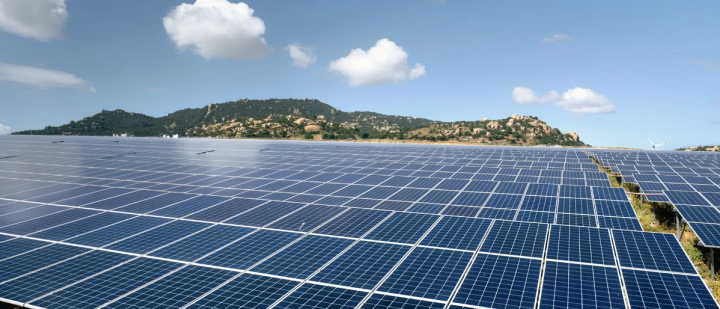
US Energy Storage Hits Record 20.2 GWh in Q2 2026
US energy storage hit a record 20.2 GWh in Q2 2026, 44% paired with solar. What the SEIA/Benchmark data signals for solar EPCs globally.