How to Size and Quote Battery Storage for Commercial Solar in India
The Rule and How to Size For It
Since April 1, 2026, any new commercial solar or open access project above 100 kW applying for grid connectivity in Maharashtra must include battery storage: at least 50% of solar capacity, for a minimum of 2 hours, rising to 4 hours from FY2030-31. For the full regulatory picture, including the battery leasing alternative and related DISCOM and REC mechanisms, see our Maharashtra BESS Mandate guide. Here is exactly how to size and cost that requirement for a client.
The Sizing Formula — Simple Version
For a commercial project above 100 kW in Maharashtra, the calculation is straightforward:
- Battery power (kW) = Solar capacity (kW) × 50% minimum
- Battery energy (kWh) = Battery power (kW) × 2 hours minimum
A 200 kW solar array therefore requires a minimum 100 kW / 200 kWh battery system. A 500 kW array requires minimum 250 kW / 500 kWh. These are compliance minimums — the client may benefit from a larger system depending on their load profile and ToD tariff structure.
The technology choice for commercial scale storage in India in 2026 is almost universally Lithium Iron Phosphate (LFP) — the safest, most cost stable lithium battery chemistry. LFP does not use cobalt (which has supply chain risk) and has a longer cycle life than NMC chemistry. For a commercial installation, specify LFP unless there is a specific reason to do otherwise.
What It Costs in 2026
LFP battery systems at commercial scale in India cost approximately Rs 3 to 5 lakh per 100 kWh of installed capacity including the Battery Management System, inverter integration, and commissioning. This gives a cost range for the mandatory minimum:
- 100 kW solar project (minimum compliance: 50 kW / 100 kWh): Rs 3 to 5 lakh for storage
- 200 kW solar project (minimum compliance: 100 kW / 200 kWh): Rs 6 to 10 lakh for storage
- 500 kW solar project (minimum compliance: 250 kW / 500 kWh): Rs 15 to 25 lakh for storage
These costs are significant — a 200 kW solar project itself typically costs Rs 80 to 100 lakh, so the storage component adds 6 to 12%. The critical point in your proposal is presenting this not as an unavoidable cost, but as one that generates its own return through Time of Day tariff savings.
The ToD Savings Argument
Maharashtra's commercial grid tariff under MSEDCL has significant Time of Day (ToD) variation. Peak hours (typically 6 PM to 10 PM) are charged at a premium rate — often Rs 2 to 3 per unit above the base rate. A factory without storage exports excess midday solar generation to the grid at low export tariffs and then purchases evening power at peak rates. A factory with storage shifts the midday solar surplus into the evening peak period, eliminating the grid purchase at the most expensive rate.
For a 200 kW solar system with 200 kWh of storage in a Maharashtra industrial setting, at the stated Rs 2 to 3 per unit ToD premium, this arbitrage saves approximately Rs 1.5 to 2.2 lakh per year. Against a storage system cost of Rs 6 to 10 lakh, the storage pays for itself in approximately 3 to 5 years independently of the solar system's economics, consistent with real-world Maharashtra commercial ToD tariff spreads. Present this calculation in your proposal and the battery stops being a compliance cost — it becomes an investment with a faster payback than the solar system itself.
Action this week: Build a simple BESS sizing worksheet into your commercial solar proposal template. For any Maharashtra project above 100 kW, the worksheet should automatically calculate the minimum battery requirement, the system cost range, the estimated ToD savings per month, and the storage payback period. If you do not have this ready before your next site visit, you are unprepared for the most common client question after April 2026: "How much extra will the battery cost and is it worth it?"
Frequently Asked Questions
Does the Maharashtra storage mandate apply to existing commercial solar installations?
No. The mandate applies only to new projects applying for grid connectivity from April 1, 2026 onwards. Existing installations with approved connectivity are not required to retrofit storage. However, the Maharashtra RE and Storage Policy actively encourages existing rooftop solar systems to add storage voluntarily — and offers priority grid connectivity to storage-integrated projects as an incentive.
Can the client use a diesel generator instead of a battery to meet the storage requirement?
No. The mandate specifically requires Battery Energy Storage Systems (BESS) - it cannot be satisfied by diesel backup. A diesel generator is not a storage system for the purposes of this policy. The battery must be capable of storing and discharging electricity from the solar system, not generating independently from diesel fuel.
Will other states introduce similar BESS mandates?
Very likely, over the next 12 to 24 months. Maharashtra is the first state to mandate storage for commercial rooftop solar, but the policy logic applies nationally — as solar penetration increases, the grid needs storage to absorb the midday surplus and deliver power in the evening. Tamil Nadu, Karnataka, and Rajasthan have all run large scale BESS tenders at the utility level. The CEA's 2026 technical amendment for BESS, effective April 2027, will create a national standards framework that makes state level mandates easier to implement. EPCs in all states should start developing solar plus storage proposal capability now.
Sources
- EQ Magazine — eqmagpro.com — Maharashtra RE and Storage Policy 2025–35: storage mandates, April 1, 2026 effective date
- Saur Energy — saurenergy.com — Maharashtra mandates 100 GWh storage as core of new RE policy
- Energy Storage News — energy-storage.news — India's energy storage market 2025: tariff benchmarks, GUVNL Phase VII tariff Rs 1.85 to 1.89 lakh/MW/month
- CEA — cea.nic.in — Technical Standards for Construction of Electrical Plants and Electric Lines Amendment Regulations, 2026
Related Articles
Gujarat BESS Regulations 2026: What the Final Rules Say for EPCs
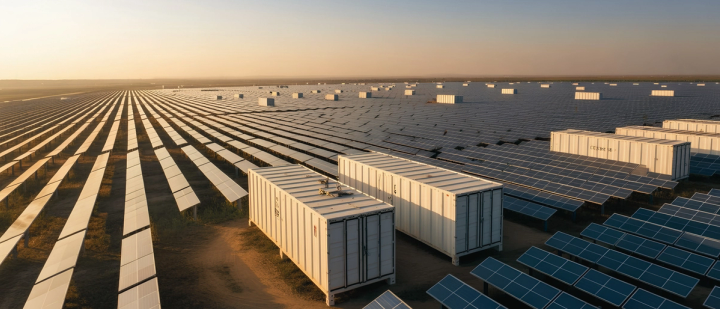
Gujarat's final BESS rules: above 1 MW for standalone, GEDA registration, and what behind-the-meter batteries need.
US Commercial Solar + Battery Storage in 2026
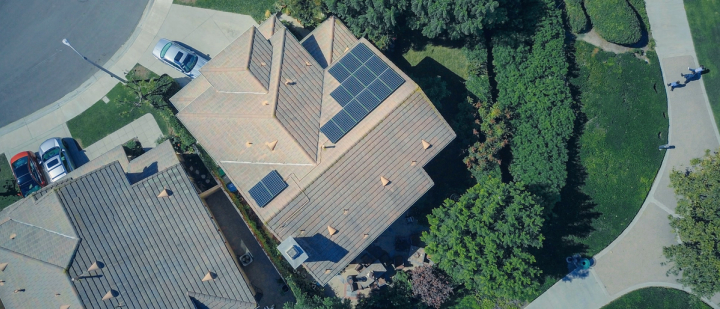
Model US commercial solar and battery payback using demand charges, TOU rates, load data, export rules and 2026 EPC cost drivers.
Commercial Solar + Battery India: Cost, Payback & Rules
Commercial solar + battery costs, payback, sizing and 2027 compliance guidance for Indian EPCs.