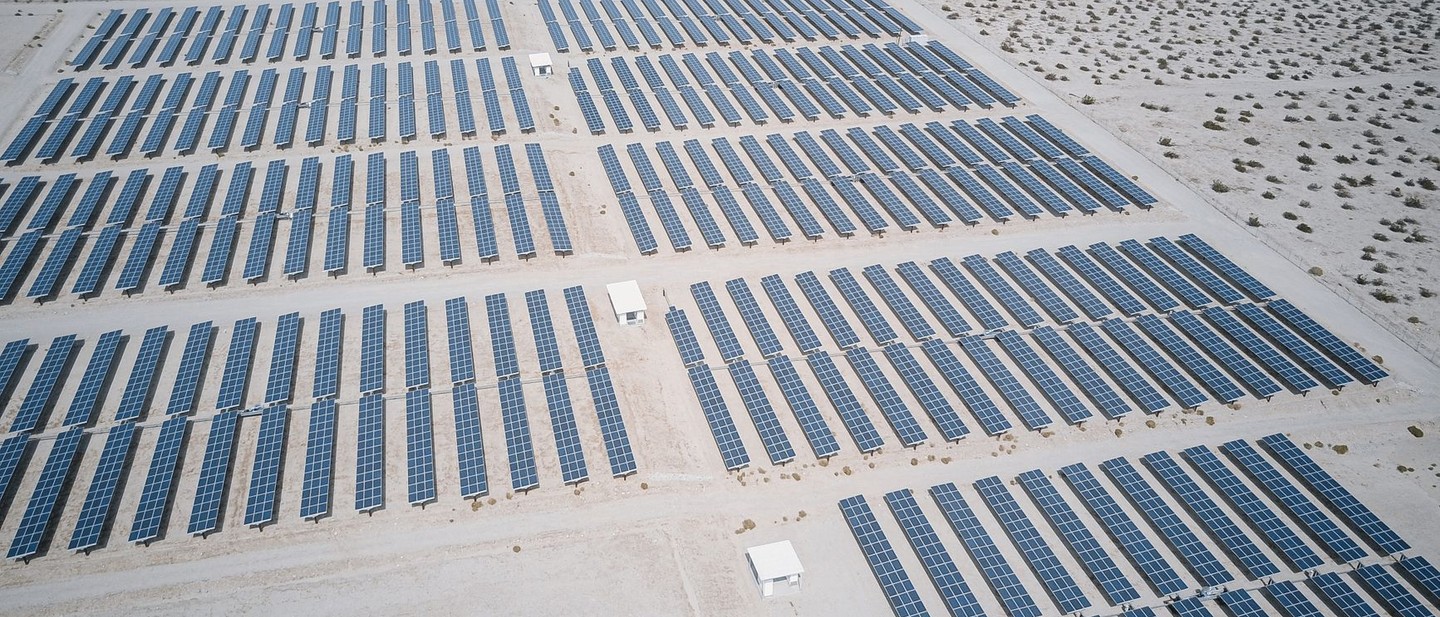
HARTEK Secures 400 MW Solar EPC Contract in Rajasthan, Redefining the Indian Utility‑Scale Market
What the 400 MW Rajasthan Contract Means for the Indian Solar EPC Market
The announcement, reported by Energetica India Magazine on 14 July 2026, confirms that HARTEK has secured a 400 MW utility‑scale solar EPC contract in Rajasthan. This award marks one of the largest single EPC deals announced in the Indian market in 2026 and expands HARTEK’s utility‑scale renewable portfolio. The scale of the contract illustrates the accelerating pace of large‑capacity solar development in Rajasthan, a state that continues to attract significant private investment under India’s national renewable energy targets.
India’s 2026 solar target of 100 GW of utility‑scale capacity, set by the Ministry of New and Renewable Energy, relies heavily on high‑growth states such as Rajasthan, which contributed 12 GW of commissioned capacity by the end of 2025 according to the Rajasthan Renewable Energy Corporation’s annual report. The new 400 MW project therefore adds roughly three percent to the state’s cumulative capacity and moves the nation closer to the 2026 goal.
Historically, Rajasthan’s utility‑scale solar pipeline has expanded rapidly. In 2018 the state had just over 1 GW of commissioned utility‑scale projects; by 2023 that figure had risen to more than 12 GW, reflecting a compound annual growth rate of over 55 percent, as documented in the RREC 2023 capacity dashboard. This growth trajectory has encouraged EPC firms to scale up their operational capabilities, and the HARTEK win is a direct result of that market evolution.

Since the launch of the solar auction scheme in 2015, Rajasthan has consistently been the top‑winning state in annual auctions, accounting for roughly 30 percent of total awarded capacity nationwide through 2025. The MNRE Solar Auctions Report 2025 notes that the state’s strong land‑availability profile and high‑irradiance zones make it a preferred destination for large‑scale bids, driving a steady influx of EPC contracts. This structural advantage explains why EPCs such as HARTEK are eager to secure projects in the region.
The previous record EPC award in India was a 300 MW contract to Adani Green Energy in Gujarat in 2022, according to PV Tech’s coverage of record bids. HARTEK’s 400 MW win therefore establishes a new benchmark for EPC scale in the country and underscores a shift toward even larger, integrated development models.
EPC perspective: This contract demonstrates that EPC firms capable of delivering high‑capacity projects on tight schedules will capture the most valuable opportunities in the evolving Indian market.
Project Overview – Scope and Key Stakeholders
- Capacity: 400 MW (AC) solar generation plant.
- Location: Rajasthan, India (exact site details not disclosed in the source).
- Primary EPC: HARTEK.
- Project developer: Not named in the source; typical projects involve state‑level developers or private independent power producers.
- Financing partners: While the source does not list specific financiers, large utility‑scale solar projects in Rajasthan commonly secure a mix of debt and equity from domestic banks, multilateral lenders, and renewable‑focused investors.
The contract’s size places the project among the top tier of utility‑scale solar installations in India, requiring extensive engineering, procurement, and construction coordination.
Why HARTEK Won – Competitive Edge Highlighted by the Announcement
Energetica India Magazine notes that HARTEK’s win reflects its “expanding utility‑scale renewable portfolio” and suggests that the company’s prior experience in multi‑hundred‑megawatt projects was a decisive factor. The implied competitive advantages include:
- Proven delivery record on multi‑hundred‑megawatt projects.
- Strong relationships with equipment suppliers and local authorities.
- Ability to assemble financing structures that meet developer and lender requirements.
These attributes likely positioned HARTEK favorably against competing bids.
Project Segmentation – EPC Responsibilities for the 400 MW Rajasthan Contract
Site Preparation and Land Use
Rajasthan’s land‑use policy for solar projects mandates a No‑Objection Certificate from the Rajasthan Renewable Energy Corporation before any earth‑moving activity. The certificate requires evidence of land‑lease agreements, desert‑soil stabilization plans, and compliance with the state’s water‑usage guidelines. According to the RREC “Solar Project Land Acquisition Guidelines 2022,” EPCs must submit a detailed site‑preparation schedule that includes dust‑control measures and native‑vegetation restoration plans. Failure to adhere to these conditions can result in a halt of construction activities and financial penalties.
Logistical challenges of desert sites also demand specialized equipment. Sand‑drift mitigation measures, such as windbreak fences and geotextile mats, are commonly specified in EPC contracts for Rajasthan projects. A 2023 PV Tech article on desert‑site solar construction notes that incorporating such measures can add 5‑10 percent to the overall EPC cost but reduces long‑term O&M expenses caused by sand abrasion on modules.
Grid Connection and Transmission
Connecting a 400 MW plant to the state grid requires coordination with the Rajasthan Power Transmission Company (RPTCL). The standard interconnection voltage for projects of this size is 33 kV, with step‑up transformers required to feed the 132 kV transmission network. RPTCL’s 2022 interconnection handbook specifies a mandatory grid impact study that must be completed before the final design is submitted. The study evaluates short‑circuit levels, voltage stability, and reactive power support, and it must be approved by the state load‑dispatch centre. EPCs are responsible for delivering the required electrical design package within a 90‑day window after the grid study approval.
Procurement and Logistics
Sourcing modules, inverters, and mounting structures for a 400 MW plant involves managing a complex supply chain that spans multiple continents. Imported components must clear Indian customs under the “Import of Renewable Energy Equipment” tariff schedule, which offers a reduced duty of 5 percent for certified solar modules. A 2024 PV Tech logistics feature highlights that delays at Indian ports have added an average of 15 days to module delivery timelines for projects in Rajasthan. To mitigate this risk, EPCs often pre‑stage goods at inland container depots near Jaipur or Jodhpur, enabling a just‑in‑time delivery to the construction site. Maintaining real‑time visibility of shipment status through a cloud‑based logistics dashboard is now considered best practice among leading EPC firms.
Customs Clearance and Local Content Compliance
Beyond duty rates, customs clearance requires submission of IEC‑type certification and Indian Bureau of Standards (BIS) conformity certificates for each imported component. The Central Board of Indirect Taxes and Customs outlines a “Form 10C” filing process for renewable‑energy equipment, which must be completed before cargo release. Failure to present the required certificates can trigger detainment and additional penalties. Moreover, the “Make in India” solar policy of 2023, issued by the Department for Promotion of Industry and Internal Trade, mandates that at least 30 percent of the installed capacity in new utility‑scale projects be sourced from domestically manufactured equipment. EPCs therefore need to balance imported high‑efficiency modules with Indian‑made inverters or mounting structures to satisfy local‑content thresholds while preserving overall project economics.
Closing Note on Reslink Capabilities
Reslink’s solar design and proposal automation tools can streamline the complex documentation, bill‑of‑materials generation, and compliance tracking required for projects the size of HARTEK’s 400 MW Rajasthan contract. By integrating real‑time equipment data and regulatory checklists, EPC teams can reduce bid preparation time and improve accuracy across large‑scale deployments.
Frequently Asked Questions
Q1. What is the capacity of the HARTEK solar project in Rajasthan?
The project’s capacity is 400 MW AC, as announced by Energetica India Magazine on 14 July 2026.
Q2. Which EPC company secured the 400 MW Rajasthan solar contract?
HARTEK was named as the EPC contractor for the 400 MW utility‑scale solar project in Rajasthan.
Q3. How does the 400 MW project affect India’s utility‑scale solar targets for 2026?
The addition of 400 MW contributes directly to India’s cumulative utility‑scale solar capacity goals for 2026, supporting the nation’s ambition to reach 100 GW of solar installations by that year.
Q4. What financing options are typically available for large solar EPC projects in Rajasthan?
Large‑scale solar projects in Rajasthan generally rely on a mix of senior debt from Indian banks, equity from private investors, and, where applicable, green bonds or multilateral financing. The specific financing package for this HARTEK contract was not detailed in the source.
Q5. What timeline is typical for a 400 MW solar plant construction in India?
Industry practice for 400 MW utility‑scale solar projects in India sets a construction window of 12 - 18 months from ground‑breaking to commercial operation, contingent on land acquisition, grid‑connection approvals, and supply‑chain reliability.
Q6. Which equipment suppliers are commonly used for utility‑scale solar EPCs in Rajasthan?
EPCs operating in Rajasthan typically source modules, inverters, and mounting structures from Tier‑1 manufacturers such as Longi, Trina Solar, and SMA, though the specific suppliers for the HARTEK project were not disclosed.
Q7. What are the key challenges in executing a 400 MW solar EPC project in Rajasthan?
Key challenges include managing desert‑site logistics, ensuring grid stability in high‑temperature environments, coordinating large‑scale procurement, and meeting stringent state‑level regulatory requirements. These challenges are common across utility‑scale projects in the region.
Q8. What are the main permitting and land‑acquisition steps for a 400 MW solar EPC project in Rajasthan?
The first step is obtaining a No‑Objection Certificate from the Rajasthan Renewable Energy Corporation, which requires proof of land‑lease agreements and compliance with desert‑soil mitigation plans. Next, an environmental clearance from the Ministry of Environment, Forest and Climate Change must be secured, followed by a grid interconnection approval from RPTCL. Finally, state water‑usage permits are needed if the project incorporates any on‑site water‑storage or cleaning systems. Each approval stage has defined timelines, and delays in any of them can extend the overall project schedule.
Q9. What performance guarantees and O&M obligations are typical for a 400 MW EPC contract in Rajasthan?
RREC’s EPC Standard Agreement 2022 requires the EPC contractor to guarantee at least 95 percent of the nameplate output for the first 12 months of operation, with liquidated damages of 0.5 percent of contract value per percent shortfall. The agreement also mandates a five‑year Operations & Maintenance (O&M) term, during which the EPC must maintain availability above 98 percent and submit quarterly performance reports to the developer and state regulator. These provisions protect developers from under‑performance and ensure long‑term reliability.
Related Articles

Australia Solar Sharer Offer: EPC Guide to Midday Power
Learn how the Australia Solar Sharer Offer gives households free midday electricity and what EPCs need to do to capture new project demand today.

Solar Panels Spain 2026 Subsidies: What EPCs Need to Know
Explore Spain's 2026 solar panel subsidies, eligibility criteria and EPC responsibilities. Stay compliant and win projects.
India Solar EPC 2026: Orders, Investment, Funding Surge
India’s solar EPC sector sees record order growth and financing inflows in 2026, what EPCs need to know to capture the surge