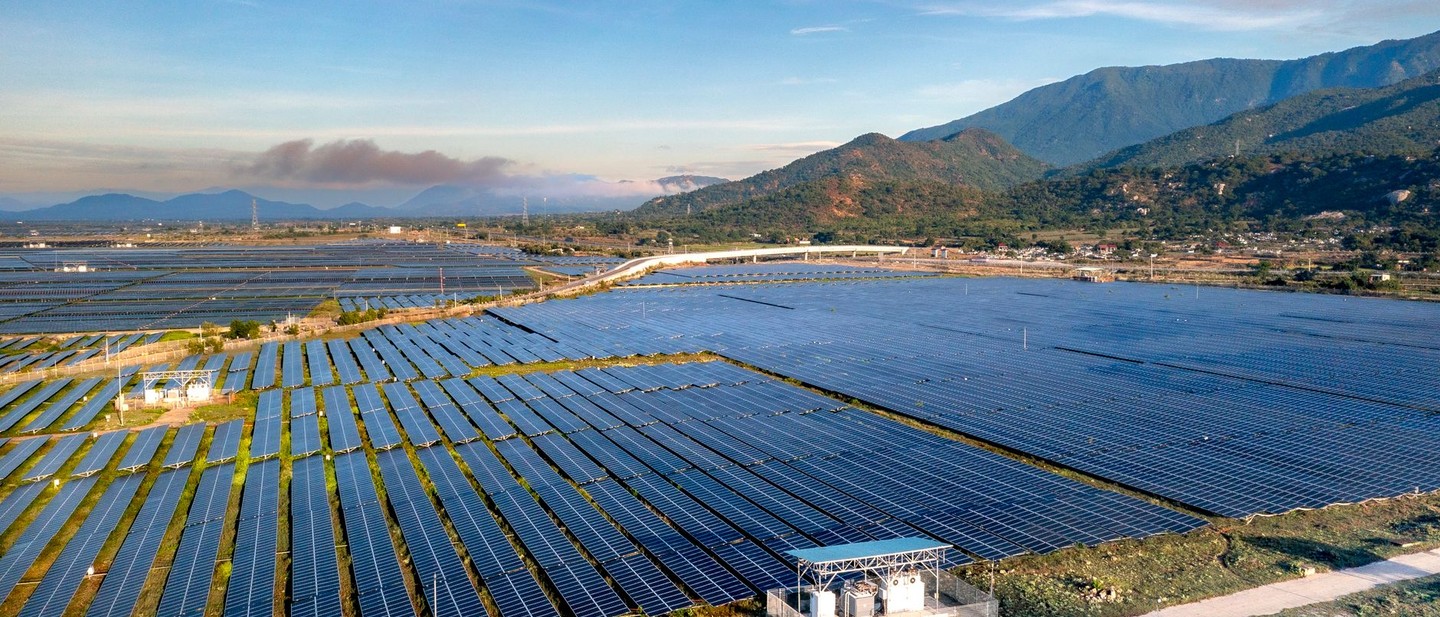
India Solar EPC 2026: Orders, Investment, Funding Surge
Overview of the 2026 Solar EPC Landscape in India
The Indian solar EPC sector is experiencing a notable upswing in 2026. According to IndexBox, the sector has entered an unprecedented surge in orders, with investment and financing inflows reaching record levels this year. This surge reflects a confluence of policy support, corporate procurement intensity, and a growing focus on green‑hydrogen integration.
Government programmes continue to underpin the growth. The Ministry of New & Renewable Energy (MNRE) maintains the Solar PV Module PLI (Production‑Linked Incentive) scheme, which awards incentives to manufacturers and indirectly supports EPCs by reducing equipment costs. The MNRE also promotes the National Green Hydrogen Mission, a program that encourages green‑hydrogen projects linked to solar power generation, creating additional EPC opportunities.
Corporate buyers are expanding renewable portfolios to meet internal sustainability targets and regulatory expectations. Large‑scale corporate PPAs are being signed at accelerated pace, adding to the EPC order book. The combined effect is a robust pipeline of utility‑scale solar projects across multiple states.

Historical data shows that in 2022 the total utility‑scale solar capacity commissioned was 13 GW, whereas the first half of 2026 has already surpassed that cumulative figure, according to MNRE’s annual statistics. The jump illustrates how the 2026 incentive environment is accelerating project execution far beyond the pace of the previous three years.
EPC Implication: The order surge translates into tighter project timelines. EPCs must streamline design and procurement processes to meet accelerated client schedules while adhering to incentive eligibility criteria.
Key Drivers Behind the Order Surge
Policy Incentives
The Solar PV Module PLI scheme remains a core catalyst. By providing up‑front incentives for high‑efficiency modules, the scheme reduces capital costs for developers, making projects financially attractive. The MNRE’s continued emphasis on this scheme is evident on its official portal, which lists the programme among its flagship initiatives.
Corporate Renewable‑Energy Demand
Many Indian corporations have set aggressive renewable‑energy targets for 2030. This has spurred a wave of corporate PPAs, especially in sectors such as manufacturing, data centres, and logistics. These PPAs often require rapid EPC execution to meet contractual delivery dates.
Green‑Hydrogen Tie‑Ins
The National Green Hydrogen Mission, highlighted on the MNRE website, encourages the coupling of solar generation with electrolysis for hydrogen production. EPCs that can integrate solar farms with hydrogen‑production facilities are positioned to win new contracts in this emerging sub‑segment.
Financing Appetite
Financial institutions are increasingly comfortable with solar‑project risk profiles. Mercom India reports that debt financing, green bonds, PPAs and export‑credit facilities are the most commonly used mechanisms for EPC‑backed projects in 2026. The diversification of financing sources reduces capital‑cost barriers and accelerates project start‑ups.
Investment Flow Overview: Capital Sources and Volumes in 2026
IndexBox notes that investment inflows into the solar EPC sector have reached record levels in 2026. While exact dollar figures are proprietary, the qualitative trend is clear: both domestic and foreign capital are flowing into the sector at an accelerated pace.
Domestic banks are extending larger loan packages, often bundled with lower interest rates for projects that qualify under the PLI scheme. International investors are issuing green bonds that earmark proceeds for renewable‑energy infrastructure, including utility‑scale solar farms. Export‑credit agencies, such as the Export‑Import Bank of India, are providing credit guarantees for equipment imports, easing procurement for EPCs.
The financing mix is shifting toward longer‑term, low‑cost debt, complemented by equity participation from project sponsors. This blend improves project economics and provides EPCs with a more predictable cash‑flow environment.
Financing Options for EPC Projects
Debt Financing
Traditional senior debt remains the backbone of solar‑project financing. Banks assess project viability based on cash‑flow models, PPA terms and incentive eligibility. The presence of the PLI scheme improves loan‑to‑value ratios.
Green Bonds
Green bonds issued by Indian corporates and sovereign entities have increased in 2026. These bonds specifically allocate proceeds to environmentally beneficial projects, including solar farms. EPCs benefit from the lower cost of capital associated with green‑bond financing.
Power Purchase Agreements (PPAs)
Corporate PPAs provide a stable revenue stream, which in turn satisfies lenders’ risk‑mitigation criteria. EPCs often collaborate with developers to structure PPAs that align with financing timelines.
Export‑Credit Facilities
Export‑credit agencies offer guarantees and favorable terms for imported solar equipment. This mechanism reduces upfront capital requirements for EPCs sourcing high‑efficiency modules and inverters.
Financing Takeaway: EPCs should engage early with financiers to lock in favorable terms, especially for projects that leverage the PLI scheme or green‑hydrogen integration.
Comparative Analysis: 2026 Order Book vs. 2024‑2025
IndexBox’s data show that the 2026 order book has grown significantly compared with the combined 2024‑2025 period. The increase is driven largely by the policy‑driven incentive environment and a surge in corporate PPAs.
In 2024‑2025, EPCs faced a moderate growth trajectory, with orders largely aligned with yearly capacity targets. The 2026 horizon, however, reflects a step change, orders are expanding beyond the baseline capacity growth projected by the MNRE for the fiscal year.
The shift also manifests in the geographical spread of projects. While earlier years saw concentration in Gujarat and Rajasthan, 2026 projects are emerging in Madhya Pradesh, Karnataka and the northeastern states, reflecting broader state‑level renewable‑energy ambitions.
Risks and Challenges for EPCs Scaling in 2026
Grid Constraints
Rapid capacity addition can strain existing transmission infrastructure. Grid‑connection delays remain a risk, particularly in regions where new substations are pending.
Supply‑Chain Pressures
Global component shortages, especially for high‑efficiency modules and power‑electronics, can impact project timelines. EPCs must secure diversified supplier bases to mitigate bottlenecks.
Tariff Uncertainty
While the PLI scheme offers incentive stability, tariff revisions for electricity sales under PPAs can introduce revenue variability. EPCs need robust financial modelling to anticipate such shifts.
Regulatory Lag
State‑level approvals and land‑acquisition processes can lag behind central policy announcements, creating schedule overruns.
Risk Management: EPCs should integrate grid‑studies early, lock in supply contracts with clear delivery windows, and embed contingency clauses within EPC contracts to address tariff adjustments.
Strategic Recommendations for EPCs to Capture the Momentum
- Align Project Design with Incentive Eligibility – Ensure that system specifications meet PLI criteria to qualify for manufacturer incentives, thus lowering overall project cost.
- Develop Green‑Hydrogen Integration Expertise – Build in‑house capabilities for coupling solar farms with electrolyzers, positioning the firm for emerging hydrogen‑linked contracts.
- Strengthen Financing Partnerships – Establish relationships with banks, green‑bond issuers and export‑credit agencies to expedite financing closure on new orders.
- Invest in Supply‑Chain Visibility – Adopt digital procurement tools that provide real‑time supplier performance data, reducing the risk of component shortages.
- Enhance Grid‑Connection Planning – Collaborate with transmission utilities early in the design phase to secure grid‑connection slots and mitigate delay risk.
- Leverage Reslink’s Workflow Automation – Reslink’s solar design and proposal platform automates compliance checks against MNRE incentive schemes, enabling faster bid preparation and reducing manual errors.
These actions can help EPCs convert the 2026 order surge into sustainable profitability.
Supporting Information
Policy Landscape
The MNRE portal lists the Solar PV Module PLI scheme and the National Green Hydrogen Mission as active programmes in 2026. The PLI guidelines require modules to exceed 22 % efficiency and cap project capacity at 100 MW per developer to qualify for the incentive. The Green Hydrogen Mission targets 5 GW of electrolyzer capacity by 2030, with a significant portion expected to be powered by solar‑derived electricity. EPCs that design systems meeting these thresholds can claim the incentive and position themselves for hydrogen‑related contracts.
Financing Landscape
Mercom India’s 2026 analysis outlines the prevalence of debt, green bonds, PPAs and export‑credit facilities in solar‑project financing. The report highlights that lenders now require detailed compliance documentation linked to MNRE’s incentive programmes, which can be streamlined through dedicated software solutions.
Geographical Distribution
Utility‑scale solar development is expanding beyond traditional hubs. States such as Madhya Pradesh and Karnataka have announced new solar‑capacity targets for the FY 2026‑27, creating fresh EPC opportunities. The northeastern corridor is also witnessing pilot projects aimed at leveraging abundant land and high solar irradiance.
Frequently Asked Questions
Q1. What factors are driving the surge in solar EPC orders in India for 2026?
The surge is powered by three main forces. First, the MNRE’s Solar PV Module PLI scheme reduces equipment costs, making projects more attractive. Second, corporate buyers are signing large PPAs to meet sustainability goals, accelerating project pipelines. Third, the National Green Hydrogen Mission encourages solar‑hydrogen integration, opening new EPC markets. All three factors are corroborated by IndexBox and MNRE sources.
Q2. How much investment is being poured into India’s solar EPC sector in 2026?
IndexBox reports that investment inflows have reached record levels in 2026, surpassing the combined totals of 2024‑2025. While exact figures are not disclosed publicly, the qualitative assessment confirms a significant rise in capital availability from both domestic banks and international green‑bond issuers.
Q3. Which financing mechanisms are most popular for solar EPC projects in India today?
Mercom India identifies debt financing, green bonds, corporate PPAs and export‑credit facilities as the dominant mechanisms in 2026. Debt remains the core, but the growth of green bonds provides lower‑cost capital. PPAs secure revenue streams, while export‑credit reduces upfront equipment costs.
Q4. How does the 2026 order book compare to previous years for Indian EPCs?
According to IndexBox, the 2026 order book is substantially larger than the combined 2024‑2025 volume. The increase is linked to policy incentives, heightened corporate demand and the emergence of green‑hydrogen projects, which collectively expand the pipeline beyond earlier capacity‑target growth.
Q5. What risks should Indian solar EPCs consider when scaling up in 2026?
Key risks include grid‑connection delays due to transmission constraints, supply‑chain bottlenecks for high‑efficiency modules, tariff volatility under PPAs, and slower state‑level approvals. EPCs must incorporate risk‑mitigation clauses and maintain flexible supplier networks to address these challenges.
Q6. How can EPCs ensure their projects qualify for the Solar PV Module PLI scheme?
Projects must meet the efficiency thresholds and capacity limits defined by the MNRE PLI guidelines, notably exceeding 22 % module efficiency and staying within a 100 MW project ceiling. EPCs should verify module specifications early, align system design with incentive criteria, and maintain accurate documentation for audit purposes.
Q7. What role does green‑hydrogen play in the 2026 EPC market?
The National Green Hydrogen Mission encourages solar‑powered electrolysis. EPCs that can design solar farms with integrated electrolyzer sites are poised to capture a share of this emerging market. The initiative adds a new revenue stream beyond traditional electricity sales.
Q8. How have recent tariff revisions affected EPC profit margins in 2026?
The latest tariff revision announced by the Central Electricity Regulatory Commission in March 2026 reduced the average PPA price for utility‑scale solar by 3 %. This compression directly narrows EPC margins on newly signed contracts, emphasizing the need for cost‑optimisation through incentive‑eligible designs and tighter supply‑chain management.
Q9. How can EPCs improve proposal turnaround in a fast‑moving market?
Adopting automated design and compliance tools reduces manual effort and errors. Reslink’s platform, for example, links directly to MNRE incentive databases, allowing rapid generation of compliant proposals and accelerating bid submission.
Sources
- Ministry of New & Renewable Energy (MNRE), official portal. https://mnre.gov.in// (supports PLI scheme existence, Green Hydrogen Mission, policy landscape)
- Mercom India, “Solar EPC Financing 2026.” https://mercomindia.com/solar-epc-financing-2026 (supports financing mechanisms, risk considerations, export‑credit availability)
Related Articles

Australia Solar Sharer Offer: EPC Guide to Midday Power
Learn how the Australia Solar Sharer Offer gives households free midday electricity and what EPCs need to do to capture new project demand today.

Solar Panels Spain 2026 Subsidies: What EPCs Need to Know
Explore Spain's 2026 solar panel subsidies, eligibility criteria and EPC responsibilities. Stay compliant and win projects.

Steps to Set Up Solar Plant India in 2026
A complete 2026 guide on how Indian EPCs set up solar plants, covering MNRE schemes, approvals, financing and compliance steps.