Solar & Storage Live UK 2026: EPC Guide
 Shashank·Founder·September 17, 2026·7 min read
Quick Answer
Question | Answer |
|---|---|
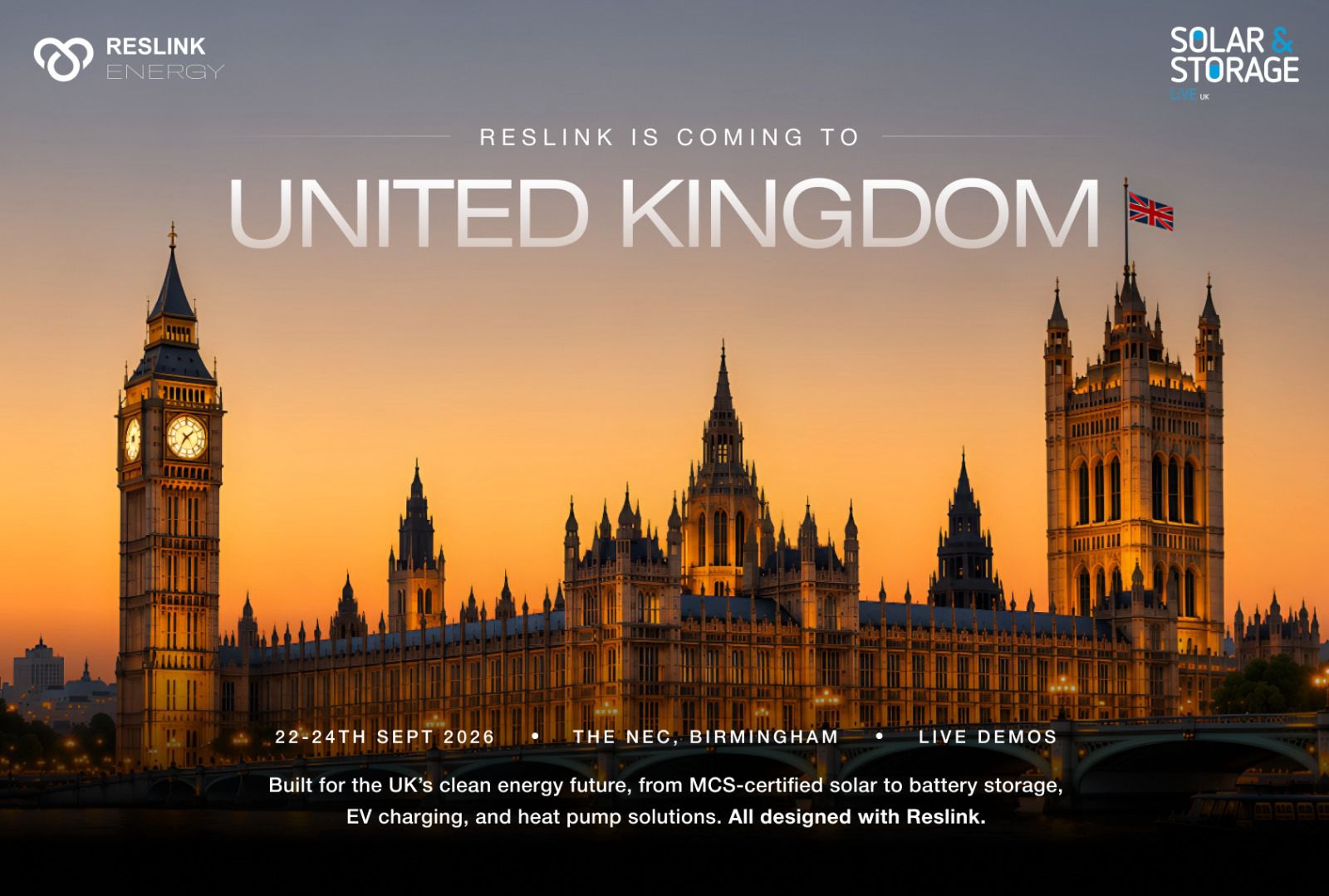
When and where is the event? | September 22-24, 2026, at the NEC, Birmingham, Halls 17-20, 10am-5pm daily. |
Is it free? | Yes, free to attend with registration, including access to the co-located EVCharge Live UK. |
What are the conference tracks? | Utility-scale solar, residential solar, commercial and industrial (C&I), energy storage, workforce development, and data centres. |
What's the one session worth prioritizing? | Anything touching NESO's grid connection reform, it's live, contested, and directly determines project timelines right now. |
What Solar & Storage Live UK 2026 Is
Solar & Storage Live UK 2026 is the UK's largest solar and energy storage exhibition, bringing together installers, developers, utilities, and investors across residential, commercial, and utility-scale solar. It sits at a genuinely consequential moment for the UK market: the country entered 2025 with Europe's largest grid connection backlog, and the reform built to fix that backlog is now in its most contested phase, with real disagreement between the grid operator's own progress reporting and Ofgem's independent assessment of how well it's actually working. This year's program has walked directly into that fight, whether NESO's grid connection reform is actually delivering what it promised, with a confirmed NESO speaker on the agenda, which is exactly why this is worth planning around rather than just attending.
Who's Confirmed to Speak
Five speakers give a sense of what this year's program actually covers:
- Chris Hewett, CEO of Solar Energy UK, the industry's own trade body, brings the sector's collective view on where policy is helping and where it's not.
- Adeolu Adesanya, Head of Commercial Finance at NESO, speaks for the grid operator actually running the connections reform covered below, a rare chance to hear that side directly rather than through a press release.
- David Rice, CEO of Segen, one of the UK's largest solar and storage distributors, represents the supply-chain and procurement side of the market.
- Antonio Arruebo, market analyst at SolarPower Europe, adds the wider European context UK-only coverage tends to miss.
- Richard Bartlett, co-founder and CEO of Greenhearth, rounds out the developer perspective.
Event at a Glance
Dates | September 22-24, 2026 |
Venue | NEC Birmingham, Halls 17-20, 10am-5pm daily |
Co-located With | EVCharge Live UK |
Scale | 500+ exhibitors, 250+ speakers, 20,000+ professionals expected |
Cost | Free to attend, registration required |
Organiser | Terrapinn |
The Real Story: Grid Connection Reform Is Still an Open Fight
Here's what makes this year's event genuinely worth planning around. NESO's connections reform, approved by Ofgem in April 2025, replaced the UK's old first-come-first-served queue with a gated system: Gate 2 projects, those with planning permission and land rights, get fast-tracked, split into Phase 1 (targeting pre-2030 connection) and Phase 2 (by 2035). Everyone else stays in Gate 1.
The reform's stated purpose was clearing Europe's largest grid connection backlog, a queue that had grown to roughly four times what's actually needed by 2030. NESO reports that by June 10, 2026, more than 700 projects representing 37GW of capacity had received offers, 58% of the pre-2030 pipeline, with Phase 1 distribution offers still being issued into mid-November 2026, meaning this process is actively running right now, not a settled, historical reform.
But the reform has real, documented costs and real, current criticism. 153GW of battery storage capacity was cut from the queue outright as part of the reshuffle, only projects with "protected" status, meaning they'd already significantly progressed before the reform, kept their original connection dates. Solar Energy UK, whose CEO Chris Hewett is speaking at this event, called the outcome "painful but necessary," a real, on-record trade-body assessment worth knowing before he takes the stage.

More pointed: an Ofgem assessment published just this month found NESO had failed to implement connections reform on time, had missed deadlines, and had distributed inaccurate connection offers, with battery storage projects facing disproportionately high skip rates. A House of Lords committee report was more measured but flagged the same underlying tension, industry is "overwhelmingly supportive" of the principle of queue reform, but concerned that legitimate projects are being held back or deprioritized under NESO's current methodology.
For an EPC, the practical translation is this: a client's connection date is no longer a function of when they signed a contract, it's a function of NESO's offer cycle, Ofgem's enforcement of that cycle, and factors genuinely outside anyone's direct control. One civil engineering trade analysis put it plainly, for solar and battery storage delivery right now, "not money, not policy, not consenting" is the binding constraint, "the grid" is.
What EPCs Should Actually Prioritize at the Event
- Attend the Policy & Regulation and Grid Connectivity & Reform sessions first, especially anything featuring NESO's Adeolu Adesanya or Solar Energy UK's Chris Hewett. This is the one topic at the event where the ground is actively shifting, and getting it wrong in a client conversation has direct financial consequences.
- If your pipeline is residential-only, don't skip this entirely. The reform was built for larger projects, but one UK solar installer's own analysis notes the ripple effects reach residential delivery too, through broader network capacity and prioritization decisions that shape what's actually buildable in a given area.
- Bring specific project details, not general questions. Given how contested and fast-moving the reform's implementation has been, generic questions about "how does grid connection work now" will get generic answers. Specific questions about a real project's gate status, phase, and region will get more useful ones.
- Treat the financing and PPA sessions as directly connected to the grid story, not separate from it. Panelists at a related Solar Finance & Investment Europe summit earlier this year noted that once a project receives a connection date under the new system, its financial viability needs to be reassessed, the economics that made sense at signing may not hold once a real, gated timeline is attached. That's a live underwriting conversation, not a hypothetical one.
Where Reslink Fits In This Conversation
A client asking why their connection date keeps moving isn't asking a vague question, they're asking about a specific, real, currently-contested regulatory process, and a specific answer beats a general one. Reslink's proposal and project workflow keeps a project's actual gate status, phase, and regional context attached to its design and client-facing documentation, so that conversation has a real answer behind it instead of a shrug.
See the full workflow → Book a demo
Frequently Asked Questions
Q1. Do I need to register in advance for Solar & Storage Live UK 2026?
Yes, entry is free but requires registration through the event's official site. Registering in advance also gives access to the event app for building a personalized session schedule.
Q2. Is the full speaker and session schedule available yet?
Confirmed keynote and featured speakers are known, David Rice, Chris Hewett, Adeolu Adesanya, Richard Bartlett, and Antonio Arruebo, but a complete session-by-session timetable wasn't published as of this writing. Check the event's own agenda page closer to September 22 for exact times and rooms.
Q3. What is NESO's grid connection reform, in one sentence?
A gated system, approved by Ofgem in April 2025, that replaced the UK's old first-come-first-served connection queue with a process prioritizing projects that are genuinely ready to build and aligned with national energy targets, at the cost of deprioritizing or cutting less-ready projects, including 153GW of battery storage capacity.
Q4. Is the reform working?
It's contested. NESO reports real progress, over 700 projects and 37GW of capacity offered by June 2026. But an Ofgem assessment this month found NESO missed implementation deadlines and issued inaccurate connection offers, with battery storage facing disproportionate skip rates. Treat it as an ongoing, unresolved process, not a finished success story.
Q5. Does this reform affect residential-scale projects too?
The reform's gated process was built primarily for larger generation and storage projects, but the broader network capacity and prioritization decisions it produces ripple into what's buildable across a given region, including for residential-scale work.
Sources
- Terrapinn / NEC Birmingham (Primary), thenec.co.uk and terrapinn.com, event dates, format, conference tracks, and exhibitor/attendee figures
- Greater Birmingham Chambers of Commerce, confirmed 2026 keynote and featured speaker list
- NESO (Primary), neso.energy, Connections Reform design documents and June 10, 2026 progress update
- Energy-Storage.News, December 2025, 153GW of battery storage cut from the connection queue; Solar Energy UK's "painful but necessary" assessment
- Energy-Storage.News, September 9, 2026, Ofgem assessment finding NESO missed connections reform deadlines and issued inaccurate offers
- UK House of Lords Industry and Regulators Committee, publications.parliament.uk, industry testimony on connections reform concerns, including Chris Hewett's comments
- Rospower / SpiritEnergy blog coverage, 2026, practical developer and EPC-level impact of the gated connection process
Related Articles

Solar Design Software for EPCs in Botswana
Botswana's Rooftop Solar Programme runs through BPC. What EPCs need for compliance, and how Reslink fits a market just getting started.
US Energy Storage Hits Record 20.2 GWh in Q2 2026
US energy storage hit a record 20.2 GWh in Q2 2026, 44% paired with solar. What the SEIA/Benchmark data signals for solar EPCs globally.
India, Indonesia, Laos Solar Tariffs 2026
Commerce set preliminary duties up to 143% on solar cells from India, Indonesia, and Laos. What's confirmed, what's still pending, and who's affected.