Mexico Distributed Generation Rules 2026 — What Solar EPCs Must Know
What Mexico's DG Framework Is
Mexico's distributed generation (DG) framework allows homes and businesses to install solar panels and connect them to the CFE (Comisión Federal de Electricidad) grid. Participants generate electricity from their own installation, consume what they need, and handle surplus through one of three compensation schemes. The framework covers systems up to the eligible capacity threshold and is regulated by the CRE.
The law has been in place since 2007 and updated several times. The April 2026 revision is the most substantive change in recent years, affecting the maximum system size, storage integration, and the menu of compensation options available to users.
The Three Key Changes in April 2026
1. Threshold raised to 0.7 MW
Systems of up to 700 kW (0.7 MW) can now operate under the DG framework. Previously, the limit was 500 kW. This single change opens up a new tier of commercial and industrial clients who previously could not access DG benefits. A factory with 600 kW of rooftop solar can now qualify for the same compensation and billing protections as a smaller residential or commercial system.
2. Battery storage formally regulated
For the first time, the CRE's DG framework explicitly covers battery storage systems connected alongside solar installations. Previous rules were silent on storage, creating ambiguity that caused some utilities to resist approving solar plus battery projects. The April 2026 revision gives EPCs a clear regulatory basis for including storage in DG proposals and removes the barrier of utility level refusal on procedural grounds.
3. Compensation schemes restructured
The three available compensation options are now defined with greater clarity. EPCs must understand all three and recommend the most suitable one for each client's consumption profile. This is covered in detail in the companion blog on compensation schemes.
What the Raised Threshold Means for EPCs
The 500 kW to 700 kW range was a blind spot in the Mexican commercial solar market. Projects in this range could not access DG benefits, which reduced their financial attractiveness compared to smaller systems. As a result, developers either capped projects at 499 kW (to stay under the limit) or structured them as utility scale projects, which carry different regulatory requirements.
With the threshold now at 700 kW, mid scale commercial projects between 500 kW and 700 kW can access the DG framework. For EPCs, this means a new pool of potential clients: medium industrial users, larger retail centres, hospital campuses, and university facilities whose electricity demand requires systems in this range. If you previously turned away clients because their ideal system size exceeded the old threshold, those conversations are worth reopening.
What Storage Formalisation Means in Practice
Before April 2026, including a battery system in a DG project created regulatory uncertainty. Some CFE regional offices approved it. Others rejected it on the basis that storage was not covered by the DG rules. EPCs building solar plus storage proposals faced inconsistent treatment depending on the state and utility district.
The April 2026 revision eliminates this inconsistency. Battery storage is now an explicitly regulated component of the DG framework. CFE regional offices can no longer refuse a DG connection application solely because it includes storage. For EPCs who have been wanting to include batteries in proposals but were deterred by regulatory risk, this is the green light to proceed.
Frequently Asked Questions
Q1. Does the new 0.7 MW threshold apply to all states in Mexico?
Yes. The CRE's DG framework is a federal regulation that applies uniformly across all Mexican states. Unlike some countries where distributed generation rules vary by state, Mexico's framework is set at the federal level by the CRE and implemented through CFE's distribution network. However, connection timelines and local utility responsiveness can vary significantly by region. CFE's northern divisions (Baja California, Sonora, Chihuahua) have generally been faster to implement updated regulations than some central or southern divisions.
Q2. What documentation is needed to connect a battery storage system under the new rules?
The CRE's April 2026 revision establishes that battery storage systems must be specified in the DG interconnection application alongside the solar generation component. Required documentation includes the battery system technical specifications (capacity in kWh, power rating in kW, chemistry type, BMS details), the single line diagram showing the integration of storage with the solar system, and the inverter or PCS specifications confirming grid protection compliance. The storage system must also meet applicable Mexican electrical safety standards (NOM 001 SEDE for electrical installations). Confirm the exact current list with your local CFE distribution division before submitting.
Sources
- CRE Mexico — gob.mx/cre — Comisión Reguladora de Energía — Updated Distributed Generation Regulations (April 2026)
- PV Magazine Mexico — pv-magazine-mexico.com — Mexico CRE publishes new DG rules, raises threshold to 0.7 MW, formalises storage (April 2026)
- Energía a Debate — energiaadebate.com — Mexico DG framework update — storage recognition, compensation scheme restructuring
Related Articles
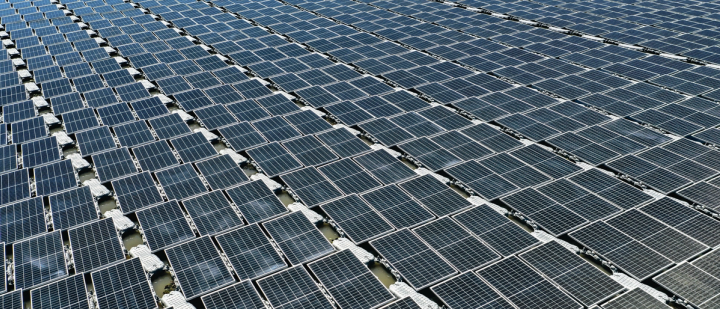
India's ₹5,070 Crore Floating Solar Push: What EPCs Need to Know
Cabinet approved ₹5,070 crore for 5,000 MW of floating solar with mandatory battery storage. CFA, timeline, and what EPCs should do now.
Electricity Tariffs Just Rose Again. Solar Payback Is Now Under 5 Years.
Egypt raised electricity tariffs 12% on August 1, 2026, and high-consumption billing changed. Full new EGP/kWh slab table for EPCs.
EU Hybrid Solar‑Wind Projects: An EPC‑Focused Guide
EU hybrid solar-wind EPC guide using Spain and Germany cases: shared grid connections, Frontones, Vattenfall, permits and guarantee rules.